


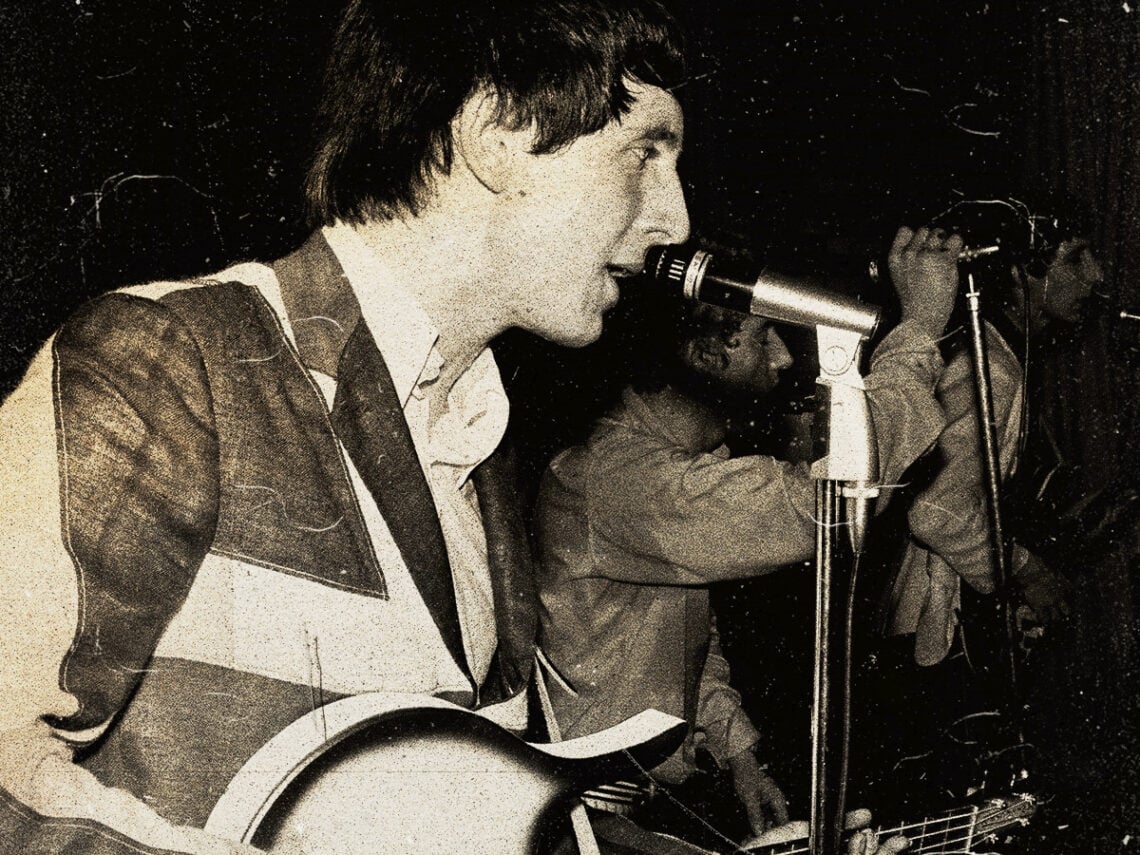
The Who’s John Entwistle picks his greatest bass work: “Better stuff on stage”

Nothing about The Who should have worked. Pete Townshend, Roger Daltrey, Keith Moon and John Entwistle started out as a bunch of tough-nut mods playing hypercharged R&B in the heyday of smiling, British invasion guitar pop. When their peers decided to experiment with psychedelia, The Who started writing operas. Most of all, though, was their work as a live act. The Who in their late 1960s and early 1970s prime didn’t come across like the tightly honed and rehearsed regiment they were deep down.
To most people watching, they were essentially four separate creatives thundering out their own vision of the band. Lunatic drummer Keith Moon had as much interest in timekeeping as he had in quantum mechanics, preferring to wreck only slightly less havoc on his kit with his sticks than he would with literal dynamite during the band’s early days. Roger Daltrey was the consummate rock and roll frontman—shirtless, mane of golden hair, microphone lassoing through the air with an almost telekinetic level of precision.
Townshend was the exasperated conductor, one trying to keep everyone together but also fighting back the urge to give in to the chaos and destroy whatever poor guitar lay trembling in his hands. It could have all been truly awful. Or, at the very least, a punishing, avant-garde deconstruction of rock and roll, Captain Beefheart-style. Yet, the band (barely) toed the line between the good kind of chaos and the bad kind thanks to the strong, strangely serene, unmoving presence stage right. The man they called ‘The Ox’, stalwart bass player John Entwistle.
In many ways, ‘Ol’ Thunderfingers’ was a microcosm for the band as a whole. He was a technically astonishing player who never took the volume and treble dials on his bass a millimetre short of full blast and wasn’t afraid to show his fretboard mastery. The Who’s breakout hit ‘My Generation’ had a bass solo rather than a guitar solo for good reason. Despite that, though, he was still the most disciplined member of the band. A one-man rhythm section you could set your watch by despite the category-five hurricane going on around him. In fact, he seemed to feel a little straight-jacketed by this responsibility in the band.
Which makes sense. The guy was a generational player who, when he was allowed to cut loose, could do mesmerising things on four strings. It’s telling that Entwistle did get time to solo in The Who, but not until long after Keith Moon’s passing. Instead, if you asked the man what he would choose to prove his worth as a bass player, he’d be much more likely to refer you to his solo work than anything he did with his main gig. We know this because, in an interview with Marc Allen for his The Tapes Archive, he was asked precisely this question!
Entwistle responded, “Some of the things I’m playing live, at least, ‘The Real Me’. I mean, I do a lot better stuff on stage than I’ve done on record. Parts of Quadrophenia. As far as my solo albums are concerned, I think probably I was actually pumped to play ‘Tongue and Cheek’, ‘Dancing Master’, ‘Too Late the Hero’. Though, really, if you want to hear me play some silly bass, come and watch me in concert; that’s when I play it.” Which makes sense in a way. The studio was always Townsend’s domain, but live, The Who were something else.
It may have seemed like anarchy, but it was truly a democracy. One where you could get the best out of everyone. It’s telling that the very best of John Entwistle was the foundation upon which the band was built, and they were never quite the same since his passing in 2002.
