


Analysing the key elements of a John Carpenter horror movie

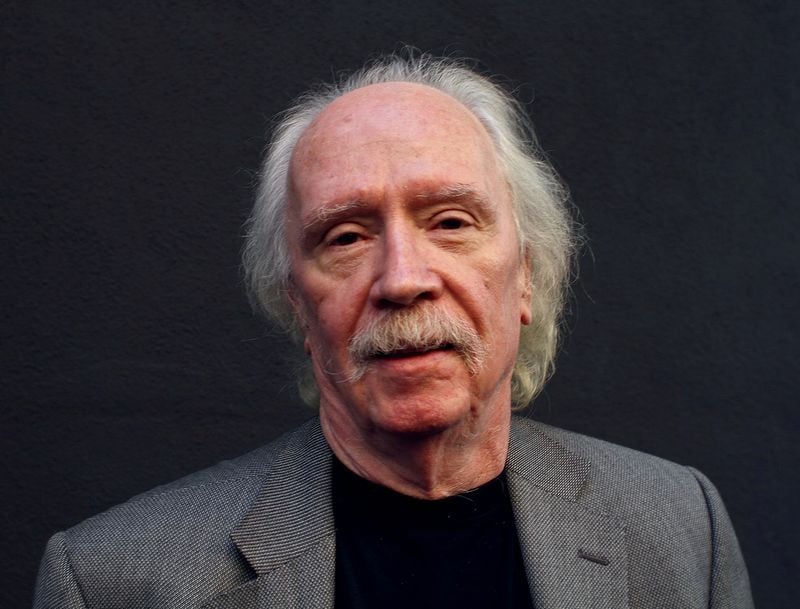
Through his stylised, suspenseful and thrilling horror features, John Carpenter has solidified his presence as an undisputed icon of Hollywood. The director’s creativity and brilliant direction had led to some of horror’s most influential contributions and characters, including Michael Myers in Halloween, the film that put slashers on the map and The Thing, a testimony to 1980s horror in all its hyperactivity and gore.
Cited as one of the Masters of Horror alongside Wes Craven, Dario Argento, Tobe Hooper and others, Carpenter is deemed a vital contributor and perspective on the horror genre. The director also solidified the genre’s ability to provide compelling and entertaining social commentary, such as the anti-consumerism values in his 1988 sci-fi action film They Live, demonstrating horror’s profoundness and ability to reflect society as art.
Carpenter’s universally decided masterpiece is Halloween, released in 1978. The film follows a killer named Michael Myers, breaking free from his institution and returning to his hometown after killing his older sister as a child. His latest victim is Laurie Strode, a high school student played by screen icon Jamie Lee Curtis in her film debut, who has now gone on to become the face of the horror trope Final Girls.
Halloween is regarded as one of the greatest horror films of all time, leading to some of the genre’s greatest features, such as serial killers and sexually active teens being murdered. It also demonstrated how tension and atmosphere, defining themes of the 1960s and ’70s horror, were crucial and effective tools in horror filmmaking before sparking one of the genre’s most popular franchises. The director described the influential feature during an interview with Chic Magazine upon its release. He said: “True crass exploitation. I decided to make a film I would love to have seen as a kid, full of cheap tricks like a haunted house at a fair where you walk down the corridor, and things jump out at you.”
Carpenter’s films uphold his legacy as one of horror’s most significant filmmakers through their thrilling execution, layered thematic concepts and brilliant utilisation of iconography. These movies offer an original perspective and approach to horror filmmaking, characterised by distinct techniques.
The director’s visual appetite consists of minimalist lighting to direct tension and a terrifying reveal and obtain a sense of realism. This element can be seen in Halloween as Michael Myers unnerves audiences by stalking teens in the dark, with his pale uncanny mask occasionally being lit by a natural illumination. Halloween’s employment of lighting vehicles the vital suspense that characterises the film and upholds its status in horror. By concealing the sinister killer in darkness during a tense build-up and bringing him out as he is about to kill in a shocking reveal, Carpenter shows a brilliant and attentive use of art direction, toying with his audience’s emotions to create a thrilling scare. With that, the director loves using a Steadicam, a stabiliser used to isolate the camera from the camera operator’s movement, keeping the camera motion separate and controllable by a skilled operator. In turn, Carpenter’s camerawork is liberated movement, remaining smooth and controlled in capturing the action in front.
This camera use proved effective during the shooting of The Thing, a chilling sci-fi movie Carpenter created around advice horror writer Stephen King gave him “the cliches in Hollywood are that you keep every monster in the dark you would never see the face of the devil, don’t ever show it,” he said, before adding: “However, if you can come up with something that’s so astonishing looking on-screen you will hit a home run out of the ballpark, they’ll never forget it. So being stupid, I said, ‘let’s try that.'”
This advice comes through in how Carpenter shoots the parasitic creature that infiltrates and kills in the film, tracking the hideous yet iconic design of a disfigured head-like creature as it tears from the victim’s dome and crawls around the floor, terrifying the characters. The camerawork assures every detail of movement, and appearance is captured to unnerve the audience, presented in a fluid manner that mimics how a person’s eyes track movement.
Of course, Carpenter’s appreciation for photography also introduces his choice of panoramic shot compositions. This feature uses specialised equipment or software that captures images with horizontally elongated fields of view, sometimes cited as wide-format photography. The director shoots his work filmed with a 2.35:1 aspect ratio on standard 35mm film, known as anamorphic cinematography. Carpenter considers the 35mm Panavision anamorphic format “the best movie system there is”, as this choice of shot composition, involving a wider field-of-view and more profound magnification, allows more dramatic, cinematic-looking footage.
As a compelling filmmaker from the ’80s, one of horror’s most iconic eras, Carpenter embodies one of the decade’s signature styles: a distinctive synthesised score. The filmmaker has self-composed most of his film scores, including the iconic Halloween theme, creating these soundtracks of music from a piano and atmospherics. This element highlights Carpenter’s role as an attentive auteur, assuring all crucial features of his film are designed to obtain and execute his vision.
Carpenter has also embodied social critique as represented through horror iconography and thematic concepts to elevate his coded works. They Live employs science fiction’s otherworldly and threatening persona to communicate issues within our familiar culture. To elaborate, the film narrates a drifter discovering the upper class are aliens manipulating humans to consume and conform through subliminal messages in marketing. This logline is a familiar critique of mass capitalist society and strict conformity. Carpenter situates this underlying thematic concept against entertaining horror sci-fi aesthetics, such as horrific humanoid skulls and screens showcasing the key language of “consume”.
Overall, a John Carpenter horror is characterised and defined by precise, thorough and creative use of film visuals and narrative concepts. The filmmaker shows a layered understanding of horror’s power in visual style and contextual and analytical values, blending against each decade’s signature tropes-the ’70s emphasis on suspense and the ’80s favouring of over-the-top gore, to demonstrate an overall awareness of how the genre morphs over time.
