


John Carpenter’s 8 greatest cinematic characters

John Carpenter is generally recognised as one of the greatest masters of the horror genre, giving it some of its greatest contributions during one of its greatest eras; Halloween in 1978 and The Thing in 1982. He has also directed some science fiction films, such as his first major film as director, Dark Star, in 1974. The film reportedly cost only $60,000 and was difficult to make as both Carpenter and writer Dan O’Bannon completed the film by multitasking.
Carpenter’s other productions from the 1970s and the 1980s have gained cult classic status years after their initial release, leading Carpenter to be acknowledged as an influential filmmaker. These films include Christine, Big Trouble in Little China, Prince of Darkness, They Live, In the Mouth of Madness, and Escape from L.A.
The director has also overseen the production of re-inventions of his classics under different directors, such as David Gordan Green’s 2018 recon of Halloween. However, Carpenter’s status and history were still so respected and powerful that he still got a say in how his original lead serial killer Michael Myers would be depicted under Gordan Green’s direction.
Carpenter has created some original and iconic characters in his works as he has mastered the domains of horror, sci-fi and comedy. These characters have been performed perfectly by some beloved film stars, whether they be over-the-top caricatures or one of a genre’s most iconic figures.
Here are eight of Carpenter’s best characters.
John Carpenter’s 8 greatest cinematic characters:
MacReady (The Thing, 1982)
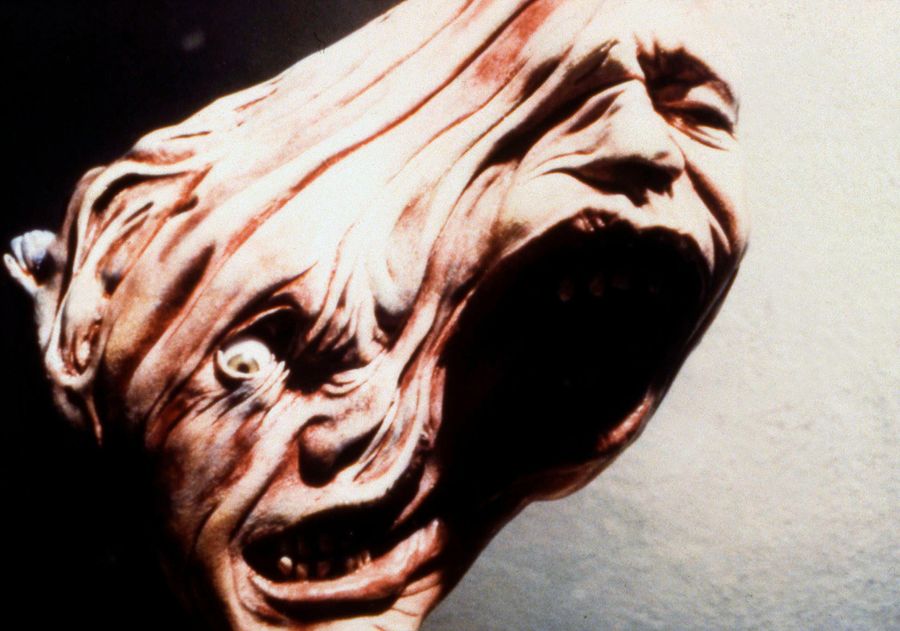
R.J. MacReady is an American helicopter pilot stationed at the Antarctic research station, U.S. Outpost 31. He is part of a research team that encounters the mysterious “Thing”, a parasitic extraterrestrial entity that assimilates and imitates other organisms. This has disastrous consequences as the group becomes paranoid from fear and turns on each other.
Played by the talented Kurt Russell, MacReady is a classic sci-fi hero; he’s smart, brave and never hesitates to act against a threat. He does also exemplify some more negative traits, such as cynicism and makes some rather brash, destructive decisions, showing he is a complicated character. He also has some ambiguity in his character and journey, as fans seem torn on his conclusion.
Stevie Wayne (The Fog, 1980)
An eerie fog rolls into a small coastal town exactly 100 years after a ship mysteriously sank in its waters. The strange ghostly figures have a taste for revenge, some brutal revenge.
Radio DJ Stevie is the protagonist of this ghost story, and she finds herself and her young son threatened by the supernatural entity that has just rolled into town. As a mother figure in a horror film, Stevie’s character displays some tense emotions in response to the hauntings and kills. These include genuine fear for her son’s fate and unconditional love for him, which are all given in an underrated yet great performance by Adrienne Barbeau.
“Snake” Plissken (Escape From New York, 1981)
In an alternate 1997, a huge war between America and the Soviet Union led Manhattan to be redesigned into a huge military base. After the US President is taken hostage, a soldier turned criminal is tasked with rescuing him no matter the costs.
Plissken’s characterisation is centred around commentary on the American government. One of his most defining traits is his cynicism, caused by the hypocrisy of the government he strongly believes exists. His need to survive and fight back is unapologetic and upfront, accentuating his commentary-driven design.
Dr Loomis (Halloween, 1976)
Dr Samuel Loomis is the psychiatrist assigned to six-year-old Michael Myers after the killing of his sister.
After spending eight years trying to reach Myers, he comes to the harrowing conclusion that Michael is “purely and simply evil” (causing a seesaw in later depictions of the character as one minute being human and then the next a supernatural evil entity) and dedicates himself to assuring Myers is never released.
Frank Armitage (They Live, 1988)
In this sci-fi classic, Nada is shocked to discover that the media and the government are built from subliminal messages, as they are plotting the population sheep-like and under brainwashing control. Another big shocker is that the social elite is actually aliens planning on world domination.
Nada meets Frank in his conquest to take this elite down. As the film is a social commentary on a range of issues, Frank’s character exists as a layered theoretical one. He has a strong moral compass and gives help when needed. However, he avoids class conflict at all costs, as his ethnicity as a black man will derive an intersection of issues and warfare. Frank is written with enough dignity and intellect that these subtexts aren’t overt and begging to be seen.
Laurie Strode (Halloween, 1976)
On Halloween Night, 1963, six-year-old Michael Myers murdered his sister, Judith, resulting in his being sent to a psychiatric hospital. Fifteen years later, he escapes and returns to the small town of Haddonfield, Illinois, to kill again. His next target? A high school student called Laurie Strode.
Cited by academics as one of the early and more influential examples of the “final girl” slasher film archetype, Laurie is a horror icon. She is played by Jamie Lee Curtis, daughter of one of the earliest Scream Queens, Janet Lee, and has only recently given her last film appearance. Laurie is intelligent, resourceful, and likeable and shows some impressive courage and fighting back in her first appearance.
Jack Burton (Big Trouble in Big China, 1986)
Jack Burton, a truck driver, gets caught up in the theatrics of a mysterious underworld beneath Chinatown. There he discovers an ancient sorcerer named Lo Pan, who will stop at nothing to release him from a centuries-old curse.
Russel’s Jack is exemplified as a hyperbolic macho action hero but in a comical manner. He may look the part, and according to actor Kurt Russell, “he thinks he’s Indiana Jones”. However, he could do with some polishing up. He has some try-hard catchphrases ready to toss out and refers to himself in the third person as though he’s the narrator. During the action sequences, where you expect him to thrive, he stumbles around and actually does some harm to himself rather than his enemies.
Michael Myers (Halloween, 1976)
Michael Myers is one of horror’s most iconic and greatest slasher icons. He is constructed from a ruthless murderous nature and an eerie presence, nicknamed The Boogeyman in the first film.
He also dons a pale white mask devoid of any emotion, so any face or expression can be projected onto it by the audience. He has inhuman strength and survival skills, making him a terrifying threat since he can’t be stopped.
