


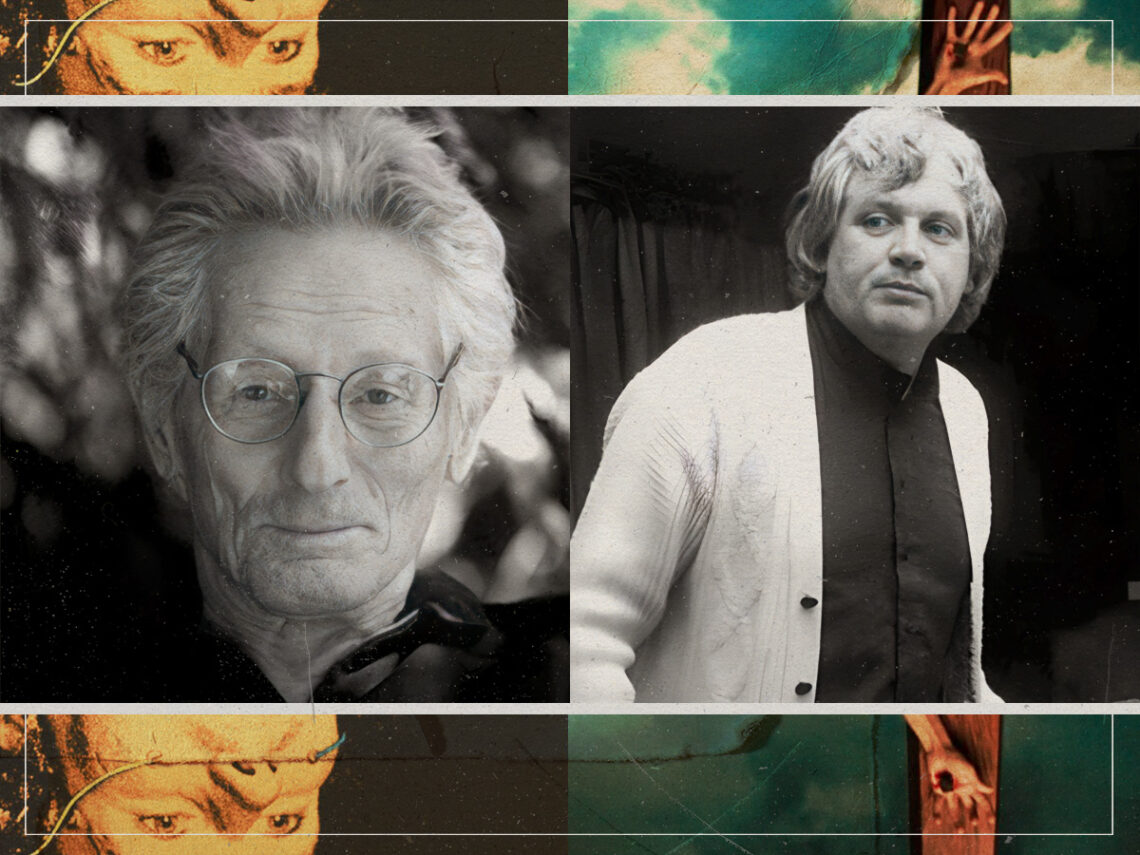
What did John C. Lilly think of Ken Russell’s ‘Altered States’?

While the most visually impressive movies that explore consciousness are often considered to be the likes of Stanley Kubrick’s 2001: A Space Odyssey, Richard Linklater’s Waking Life and Gaspar Noe’s Into the Void, Ken Russell‘s 1980 science fiction horror film Altered States, starring William Hurt in his film debut, is well worth of consideration.
Based on a novel by Paddy Chayefsky, Altered States sees Hurt play an obsessive scientist who is driven to discover more about the reality of human consciousness. In order to examine it further, he begins experimenting on himself by taking strong hallucinogenic drugs and lying in a sensory deprivation tank, although his quest for knowledge is one that almost claims his physical existence.
Both Chayefsky’s novel and Russell’s film were based on the sensory deprivation research of John C. Lilly and the effects of LSD, ketamine and mescaline. Lilly was a scientist and psychonaut who comprised part of a wider group of countercultural thinkers like Timothy Leary, Ram Dass and Werner Erhard and saw the sensory deprivation tank as a means to examine human consciousness.
Lilly had watched Altered States and admitted that he liked what he saw. In a 1983 Omni magazine article, he wrote, “I think they did a good job. The hallucination scenes are much better than anything ever produced before. The scene in which the scientist becomes cosmic energy, and his wife grabs him and brings him back to human form is straight out of my Dyadic Cyclone.” That was not the only scene in which Lilly found that he had inspired Russell and Chayefsky, though.
The man of many professions went on to refer to the moment in Altered States that sees Hurt’s character devolve into a prehistoric ape-like creature, and Lilly said that it seemed to have been inspired by a ketamine trip that he had taken with a fellow scientist, Dr. Craig Enright, who had first introduced him to the substance.
According to Lilly, “while taking a trip with me here by the isolation tank”, Enright “suddenly ‘became’ a chimp, jumping up and down and hollering for twenty-five minutes”. Lilly admitted that he was “frightened” while watching his friend trip the hell out on K, and when he finally came around, he asked him just where his mind had gone.
Enright’s response was that he had become a “pre-hominid” and was waiting in a tree because a leopard was trying to get him from below. Enright had been trying to scare away the leopard so he could become safe. The scene in Altered States also saw Edward Jessup trip out and become a pre-human being whilst imagining he was back in a natural environment.
Lilly also noted that the manuscript of his 1978 book The Scientist had been with his publishers, Bantam, when the head of the company called him and said that Chayefsky had requested to see it. When asked if he would give permission to Chayefsky, Lilly said that he would only allow it if Chayefsky called him personally and asked him himself.
However, Chayefsky did not call Lilly, even though Lilly admitted that he “probably read the manuscript” anyway. The brilliant thing about Altered States is that it combines some of the most visually impressive pieces of science fiction horror with psychonautic scientific experiments, the likes of which Lilly had become famous for but which had also drawn criticism from the scientific community. Thankfully, he approved of Russell and Chayefsky’s film.
