


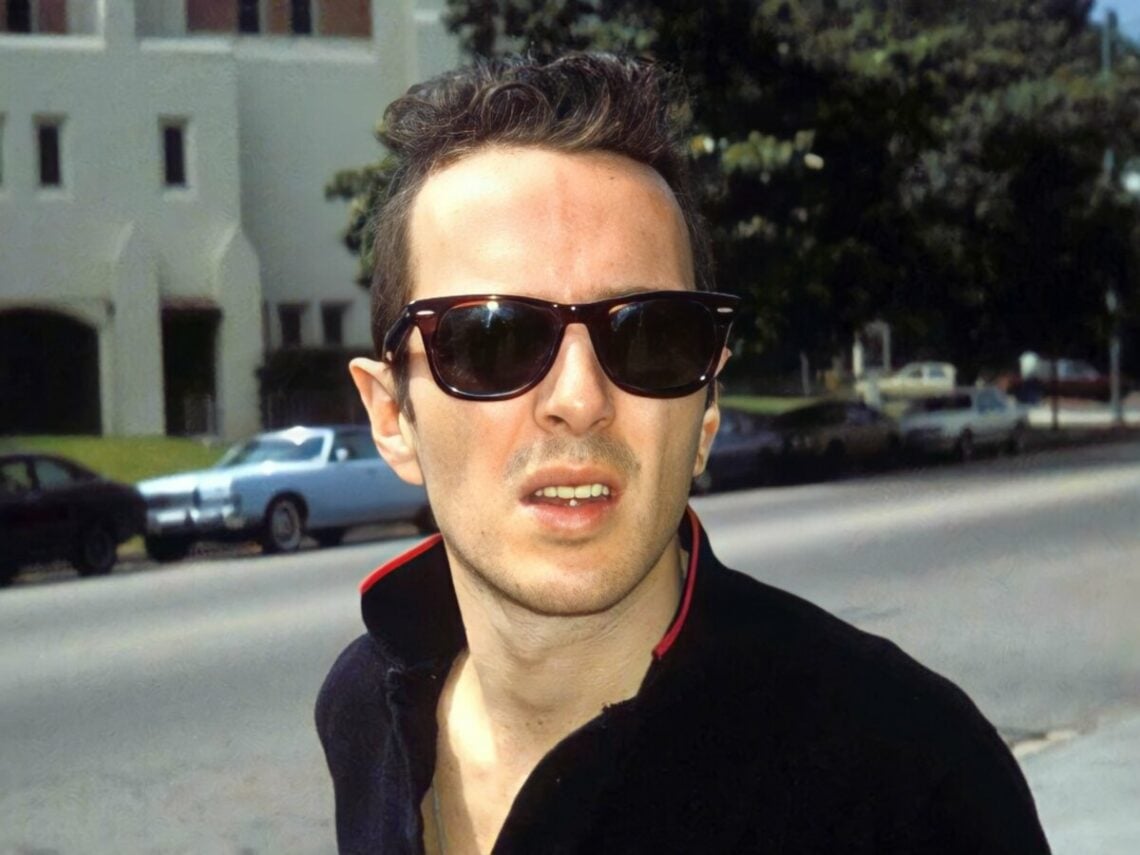
Joe Strummer on the only adult allowed to make good rock music: “A new plateau”

It’s hard to keep up the rebellious spirit of rock and roll as the years pass. It’s easy to become complacent as you get older, and the more you try to innovate your sound, the more enticing it becomes to try to rely on the same kind of sounds that you know your audience will like. When things get complacent, that’s where punk comes in, but even Joe Strummer had to admit that Paul Simon was in a completely different league than any other rock star.
Looking at Simon’s laid-back demeanour and the face of someone who’s going to be teaching English at a local primary school, it doesn’t exactly shout punk rock. Although Simon would have been more than happy to rely on traditions when making a handful of his classic tracks, he did have an anti-establishment streak when he wanted to.
When working on Simon and Garfunkel’s Bridge Over Troubled Water, Simon refused to cower to what his partner wanted, eventually taking charge after feeling like he was writing songs for someone else to sing. Now that he was free to go on to a solo career, though, Simon seemed to go down into easy-listening territory pretty quickly, especially with tracks that seemed to blend jazz and pop together.
The 1980s were not going to be easy for any ageing rocker, but Simon knew where he was going to go the minute he heard the sounds of African music. Working on his album Graceland, Simon put together pieces that seemed to go against the process of traditional songwriting, using various African musicians to work on the record despite the Apartheid movement going on at the same time.
For a classic rocker like Simon, this was the sound of him sticking his neck out on the line, and Strummer was definitely listening. Talking to The Los Angeles Times, Strummer loved what he heard from Simon, saying, “I don’t like the idea that people who aren’t adolescents make records. Adolescents make the best records. Except for Paul Simon. Except for Graceland. He’s hit a new plateau there, but he’s writing to his own age group. Graceland is something new.”
It might have seemed strange to hear high praise from the same man who claimed that phoney Beatlemania had bitten the dust, but his praise concerned the heart behind the music. Compared to artists who just wanted to make as much money as possible, Strummer always wanted to write the next song that would move something in the listener.
That meant not being confined to one genre, and hearing a piece like ‘Graceland’ or ‘Diamonds on the Soles of Her Shoes’ isn’t all that different from the kind of wild experiments that The Clash were doing on projects like Sandinista. There may have been some fine melodies spread throughout the album, but the goal was never to make simply good music.
Simon wanted to make a statement about how two forms of music could live in harmony together, which is the same marriage that Strummer continued to preach until The Clash fizzled out. For a genre that was known for causing as much destruction as possible, Strummer was about the message behind the destruction, and if he heard a classic rocker that resonated with him, why not shout their praises?
