


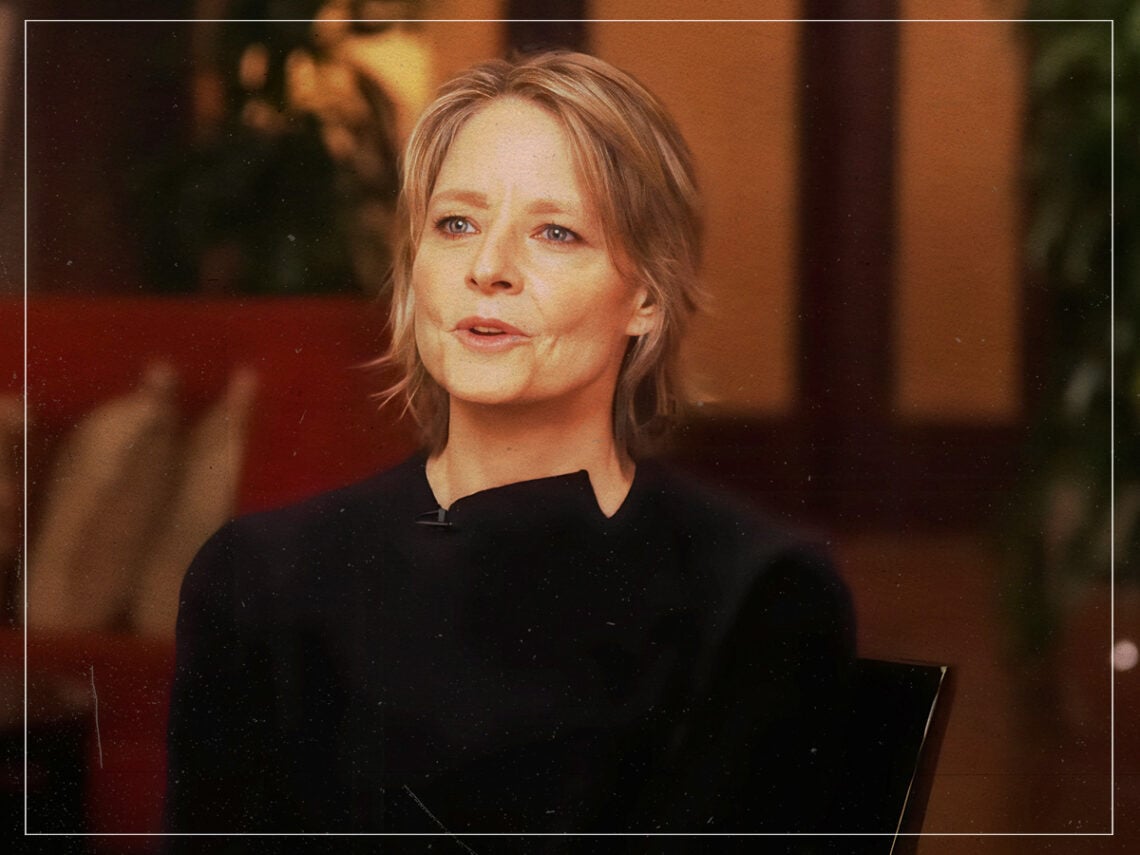
“To me, that’s not filmmaking”: Jodie Foster’s least favourite style of cinema

When Jodie Foster was just a child, she started acting and appeared in commercials, television shows, and movies. She showed talent from a very young age, and as a result, it didn’t take her long to appear in some high-profile productions, such as Martin Scorsese’s Taxi Driver.
The movie saw her play a child prostitute, although Scorsese has since admitted that he was not well-equipped to direct a 12-year-old in such a serious part. Luckily, Robert De Niro, who played the lead character, Travis Bickle, took the young actor under his wing and helped her to practise her role – giving her acting advice that would stick with her for the rest of her career.
Foster would continue to star in a mix of movies, some designed for adults and others more age-appropriate. For example, following Taxi Driver, she starred as Tallulah in Bugsy Malone before then appearing in the original Freaky Friday, which was made for a family-friendly audience. As her career progressed, she would earn significant critical praise for her role in The Silence of the Lambs, directed by Jonathan Demme. Opposite Anthony Hopkins as Hannibal Lecter, she played the trainee FBI agent Clarice Starling, who must study the terrifying cannibal to help solve another criminal case.
The role is what many people have come to associate Foster with, but since then, she has also appeared in many other acclaimed films. In recent years, Foster has starred in two biopics, The Mauritanian and Nyad, a genre she is typically against. In the many years that Foster has been an actor, she has come to discover which genres she prefers and which ones she’d rather avoid, and the biopic is one she has traditionally strayed from.
Talking to Screen Daily, she revealed her dislike for the biopic genre. “Somebody is born, they do something, they meet a bunch of famous people, and then they die. To me, that’s not good filmmaking. I just don’t respond to the genre,” stating, “Usually, it’s because the scripts have a structure I don’t particularly like.”
It is easy to see Foster’s point. Many biopics start when a famous singer, actor, or sportsperson is young and trace their rise (and usually, their inevitable fall) until they reach middle age or even their death. While this isn’t always the case, biopics have often caused discussion because they so frequently feel like Oscar bait, designed to win over audiences by gloriously depicting an icon’s life.
“There are some I like and appreciate, and it’s because they take a different course. They either identify one tiny moment in that person’s history where you really get a feeling you know them, or they approach it in a completely different way that isn’t just the chronological account of someone’s life,” she continued.
Thus, she decided to take on roles in The Mauritanian and Nyad because they weren’t your run-of-the-mill biopics. Both focus on genuinely interesting people who viewers might not have heard of before, and tell stories that aren’t simply tales of celebrity. For example, The Mauritanian explored the period in which Mohamedou Ould Slahi was held in a military prison without charge and subsequently tortured, with Foster playing Nancy Hollander, the lawyer who helped Slahi to be released.
Clearly, if a biopic tells a good story, Foster won’t rule one out. Yet, for the most part, she is critical towards the way that Hollywood churns out predictable, epic biopics.
