


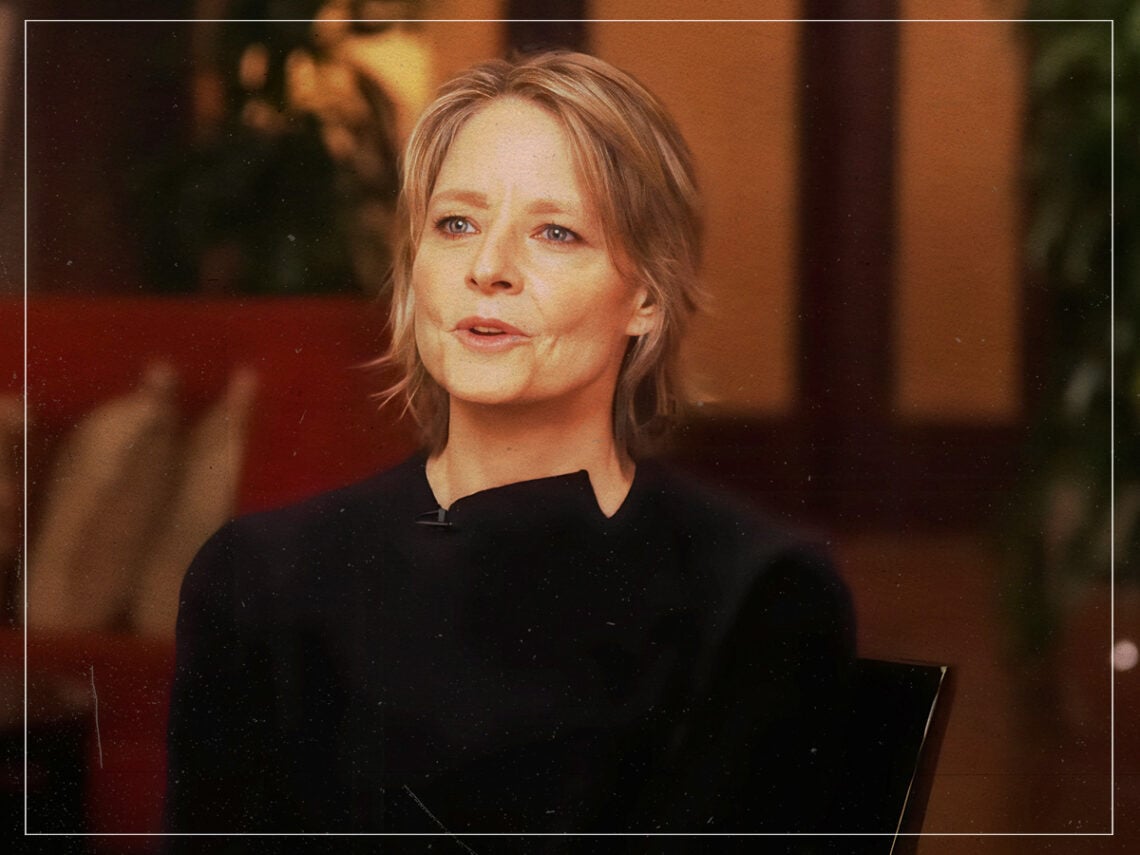
Jodie Foster’s favourite feminist filmmaker: “It’s hard for me to be in the business of saying”

Jodie Foster is one of Hollywood’s most singular stars. No one’s career trajectory has been quite like hers, from the beginning of her career to where she is now. She started acting as a child, working in television adverts (including one with Henry Fonda) before branching out into movies. Her first major role caused a significant amount of controversy. In Martin Scorsese’s Taxi Driver, she played a 12-year-old sex worker who befriends Robert De Niro’s character. Her performance was met with widespread praise and hand-wringing, but it made her an instant star.
Foster stuck with bold choices, including 1976’s historical parody Bugsy Malone, the independent Adrian Lyne film Foxes, and the brutal legal drama The Accused, which earned her her first Oscar. In addition to acting, she stepped behind the camera to direct several projects, including the 1991 family drama Little Man Tate, the unconventional 2011 Mel Gibson drama The Beaver, and the 2016 thriller Money Monster. She has also taken several breaks from the film industry, first to attend Yale University and then to focus on raising her family.
All in all, Foster has built a career on her own terms, something that seems to be nearly impossible for people who gain widespread public attention in Hollywood, especially at a young age. The term ‘feminist filmmaking’ is as subjective as the word ‘feminist’ itself, but it’s reasonable to assume that Foster would fit most definitions. She has taken on complex, female-driven movies, directed multiple projects, and has seemingly avoided losing her sense of artistic direction along the way.
True to her reputation for unwavering independence, however, she has often ruffled feathers with her somewhat contrarian take on diversity in the film industry. For example, she isn’t interested in committing to making movies with a certain percentage of filmmakers who are women or people of colour, the way some of her peers have.
“It’s hard for me to be in the business of saying, half my movies are going to be made by women or men or whatever,” she told Variety in 2025. “Shouldn’t it be a more instinctual choice? You would hope that you’d be interested in the human being.”
To illustrate her point, she singled out the filmmaker who ushered her to her second Oscar-winning performance. “Jonathan Demme on Silence of the Lambs was my favourite feminist director.”
Labelling a man as your favourite feminist filmmaker is an unusual move, but it’s hard to deny that Demme helped pave the way for one of the strongest female protagonists of the 1990s with Silence of the Lambs. Foster starred as Clarice Starling, an FBI trainee who enlists the help of an imprisoned murderer (Anthony Hopkins) to help her track down a serial killer. It remains the only horror movie to ever win the ‘Best Picture’ Oscar and provided Foster with the best material she had ever had to showcase her dramatic talents.
Most people would probably be more inclined to name Agnès Varda, Chantal Akerman, or Céline Sciamma as the greatest feminist filmmakers of all time, and Foster has worked with plenty of female directors who might make a longer list. However, it’s fair to say that Demme did his part to make female characters as complex and central as his male characters, at least in his collaboration with Foster.
