


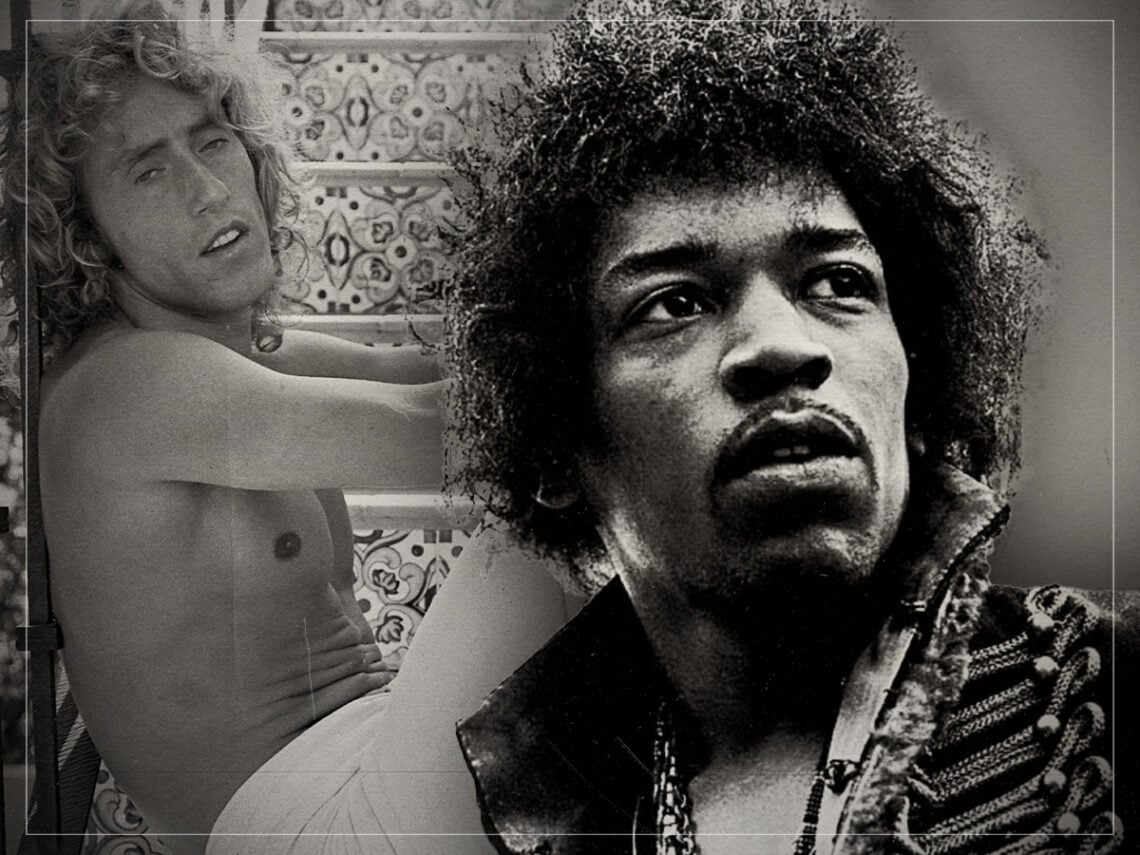
Jimi Hendrix, The Who, and the love triangle that produced two classic albums in 1967

Contextualism is the idea that art cannot be separated from the context in which it was created. That includes everything from the basic details of place and time to more emotional influences like feelings, friendships, politics, or romantic relationships. For musicians, all of it finds its way into their albums in one form or another.
Of course, certain recording studios carry a palpable sound. When Iggy Pop discovered Hansa in Berlin, for example, everything he made afterwards seemed to take on a Krautrock edge. Or take Fleetwood Mac’s Rumours, where the tension between the band members is not only obvious in the lyrics, but almost seems to fizz through the instrumentals as well. But in 1967, two albums were shaped by the same context, or more specifically, by an attempt to avoid it.
It was summer, and The Who were working on their third album, The Who Sell Out, which would go on to be viewed as one of their finest efforts, housing the hit ‘I Can See for Miles’. But during its making, Roger Daltrey wanted to be anywhere but the studio.
Notably, this album almost feels like a Pete Townshend solo effort. Daltrey didn’t contribute at all to the writing; he only takes lead vocal on one song, and largely, he was just pretty absent. When asked about it years later, Townshend’s only answer as to why was to recall the context:
“We were recording studio called De Lane Lea, and at the same time Jimi Hendrix was using the studio on the days that we weren’t, or we were using on the days that he wasn’t.”
At the time, Hendrix was working on his debut, Are You Experienced, and the two acts were basically running a changing of the guard rota that meant there were a lot of run-ins between The Who and the guitarist.
Unable to remove anything from context, the key here might all come down to romance. Hendrix will have been recording ‘Foxy Lady’, a track rumoured to be inspired by Heather Taylor, but by the time he was in the studio, that love was done and over, and Taylor was then dating Daltrey.
“At that time, Roger’s girlfriend Heather, who became his wife, had been seeing Jimi, and I think Roger was…I don’t know whether or not this is turning into sort of silly gossip, but I think he wasn’t around as much as he would normally be,” Townshend said, admitting that the awkwardness of a love triangle likely played into it.

It completely shaped that The Who album. “He used to enjoy being in the studio, but suddenly he was gone. And so I think what actually happened was that I was finishing the songs as I was finishing the vocals, imagining that Roger would come in and replace my vocals,” Tonwhend added, expecting that record would go like any other, “But what actually happened was he just wasn’t there.”
Leading to a whole new sound as Townshend took on the majority of the work, The Who Sell Out was produced by Daltrey’s avoidance, just as Hendrix’s debut was electrified by his songs of lust for the same woman.
