


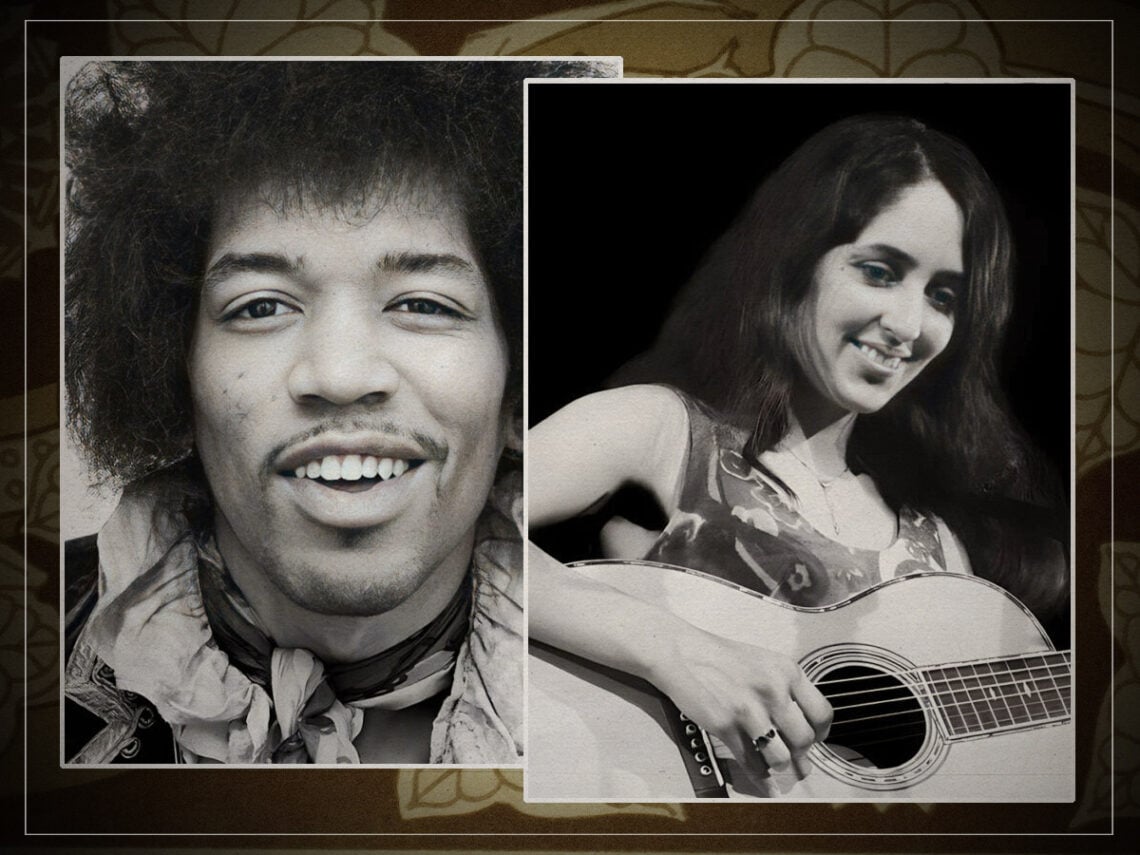
‘Any Day Now’: Jimi Hendrix’s favourite Joan Baez album

It’s one of the great what-if moments in music. What material would Jimi Hendrix have made had he survived that fateful night in the Samarkand Hotel? Of course, it’s a valid question of any musician who died that young, from Amy Winehouse to Juice Wrld, but with Hendrix, the question is a little more open-ended. Each artist who died young passed with a general expectation of what kind of music they were making, but Hendrix was evolving.
Quite an insane statement considering he was evolving from Axis: Bold As Love, but thus was the level of his talent. He’d moved from the hypercharged blues of his early work to the psychedelic firestorm of his work from the late 1960s and yet still, as the 1970s dawned he found himself in a rut. Deeply jaded with the music industry and unable to settle on a project, the signs of where he was heading are there if you know where to look.
Funk and Jazz influences are all over his final record, Band of Gypsys, recorded live at New York City’s Fillmore East. Hendrix, however, was a musical omnivore and an obsessive fan of folk music. He sought to take as much inspiration from the work of Miles Davis and John Coltrane as Bob Dylan and Tim Buckley. However, among his favourite genre records was Joan Baez’s Dylan covers album Any Day Now.
This checks out, as if there was one person in rock ‘n’ roll still in thrall to the standards tradition, who saw the value in putting ones own stamp on the music of the day, it was Jimi Hendrix. This is, after all, the guy who celebrated the release of The Beatles’ Sgt. Pepper’s Lonely Hearts Club Band opened his next show with a plutonium-powered version of the title track two days after the album dropped. Right in front of Paul McCartney’s thoroughly rocked face to boot.
So, the very last thing he would have seen Any Day Now is as some kind of cash-in or coat-tail riding. He would have understood the empathy and spirit of tribute that the record came from. It is a tribute to Baez’s own patience, if nothing else, as she was covering 16 songs by her ex, no less. She was one of the premier covers artists of her generation to boot, she could have covered anyone and made a gold record out of it.
The interesting thing to me is how Baez and Hendrix arrived at the very same respect for the medium through very different avenues. Baez came from the folk tradition of guesting on each other’s songs and having your own take on standards. Hendrix, a sideman for the first few years of his professional career in soul and R&B, came up needing to turn his hand to absolutely every kind of music he could for the sake of the next job.
If anything, Hendrix’s whole career was a mix of those two disciplines. The community spirit and radical self-expression of folk music, shot through with the razor-sharp musicianship and diversity of the R&B circuit he cut his teeth in. That’s the kind of combination that one could spend a career exploring, and it’s a crying shame that’s not the career Hendrix spent a lifetime in.

Never Miss A Tale
The Far Out Bob Dylan Newsletter
All the latest stories about Bob Dylan from the independent voice of culture.
Straight to your inbox.