


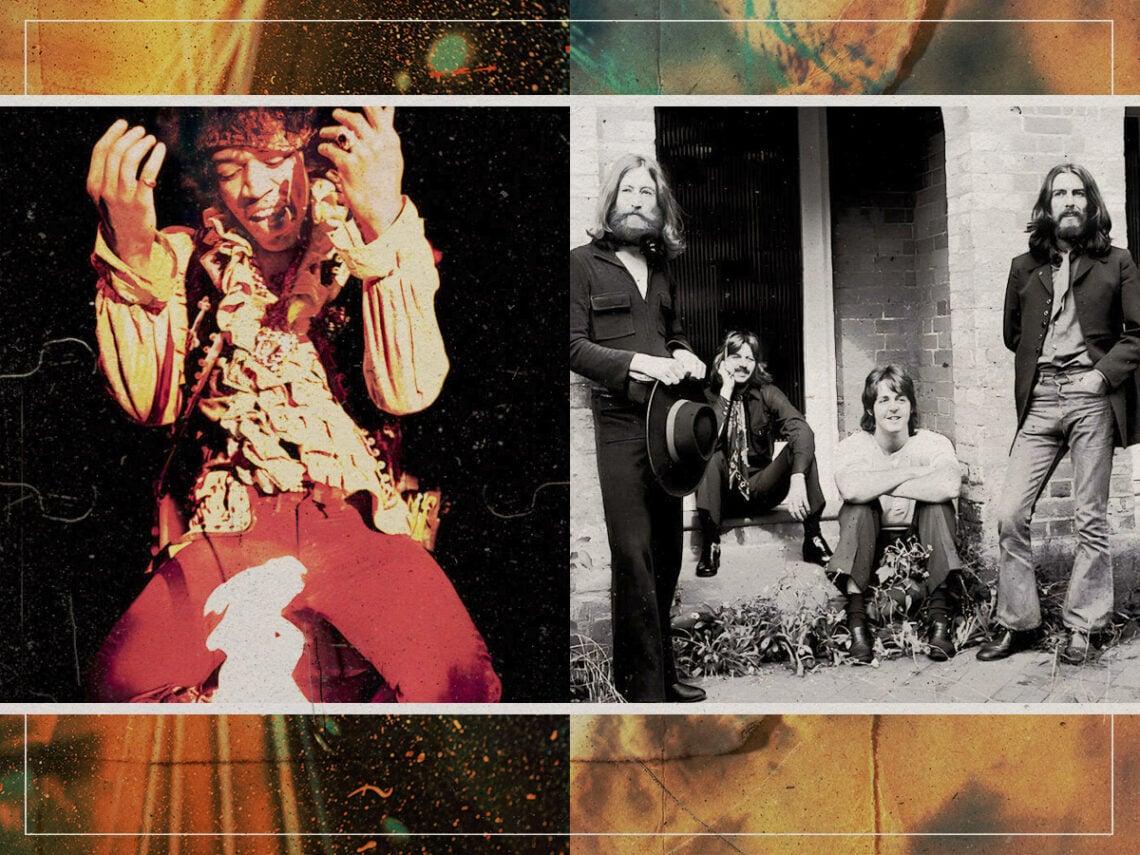
The one moment The Beatles became a part of “the establishment” according to Jimi Hendrix

The Beatles are rightly considered one of the most progressive rock bands of all time. So it is easy to look back at their salad days and point out John Lennon, Paul McCartney, George Harrison and Ringo Starr as the early 1960s version of a boy band. After all, the group were well-marketed and hit the top of the charts with startling consistency. But, within a few years, they were already changing the game.
After their album Rubber Sul, the group confirmed themselves as the rock icons they are now revered as. Not only did they begin expanding their counterculture vocabulary, with many fans calling the album their “pot album”, but the band’s change of songwriting also set them apart. Previously, the Fab Four had stuck to creating pop songs that involved rock ‘n’ roll tropes such as chasing women, driving fast cars and partying the night away. On Rubber Soul, they made pop music personal and put their own lives into their music.
One man who took heed from the band was Jimi Hendrix. The guitarist blew away the competition when he arrived in the swinging ’60s and proved to everyone in London that there was a new sheriff in town. He made that point even clearer when, just a few short days after the album’s release, Hendrix provided a searing cover of Sgt. Pepper’s Lonely Hearts Club Band for the Beatles in the audience at the Bag O’ Nails club. It’s clear that Hendrix was a fan. But, the following LP would leave Hendrix feeling cold.
Lennon noted the album as The Beatles’ “returning to rock,” and Hendrix agreed. But whereas Lennon deemed the album to be a reaction to the “philosorock” sound of the previous albums, Hendrix felt the LP was a regurgitation, “like an inventory of the past ten years, rock music, you know. There’s a lot of people waiting for something else to happen now, anyway.” It was clear that Hendrix felt there was more innovation needed in music, citing ‘Happiness Is A Warm Gun’ as his least favourite song on the record.
It’s a thought that would have pleased bandmate Paul McCartney. The songwriter was so devoted to creating deliberately innovative music that he threw away the shackles of being in a rock band and created something entirely unique with Sgt. Pepper’s lonely Hearts Club Band, a record that Hendrix himself would cover.
It was also a political song that, for Jimi Hendrix, showed The Beatles were now far removed from their audience. It was a devastating blow to a band who had their own issues. The group were now nearly always teetering on the edge of break up and the very notion that they were now playing only to the masses would have likely promoted another walk out.
“The Beatles are part of the establishment,” he said in The Times. “They’re starting to melt that way too.” He continued to make allusions to the band, comparing how people go through different walks of life to the group becoming somewhat middle class in their thinking: “That’s not saying anything bad about a person at all, it’s just the scenes some people go through.”
For Hendrix, with The White Album, The Beatles confirmed they were now becoming a part of the industry and establishment they had once rallied against, galvanising a generation in the process. “It’s like a person who starts out with something really on fire. Now they’re still good […], but they seemed a little closer to the public beforehand.”
Whether or not you like The Beatles albums that followed Sgt. Pepper, it’s hard to argue that the band hadn’t smoothed out their sound. For Hendrix, this and writing political songs confirmed that the Fab Four had lost their touch and were now just a part of the establishment.

Never Miss A Beat
The Far Out Beatles Newsletter
All the latest stories about The Beatles from the independent voice of culture.
Straight to your inbox.