


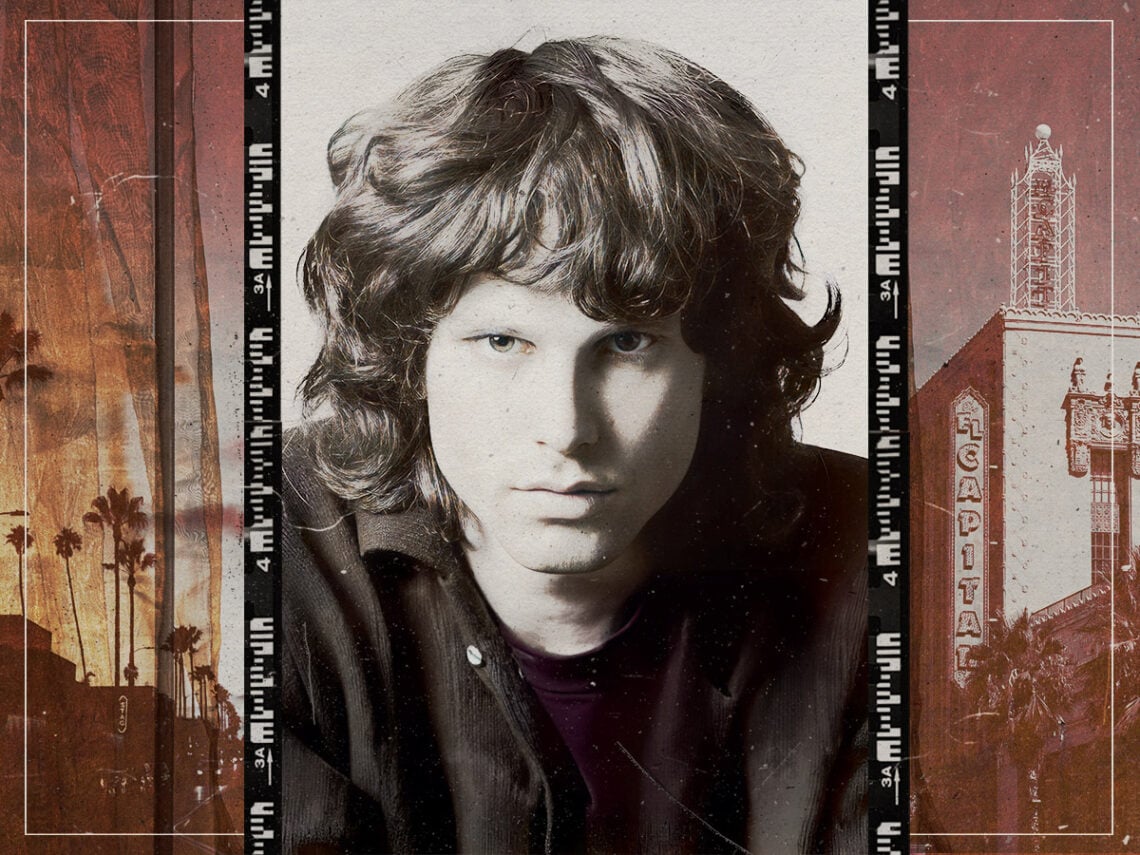
America’s two indigenous types of music, according to Jim Morrison

For all their associations with boundary-pushing, both musically and biochemically, The Doors never pretended to be anything other than a rock band. Even their notoriously unpredictable frontman had a relatively clear-eyed view of his place in the history of American popular music and a surprisingly prescient perspective on what the future might sound like.
During an interview conducted not long before his death in 1971, a pensive, bearded Jim Morrison pontificated on these subjects. “I think the two basic types of music indigenous to this country are the black music–blues–and the kind of folk music that was brought over from Europe,” he said. “I guess they call it country music or the West Virginia ‘high lonesome sound.’ Those are the two main streams of root American music.”
While this might be an oversimplification (and Morrison does note that “there might be others”), the idea of these two sources of influence as the essential base ingredients of late 20th and early 21st-century American music is hard to debate. Back in 1970, though, the sorting out of the rock ‘n’ roll phenomenon was still fairly new as a historian’s undertaking. Morrison, from inside the belly of the beast, already felt like he understood the confluence of what had happened up to his own time. But he also seemed convinced that rock, as he knew it, was about to become something else entirely.
“Ten years ago, what they called rock n’ roll was kind of a blending of those two forms,” he added. “And I guess what’s happening now is that rock is kind of dying out, and everyone is going back to the roots again; some are going back into country and some are going back into basic blues”.
The Doors singer continued: “I guess in four or five years the new generation’s music will have a synthesis of those two elements and some third thing–it might rely heavily on electronics, tapes. I can envision one person with a lot of machines, tapes and electronic set-ups singing or speaking using machines.”
It’s interesting that Morrison, at the dawn of the 1970s, is observing the “return to roots” trends in the music of artists like The Band, Neil Young, Dylan, etc, as a temporary regrouping before a new tide of “machine” based music. This prediction might seem quite remarkable, lending some credence to the third eye of the ‘Lizard King’, but really, it’s the sort of analysis that wouldn’t have been that unusual at the time, considering the rising prominence of synthesisers in pop music (The Beatles had already embraced them on Abbey Road), not to mention the increasing sophistication of computers in general.
Sure, nobody was bringing smartphones to the Whisky A Go Go 50 years ago, but Morrison – even at just the age of 27 – had seen enough technological advancement in his brief life to anticipate some major new breakthroughs on the horizon.
By the end of the 1970s, of course, his predictions had already largely come true, as hip hop, disco, and electronic music had all taken the two main roots of American music and added their own new technology-based wrinkles, with sampling, synths, and computer programming forever rewriting the pop music playbook. Did rock and roll die as a consequence? Morrison might have gotten that one wrong by a few years or so, not foreseeing the aggressive pushback of punk. But overall, we’ll give Jim a pretty solid four stars as a soothsayer.
