


The effortless cool of Jim Jarmusch’s ‘Stranger Than Paradise’

A true auteur and champion of American independent film, Jim Jarmusch has proven himself to be a master of the directing profession. Many of his films, including Dead Man, Coffee and Cigarettes and Paterson, have been heralded as the works of a master filmmaker, but one ought not to forget the movie that started it all, Stranger Than Paradise.
Made on a budget of around $125,000, Stranger Than Paradise was released in 1984 and announced Jarmusch as a serious talent to be reckoned with. Starring John Lurie of The Lounge Lizards in his breakthrough role, former Sonic Youth drummer Richard Edson, and violinist Eszter Balint, Stranger Than Paradise is dripping with the cool expected from its musically talented cast.
The now-classic independent piece of cinema is a road movie at heart that focuses on three seemingly estranged figures who suffered the slings and arrows of life in the early 1980s. Jarmusch employs a minimalist filmmaking style with a black-and-white stock that creates a truly stunning work of film.
New Yorker Willie is suddenly visited by his Hungarian cousin Eva, who stays at his house for a short while, and the pair spend their time smoking cigarettes and watching television. There’s a wry detachment to the film that traverses the tightrope between deadpan humour and an exploration of modern existential ennui.
Occasionally, Willie and Eva are joined by Willie’s friend Eddie, who seems to be as much of a proto-slacker as Willie. Though reluctant to accept Eva into his home, Willie eventually grows fond of his cousin and starts to detail a protective attitude over her, guarding her from the dangers of New York City. When Eva departs for Cleveland to live with her mother, Lotte, Willie, and Eddie set out to Ohio without any real directive, perhaps just because they miss her.
What proceeds is a loose narrative in which the trio wander through the pitfalls of life, from romance to finance, seemingly giving themselves up to the nature of fate and displaying a disaffected attitude without any real ambition. The pace of Stranger Than Paradise also aligns with the ultra-cool attitude of its characters and allows its audiences to come along for the ride.
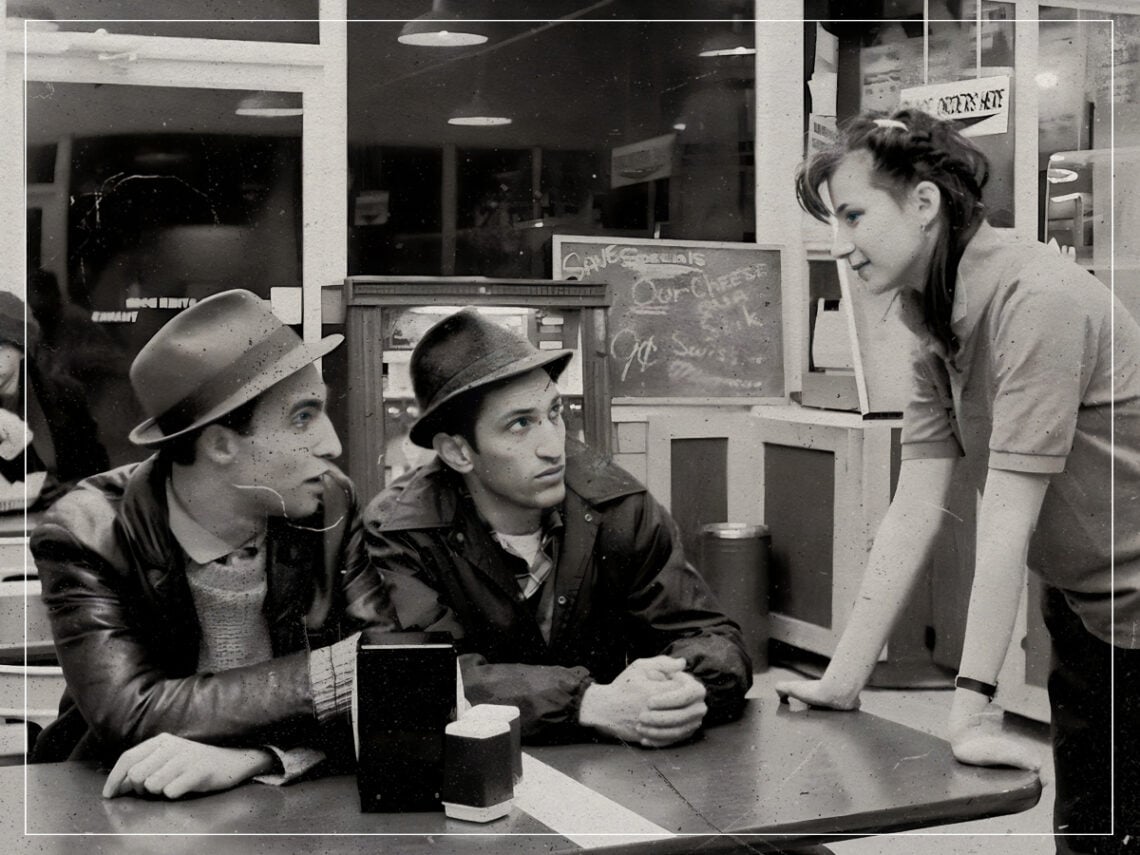
Jarmusch’s debut is a film that drifts listlessly with shades of homage to the great moments of European cinema through its black-and-white cinematography and long naturalistic takes. John Lurie seems to be the living epitome of carefree cool with his trademark trilby hat, bracers and canvas shoes, undoubtedly influenced by the Beatnik writers and artists of yore.
Still, there’s just about enough meaning and even tragedy within Stranger Than Paradise to make it a film that leaves a deep impression on its audience. There’s something unspoken in each of its three main characters, a sadness that’s often covered up by their respective attitudes, and it’s this only occasional glimpse into their inner lives that creates a more profound sense of intrigue.
Jarmusch manages to find the poetry within the every day, as his protagonist in Paterson would several years later, and the film serves as a slowing of the clocks, where the audience can take a moment to reflect on their surroundings and take it all in. In that light, Stranger Than Paradise is an appreciation of life itself in all its ugly and beautiful moments, and Jarmusch’s debut might just be one of his best works.
Check out the film’s trailer below.
