


‘Father Mother Sister Brother’ movie review: slow but oddly captivating

An interactive trilogy explores family relationships, and the various joys and challenges they can present, in Father Mother Sister Brother, an unusual, free-flowing narrative. The film’s director, Jim Jarmusch, once remarked, “I reach for my revolver when I hear the word ‘quirky’ or ‘edgy’” – so let’s just say Jarmusch’s reputation precedes him.
He manages to examine countless facets of parent/child and sibling interactions, and hints at what may be behind them, in a way that is open-ended and leaves room for mystery and untold secrets. Its slow pace and lack of a clear plot can make it a challenge to watch, but its exploration of family dynamics is intriguing. The distinctive drama received the Golden Lion at the most recent Venice Film Festival.
The first story in the trilogy concerns a brother and sister (Adam Driver and Mayim Bialik) travelling to visit their elderly father (Tom Waits) for the first time in two years. Their father lives in a slightly shabby house in a remote small town. The dialogue is painstakingly managed to get across key points: a combination of affection and awkwardness; concern by the siblings carefully downplayed to avoid giving alarm; attempts by the father to assure that he is managing well.
Almost everything is in subtext, as the conversation remains mostly superficial, leaving the audience with something of a puzzle to piece together. The dialogue makes clear the father’s distinct preference for his son. Mayim Bialik perfectly expresses, without explicit words, the daughter’s quiet resentment at being the less favoured child, and her doubts about her father’s stability. One or two alarming moments break through the mildly tense but innocuous conversation. What adds depth and mystery to the situation is what occurs before and after the visit, when the father is alone, causing the viewer to rethink the entire family dynamic.
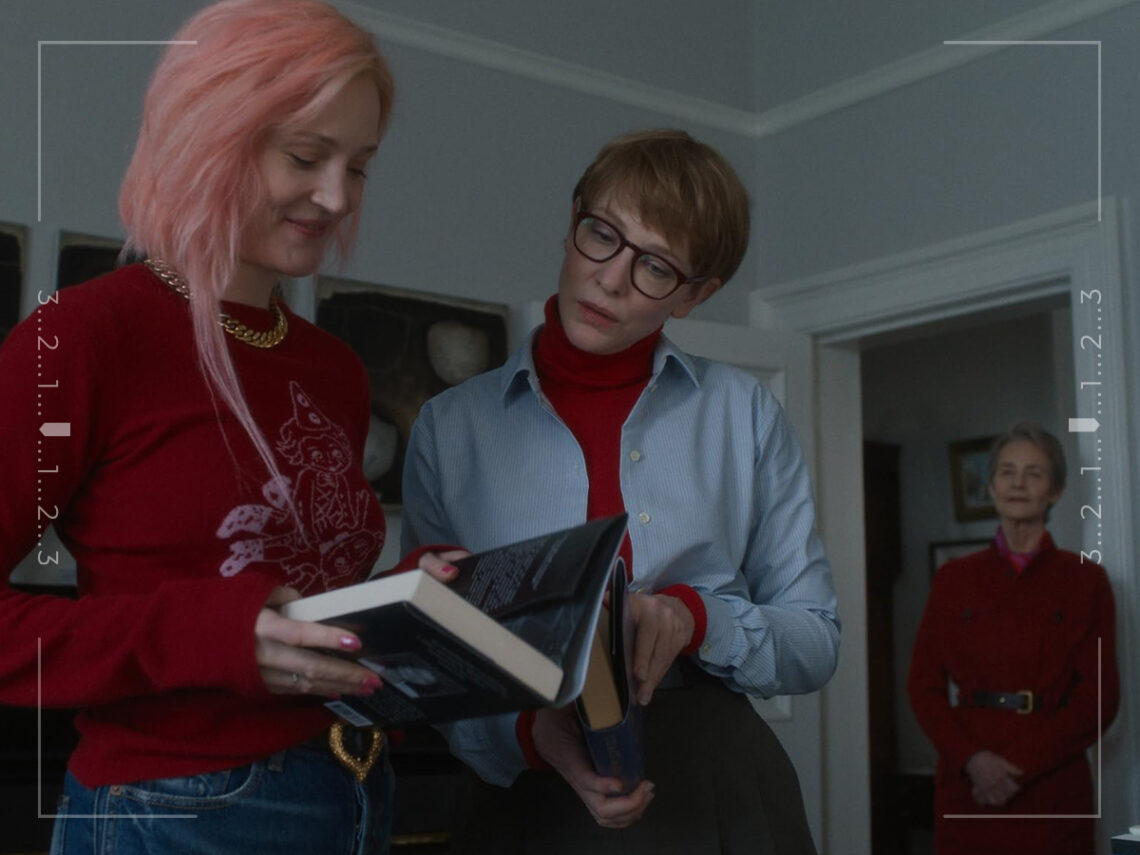
The second part shows a similar situation: a visit by two sisters (Cate Blanchett and Vicky Krieps) to their rigidly proper and undemonstrative mother (Charlotte Rampling), whose outwardly pleasant conversation is notable mainly for the things that are not, and cannot, be said. As in the first chapter, the polite dialogue is a minefield of unspoken feelings and personal history, some of it revealed during private interactions between the sisters, and some left vague but significant, with the exception of an occasional barbed, half-joking comment that breaks through.
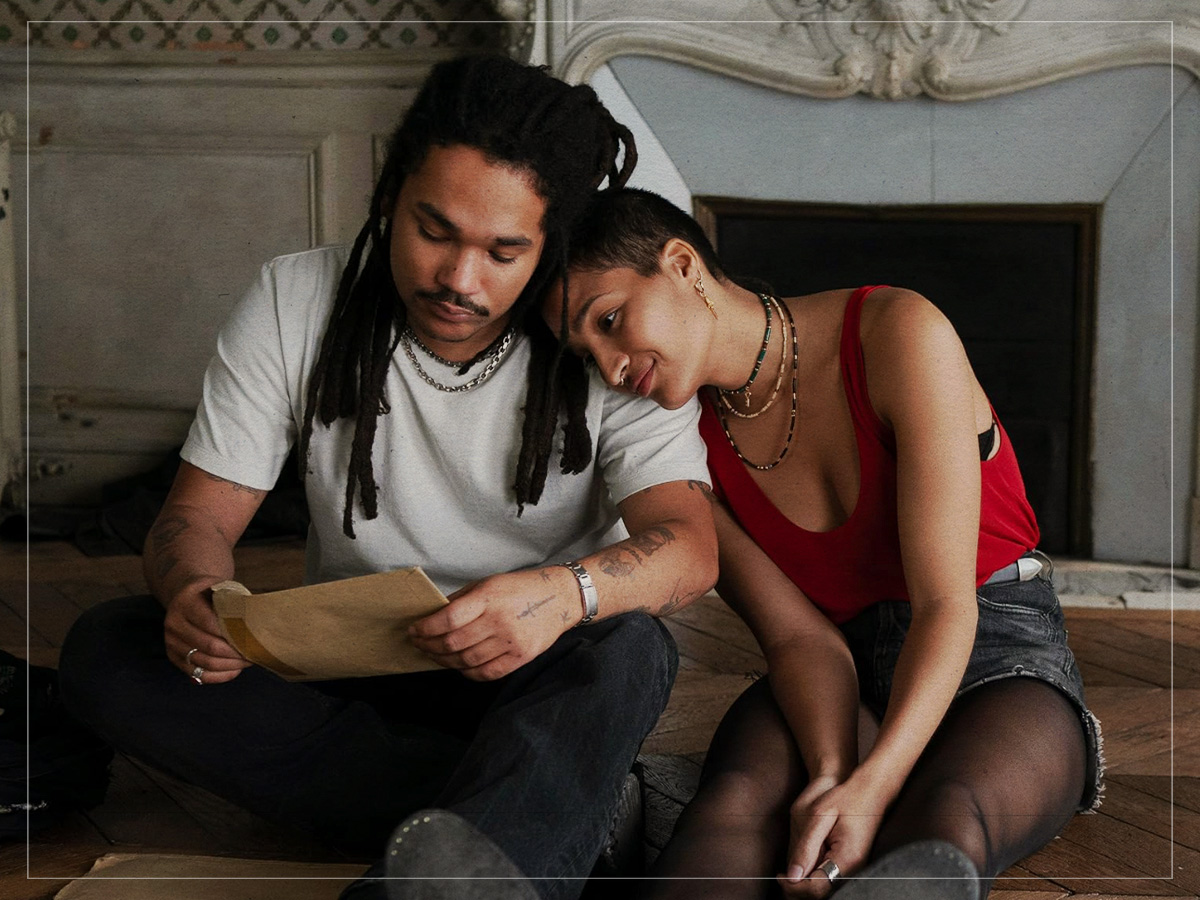
The final part of the trilogy involves a brother and sister (Luke Sabbat and Indya Moore), apparently close and affectionate siblings, going to the Paris home of their deceased parents to clear out the empty place and deal with their belongings. In this case, there is little or no conflict, but the two siblings use the occasion to compare their childhood experiences with their parents. They also discover a number of documents and items that reveal things about their mother and father that come as a complete surprise to them, and cause them to contemplate how little they may really have known about their parents’ past or private life.
Jarmusch brings the three parts of the trilogy together in complicated ways, beyond their common theme of family connections. There are a number of small elements that repeat in each of the three parts. For example, a group of skateboarders appear at some point in each segment, but the differing reaction of the central characters demonstrates their particular personalities and attitudes.
Each part of the trilogy also includes, at some point, the 1960s pop song ‘Spooky’ in the soundtrack; both the version of the song chosen and the context in which it is heard shed light on the characters. A few specific items, such as family photographs and particular minor lines of dialogue, are also repeated in each segment to provide further comparison among the three family groups and how they relate to one another, like a series of interactive clues.
The film, with its understated, nuanced dialogue and implied meanings, is held together by the excellent, carefully chosen cast. The movie simply would not have worked without the perfect ensemble performance. Jarmusch reportedly was inspired to write the screenplay by the idea of casting Tom Waits and Adam Driver as father and son, but all eight central characters are played brilliantly and with the subtlety necessary for this unusual non-story.
Each of them manages to express the layers of conflicting emotion connected to their family interactions, without overt dramatics, and while keeping a naturalistic tone. Combined with the dreamy, unobtrusive musical score and intimate camera work, they give a feeling of realism to this slow but oddly captivating drama.
