


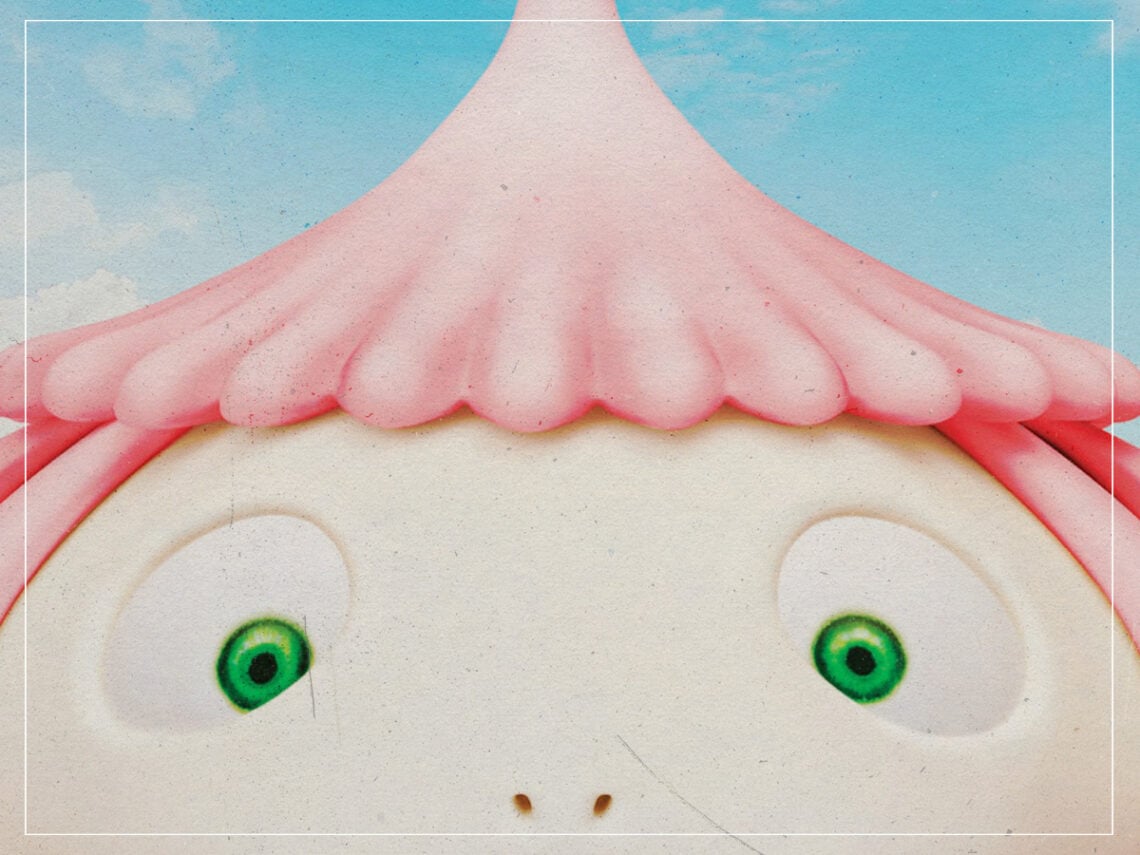
‘Jellyfish Eyes’: The weird Pokémon knock-off released by Criterion

After becoming a global phenomenon in the late 1990s, it was inevitable that Pokémon would give rise to a number of thinly veiled imitators, although it would be safe to assume none of them were anywhere near as bizarre as the movie Jellyfish Eyes.
While it remains debatable as to whether or not it was intended to draw comparisons to the all-conquering franchise, the similarities were there for all to see, and regularly used to beat the film over the head when it didn’t come close to maximising the intriguing potential of either its concept, or the status of its creator.
Writer and director Takashi Murakami found fame in the contemporary art world, most prominently through his postmodern ‘Superflat’ style. He made his first move into filmmaking by directing the animated music video for Kanye West’s ‘Good Morning’, and he also designed the album cover to the artist’s Graduation, from which the song emerged.
Taking his talents into the feature-length arena, Jellyfish Eyes was every bit as outlandish as would be expected from such a singular artist. A hybrid of live-action and CGI, a young boy named Masashi befriends the titular creature (also known as Kurage-bo), who hails from an alien race colloquially known F.R.I.E.N.D.s. The monsters are only visible to children, though, which is where the Pokémon comparisons really come to the fore.
Each child who has a F.R.I.E.N.D. of their own becomes convinced they can control their companion through an electronic device, which they inevitably use to bully, harass, intimidate, and fight each other. Of course, the intentions of the cute and cuddly critters aren’t entirely good-natured, leading to the reveal of a plot to manipulate the children’s emotions in order to convert negative emotion into a powerful weapon.
There’s a splash of Hayao Miyazaki’s My Neighbour Totoro thrown in for good measure, with the small and isolated town in rural Japan becoming inhabited by fantastical creatures, but Murakami’s ambition greatly outweighs the execution. Jellyfish Eyes has its heart in the right place, but for all of its whimsical visual splendour, the narrative feels derivative to the point of formula.
Still, despite largely being greeted with nothing more than a shrug of indifference, the film was deemed worthy of a Criterion release. The post-Fukushima story does have plenty of important things to say beneath the surface. Still, when the overriding feeling is that it doesn’t possess much aesthetic integrity beyond being a Pokémon facsimile, it’s hard to invest in the narrative.
That being said, it must have been popular enough seeing as Murakami persevered for years with his plans to mount a sequel, which ultimately amounted to nothing. Sharing on social media that Jellyfish Eyes Part 2: Mahashankh was off the table, the artist and filmmaker lamented how “the enormous budget I poured into this project” and “my tenacious persistence” had proven to be for nought.
