


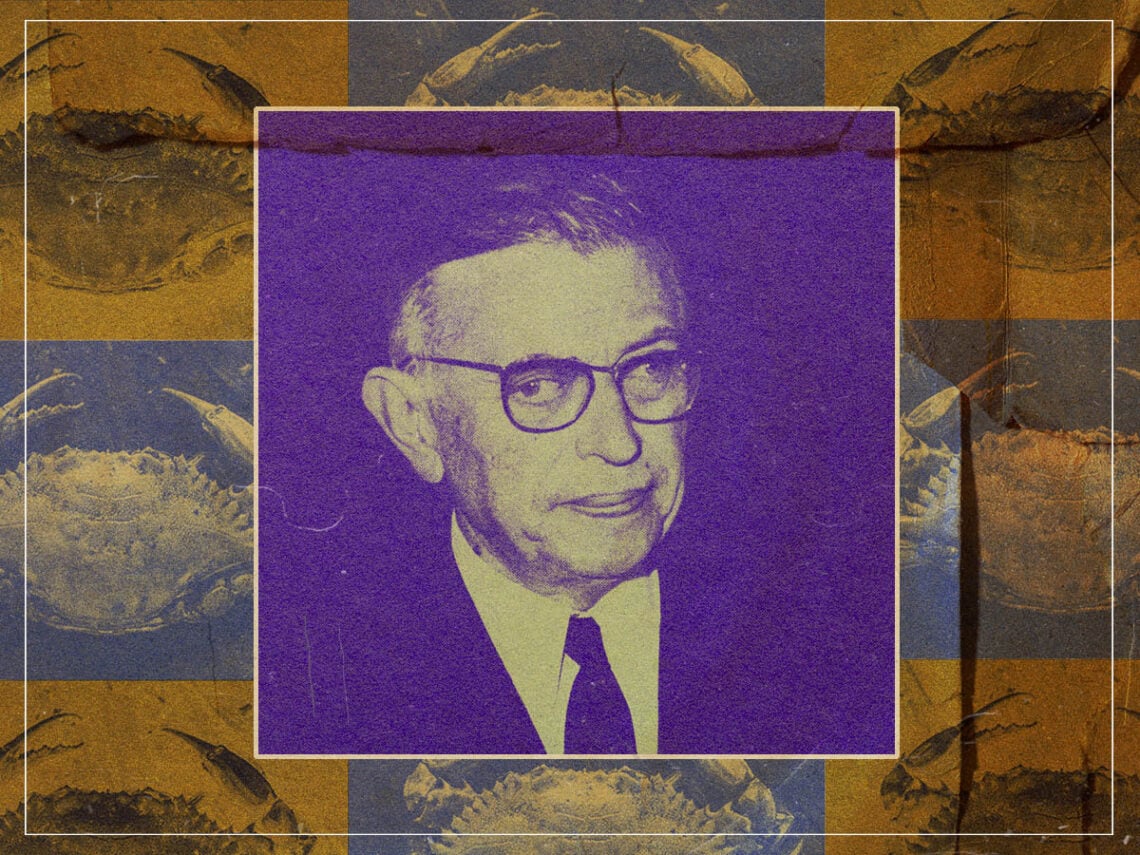
The music of existentialist freedom, according to Jean-Paul Sartre

Jazz and existentialism share a few fundamental links. While Jazz is music that embraces the notes that aren’t played, existentialism is understanding the world by embracing what you don’t understand. The second is that both are expressions of freedom.
Existentialism is all about denying self-imposed restrictions, and so is jazz, throwing convention to the wind and embracing the chaos of improvisation and exploration. Thus, it figures that Jean-Paul Sartre, arguably the most important figure of existentialist philosophy, was a fan of jazz music and wrote about it several times in his work.
The first was in his 1938 masterpiece La Nausée (or Nausea to us rosbifs). The novel follows Antoine Roquentin, a depressed academic (as if there’s any other kind) living in the fictional seaside town of ‘Bouville’ completing a biography of a historical figure. As the novel goes on, Roquentin keeps falling into the titular feeling, everything from his work to his feelings to even a humble seat on a tram, spiralling further and further into this primal feeling of disgust.
Like a true existentialist, though, the novel (spoilers for a novel published before the Second World War) has a happy ending. One that centres around Roquentin discovering a record. Namely a version of the jazz standard ‘Some of These Days’, old even at the time of writing. Roquentin spins this record on repeat, enraptured not so much by the music but by the preservation he sees in it. A songwriter in a New York skyscraper and a singer will someday be gone as people, but by the music, they are saved.
Sure, the language Sartre uses to characterise those people is as regrettable as you can imagine from a rich, white academic in the 1930s, but the logic is sound. Through art, we can express the anguish of existence and, by expressing it, remove it at least briefly. Transcending the anguish of reality is what existentialism is all about and Sartre didn’t just find that within art, he found it particularly in jazz music. This continued in an article he wrote for The Saturday Review in 1947 titled I Discovered Jazz in America.
In it, he draws a night at a New York club called Nick’s as less an evening of music and more a communal primal scream therapy. To Sartre, jazz is a distraction in Europe, played by elegant men in elegant shirts for couples to dance and weep to. In New York, it’s a reflection.
He writes, “It does not speak of love, it does not comfort. It is hurried. Like the people who take the subway or eat at the Automat.” It’s a harsh noise that brings an honest reaction from its audience.
Describing the physical response, Sartre elaborates: “You begin to shout; you have to shout; the orchestra has become an immense spinning top: if you stop, the top stops and falls over. You shout, they shriek, they whistle, they are possessed, you are possessed.”
Thus begins a line that stretches to rock and roll, then to punk and hardcore, then to the experimental techno of Aphex Twin and even the post-modern hip hop of Earl Sweatshirt.
Confronting art that distorts reality, that presents us with something we can’t understand, brings out the most human reactions of all, a phenomenon that Sartre himself spotted in jazz music nearly a century ago.
