


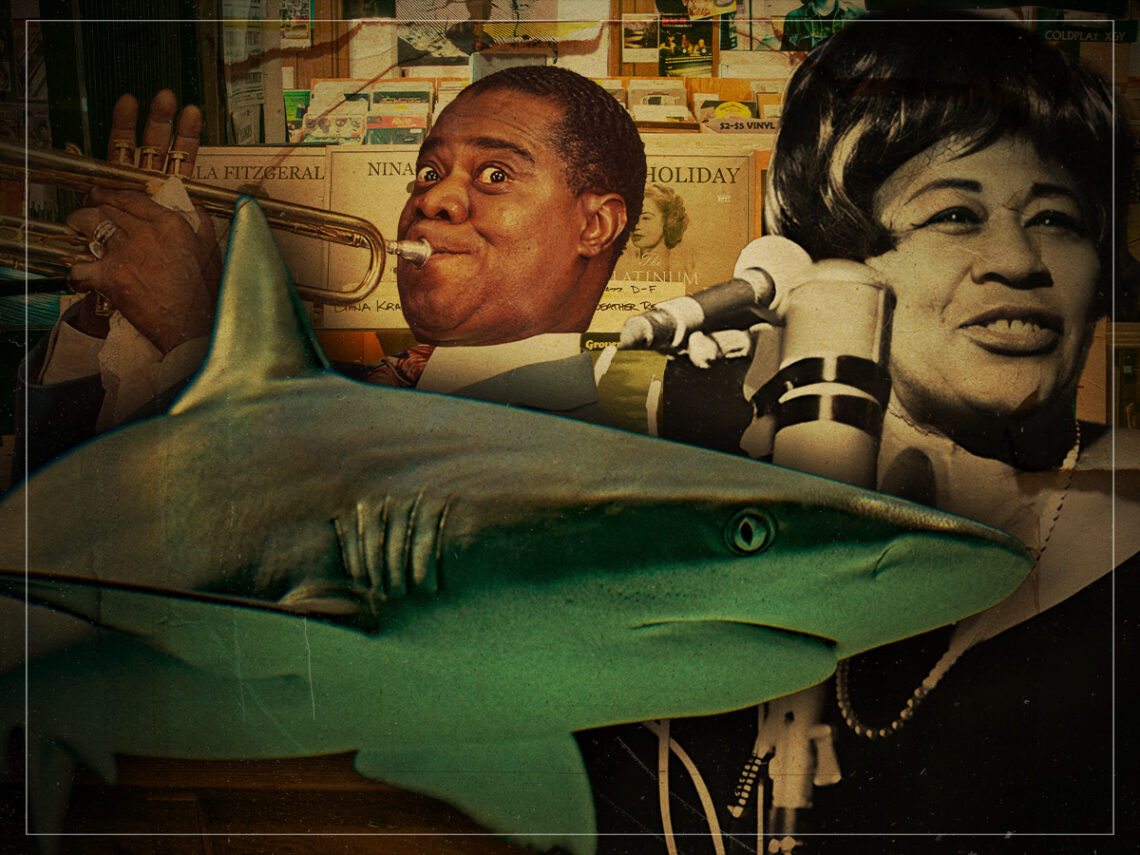
Jazz: the one genre sharks apparently adore

We often think of sharks as being dangerous predators, and for that reason, if we were to attach the most appropriate genre of music to these aquatic beasts, then surely they’d have to be fans of heavy metal, right?
A genre with plenty of bite and aggression feels fitting, and given the often menacing nature of metal, you wouldn’t exactly be surprised to find sharks vibing out to some Iron Maiden in their spare time.
Of course, the idea that sharks actively listen to music is pretty ludicrous in itself, and because beneath the surface of the ocean, sound travels in a different manner to how it does on land, it would be difficult to introduce any marine life to the works of Judas Priest, let alone imagine an ecosystem where they’re actively craving music streaming services.
Not all of us have the gift of Dr Doolittle, and we can’t fully ascertain what’s going on in the mind of any animal, but it’s considerably easier to determine what land mammals or avian species are thinking about, given how we have a much closer bond with them as humans. However, there have been studies conducted as to whether dogs like music, so logically, the next step would be to do the same with sharks?
Australian scientists at Sydney Macquarie University did exactly this, and while it isn’t heavy metal that was played to the creatures, it was determined that they’ve got something of a fondness for jazz, and they also figured out that they can’t quite wrap their heads around classical music.
Their findings, which were eventually published in the Animal Cognition journal, stated that the researchers trained a group of young sharks to respond to jazz music when they played it, in order to lure them in the direction of food. Allegedly, they associated the noises of wailing saxophones and trumpet solos with the sound of trawler engines, which was a sign that they were going to be given a meal, and therefore, when they heard jazz music, they would follow the direction that the music was coming from and expect food to be given to them.
However, when the variables were changed for their experiment, and classical music was played to the sharks, their reaction was one of confusion rather than gleeful responsiveness. The music was played from a different location to where the jazz was being played, with food being dropped off, but because the sharks were unable to differentiate between the two disparate genres, they would go to the same location where they were initially fed, expecting the same result.
It may not necessarily be that they appreciate jazz, but they were able to respond to it and identify its features more easily than they did with classical music. Project leader Catarina Vila Pouca stated in her findings that “sharks are generally underestimated when it comes to learning abilities—most people see them as mindless, instinctive animals,” adding, “they have really big brains and are obviously much smarter than we give them credit for.”
Plenty of folk might think of jazz as being an intimidating genre that is complex and should be avoided at all costs, but the reality is that it can be welcoming and provide wonderful rewards. In that same light, sharks are often portrayed as being these vicious and destructive creatures, when in reality, they can be equally as placid, and their love of jazz feels like a delightful pairing of two often misunderstood things.
