


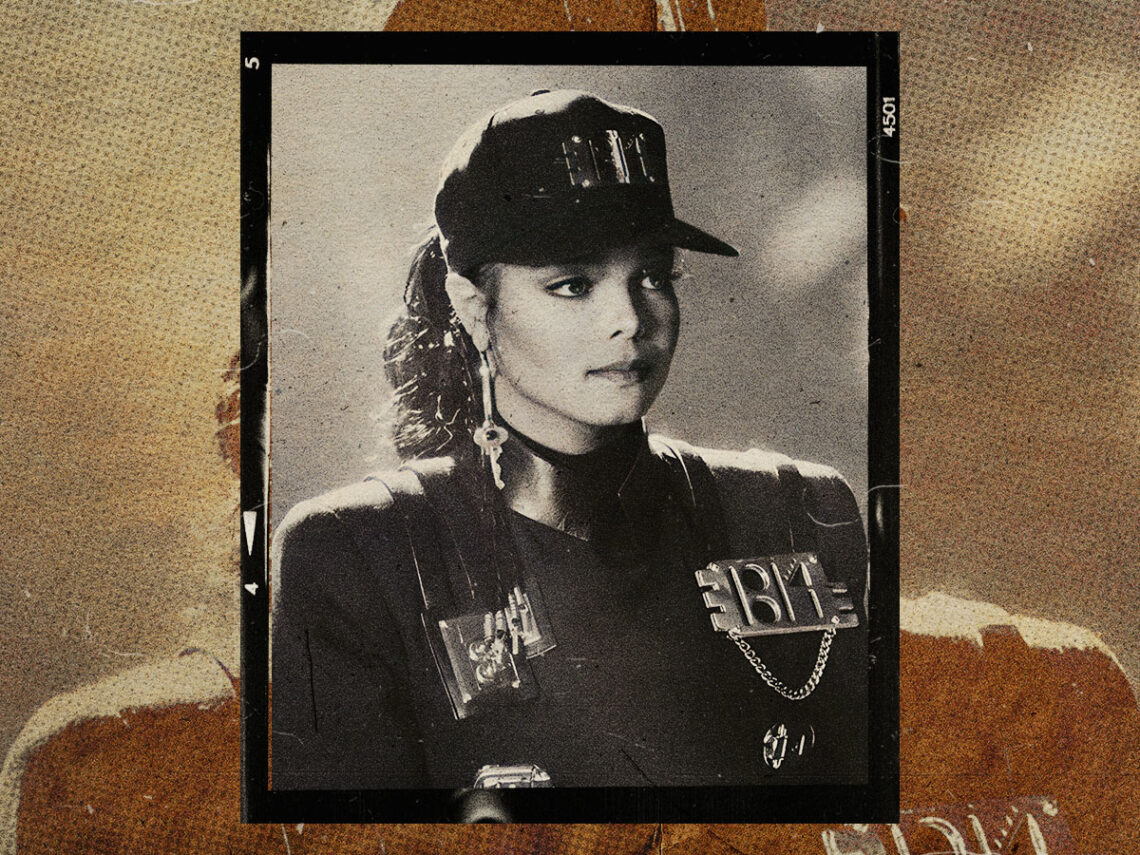
How Janet Jackson foreshadowed Sly Stone’s resurrection in hip-hop

There is no escaping the power of Sly and the Family Stone. When they were making music in their prime, they weren’t just flying, they were building bridges between genres that people had previously thought could never be connected. It was these highs that made his fall seem so tragic, as he took to the stage for one of his final gigs at Radio City Music Hall and delivered the tired set of a man who had lost faith in his music.
“He has taken to the stalest of rehashes of his greatest hits, ignoring his most recent work, submerging the communal energies of his band under a silly ego trip and rushing perfunctorily through the music he does play,” wrote a critic at the time, “It would be easy to dismiss Sly out of hand. Except that memories of what he used to be make one more sad than angry.”
While this review might seem somewhat out of pocket and overly harsh, it was true that Sly Stone had lost his edge as a performer towards the end of his career. Sly’s career wasn’t just successful; it was transformative. He managed to bridge the gap between funk and rock, broke societal norms with his band lineup, and made some of the most exciting music of all time.
When the band eventually split up and Sly Stone needed more money later on, he started trying to write again, but his songs simply didn’t have the same impact as some of his earlier classics. Little did he know, a small fortune was waiting for him in the world of hip-hop, as rappers would soon begin sampling his songs to perform over.
A number of huge artists have used his music, such as LL Cool J, A Tribe Called Quest and Dr Dre; however, before any of them realised how well the infectious basslines of Sly and The Family Stone could fit into hip-hop, Janet Jackson beat them to the mark. While she was working on her song ‘Rhythm Nation’, she was happy with the concept, but she and her songwriting partners, Jimmy Jam and Terry Lewis, were stuck on how the song should come together.
The track was going to revolve around a new nation that Jackson wanted to build, filled with people she had met in various clubs around the world. Therefore, the song needed to be inclusive but also champion the nightclub vibe that she was talking about. “I was reading about all these clubs, and I thought it would be great if we could create our own nation,” she said in an interview when discussing the track. “One that would have a positive message and that everyone would be free to join.”
The song finally started to come together when Jimmy Jam was sitting in a restaurant and heard an isolated version of Sly Stone’s bassline on ‘Thank You (Falettinme Be Mice Again)’. As soon as he heard the line in isolation, despite having listened to the track a lot prior to that instance, Jam knew that it would work perfectly in Janet Jackson’s ‘Rhythm Nation’.
“I was actually at a restaurant, I might have been with Janet, I can’t remember who I was eating with. But I remember they were playing music in the background, sort of ambiance,” he recalled, “And I remember all of a sudden just hearing the guitar lick on the break of ‘Thank You’, which is ‘da jing da jing jink’. I heard that, and I’ve heard that a million times, but it was the first time I heard it kind of out of context where I wasn’t really listening and all of a sudden that part just grabbed my ear.”
He continued: “I immediately said, ‘I’m going back to the studio because I’m going to loop that part and make a song out of it’. I had no clue that it was going to be ‘Rhythm Nation’ or anything like that. I just knew that that track, that was fine. That that was going to be just beyond – that was the spark of the idea.”
Jackson was one of the first people to loop one of Sly Stone’s songs and sample it in her own work. It marked the beginning of a new chapter for Sly Stone, one that moved away from writing and instead involved other people using his work to help define an evolving sound. Even when he wasn’t making music, he was influencing it.
