


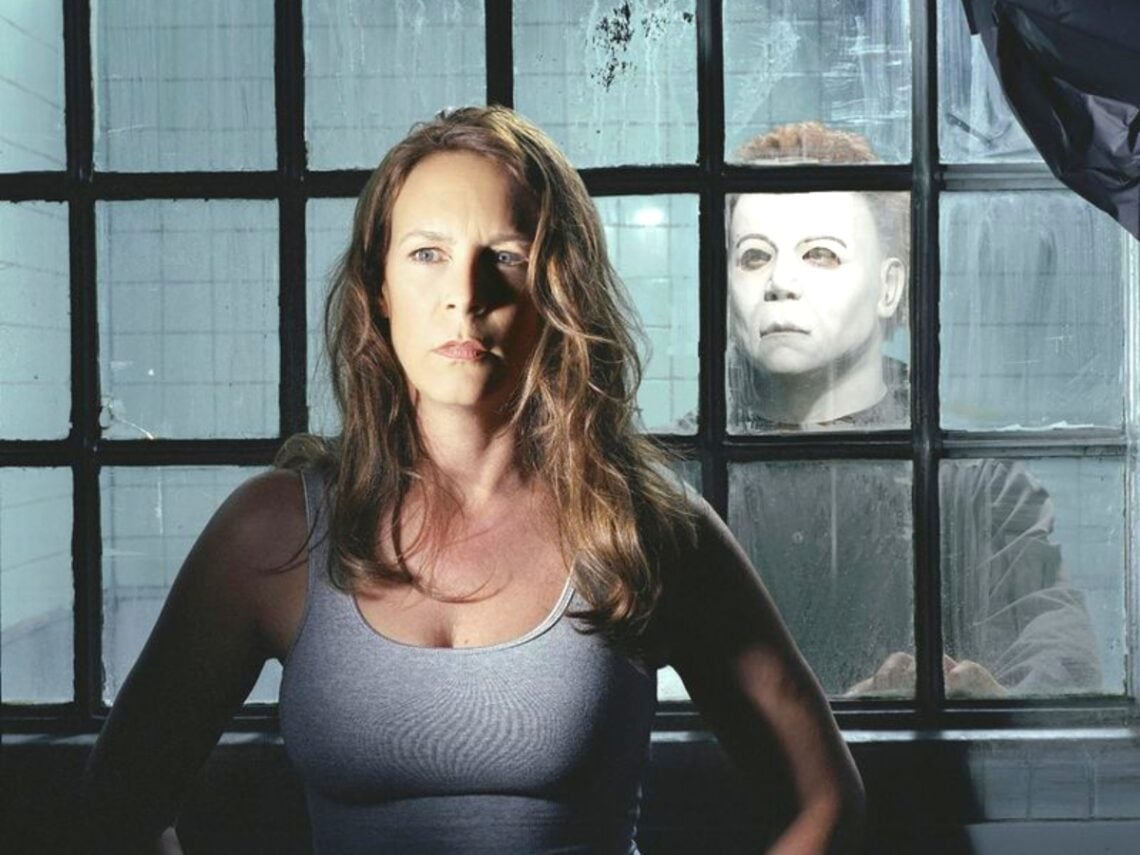
Jamie Lee Curtis explains how the ‘Halloween’ reboot changed her life

When John Carpenter’s definitive slasher movie Halloween opened in theatres in 1978, the horror genre changed forever with a newfound execution of codes. The film, narrating a killer called Michael Myers who stalks babysitter Laurie Strode, played by Jamie Lee Curtis, spawned one of horror’s biggest franchises. After a 16-year wait, the series was then rebooted by director David Gordon Green in 2018, with Curtis reprising her role in a new timeline that played out in a trilogy.
The Halloween franchise previously rebooted its story for Halloween H20: 20 Years Later in 1998, forgetting the events of the third film and onwards and situating its plot as a direct follow-up to 1981’s Halloween II. Green’s 2018 vision then scrapped this timeline, placing Laurie Strode against another character arc, a story tactic also seen in Don Mancini’s Child Play franchise, another iconic slasher horror series. These recons involve changing the significant plot element that Laurie and Michael Myers are siblings and the killer’s physicality as an actual human or a supernatural entity.
Curtis’ performance as Laurie Strode is one of horror’s most treasured, serving as the ultimate ‘Final Girl‘. In the 2018 reboot, the character prepares to face Michael Myers, who isn’t her brother in this take, in a showdown on Halloween night, 40 years after she survived his killing spree.
“It wasn’t even a thought in my head to do another Halloween movie. I didn’t want to, but then I got a call from Jake Gyllenhaal, my godson, who I’ve known since he was a little boy,” Curtis shared with NME. “Jake had worked with David Gordon Green, and he said David wanted to speak to me. So I told him to pass my number along, and the phone rang again just a minute later.”
Despite the horror genre being accused of being stifled artistically by remakes and ‘pointless’ sequels that cling to the golden years and stories out of desperation, the actor feels this re-telling of the classic was different and innovative. “David had hidden an indie drama in the middle of a horror film,” Curtis says. “He made something intimate that was layered in bloody tissue and exploding heads. I read it in about an hour and called him back immediately: ‘OK, let’s go.'”
However, as expected, there was something nostalgic and familiar to the project for Curtis, who feels emotionally invested in horror’s favourite ‘Final Girl’ Laurie Strode. “I am a creature of habit. I am, at my core, loyal – and I’m loyal to Laurie. I will look back on my life and think that was a good quality,” she adds.
As a whole, 2018’s Halloween was a needed experience for the actor that blended this creature’s comfort of recognition and memory with something updated and progressive. Curtis expanded on the character’s arc and emotional well-being alongside thematic values of family, identity, trauma and recovery, elevating the thrilling slasher foundation with something human. She adds: “That film changed my entire life. At 64, I have an entire career. Now I’m a producer. I’m a writer, I’m a director, I’m an active boss, I’m a creative partner. I can collaborate with artists in a way that I’ve always dreamed of. I never expected to be making the movies that I’m making now.”
Although the poor ending of Halloween Ends soured the promising trilogy, the first in the trio is a brilliant example of genre filmmaking regarding tension, artistry and engagement.
