


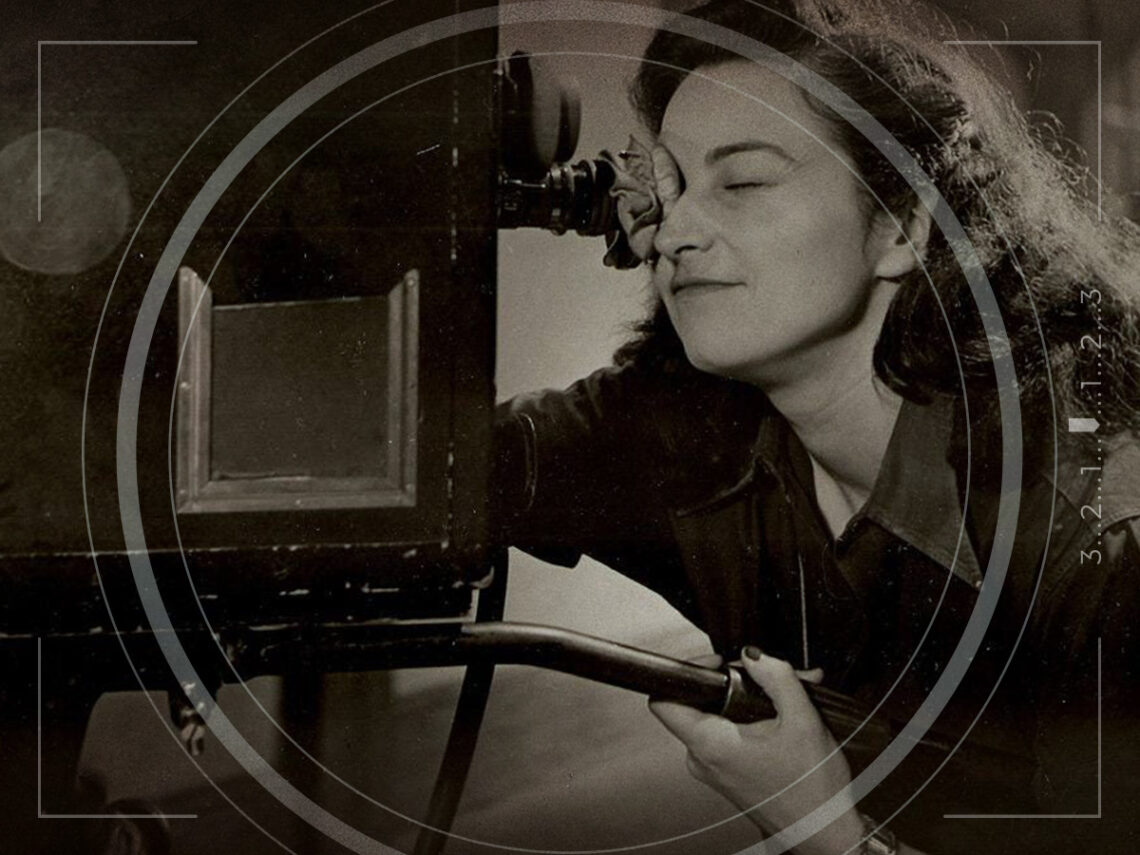
Jacqueline Audry: France’s first commercial female filmmaker

There has always been a lack of female filmmakers in the industry, and not because women simply aren’t interested in cinema. There is nothing about cinema that makes it more of a male art rather than a female one – women have just been routinely excluded from it. From sexist men who believe that a woman couldn’t simply command a crew or operate a camera to abuses of power resulting in sexual harassment and abuse, there are many reasons for the stark divide between men and women in the directorial field.
While there are more female filmmakers now than ever before, there have been many times when there were very few women working as directors, if at all. For example, in 1930s America, just three women – Dorothy Arzner, Wanda Tuchock, and Dorothy Davenport – directed films, and in France, the statistics were also slim. A small handful of female directors, like Germaine Dulac, Solange Térac, and Andrée Feix, worked within the film industry during the early years of the 20th century, but no female filmmakers were able to make as many movies as their male counterparts.
The few women who did work during this era of cinema have largely been overshadowed, like Jacqueline Audry, one of the only French female filmmakers to find success during the 1940s and 1950s. Born in 1908, Audry made various movies that found commercial popularity, although it took her a while to get to this point due to the fact that Nazi-occupied France wasn’t exactly the most thriving of cinematic landscapes, especially for women.
However, she was keen to be a filmmaker, and after working with the likes of Max Ophüls, she worked her way up to a point of being able to make feature films, beginning with 1946’s Les Malheurs de Sophie. Audry hoped this would be her ticket to success, but instead, she was immediately greeted with censorship. This would become a common trend in Audry’s work, which was bold and female-centric, although she used a traditionally cinematic approach. The filmmaker simply wanted to tell vital stories about women, and while Audry’s movies resonated with a lot of viewers, they also caused controversy for their sometimes taboo thematic explorations.
You could certainly call some of her movies proto-feminist, and in the case of Olivia, an adaptation of the queer novel of the same name by Dorothy Strachey, Audry also became one of the first female filmmakers to make a feature film about lesbianism. In fact, it appears that Olivia, released in 1951, was the second-ever female-directed lesbian-centric film after Mädchen in Uniform from 1931, a film that likely inspired Strachey’s story with its similar exploration of a young girl at boarding school falling for a female teacher. Olivia, which earned Edwige Feuillère a Bafta nomination, is an underrated gem that remains an important entry into the LGBTQ+ cinematic canon, yet it was censored for quite some time, simply for containing sapphic themes.
Audry also made 1954’s No Exit, a staging of Jean-Paul Sartre’s existentialist play, which received strong critical reviews, as well as 1949’s Gigi, which was the first adaptation of the 1944 novella by Colette. Audry was interested in spotlighting interesting female characters, something she continued to do with movies like Girl on the Road, Minne, and Mitsou, with the latter two also stemming from Colette stories.
While she faced censorship and resistance from those who were uncomfortable with a woman making films at a time when most women simply weren’t doing that, Audry left an indelible mark on French cinema, even if her legacy today is widely forgotten.
