


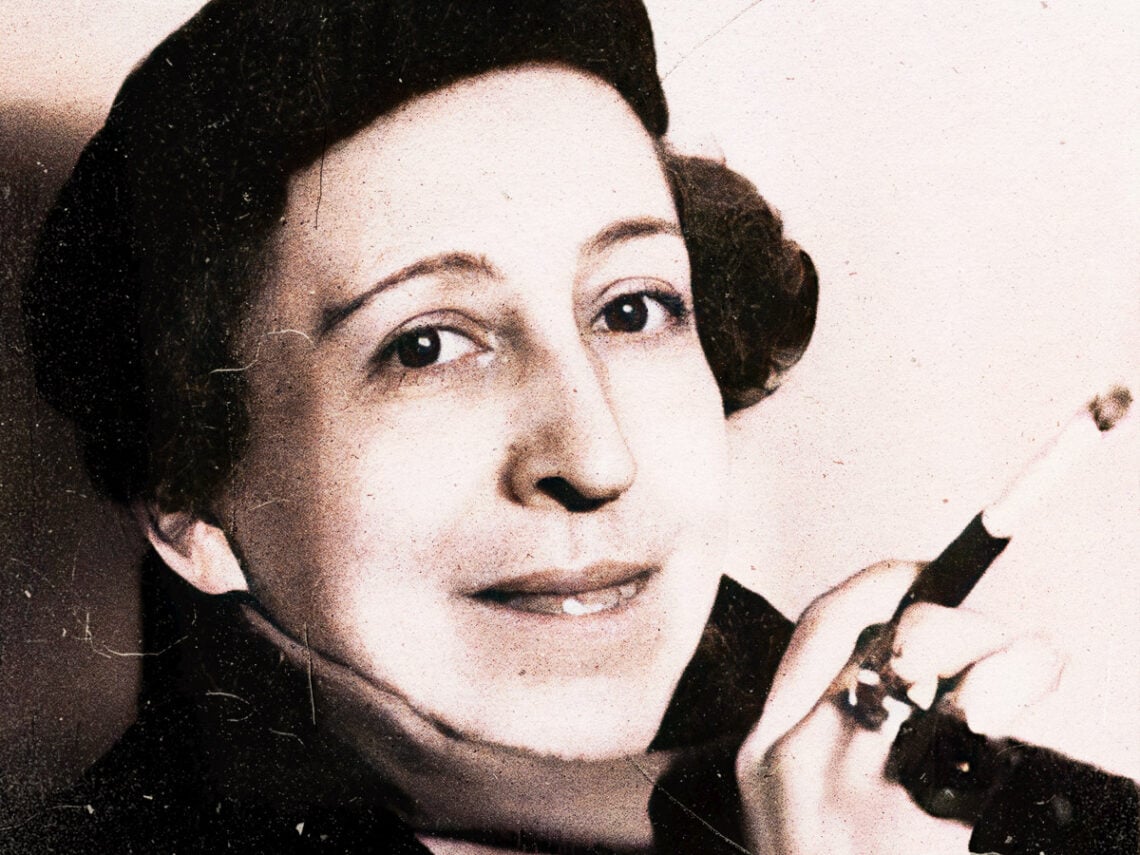
Germaine Dulac: a surrealist and feminist film pioneer

Women have been consistently written out of film history – merely a footnote at the bottom of a page of male creatives. Although more and more female filmmakers have risen to prominence in the last few decades, the industry has taken its time in recognising the importance of women in cinema. It wasn’t until 2010 that a woman (Kathryn Bigelow) would be crowned ‘Best Director’ at the Academy Awards, despite the institution’s inception in 1929.
Moreover, when we learn about the original pioneers of cinema from the late 1800s and early 1900s, male names such as Georges Méliès and the Lumiere Brothers crop up far more often than Alice Guy-Blaché, despite the fact she made what is widely considered the world’s first narrative film – La Fée aux Choux. Not only was Guy-Blaché the first female director, but she was also one of the first filmmakers to experiment with colour tinting and special effects, even making what is assumed to be the first film with an all-Black cast.
Evidently, women are vital components in the cinematic wheel, which would be unable to turn if not for their innovative contributions. Not long after Guy-Blaché made waves in the industry with her proto-feminist films and ideas, Germaine Dulac, born in 1882, began making movies of her own. Beginning her career as a journalist, Dulac wrote for early feminist publications like La Française and La Fronde.
Around the mid-1910s, Dulac started making short films, and within a few years, she was certain of her place in the cinematic world, advocating for the importance of film authorship and cinema as its own art form. In 1922, she made The Smiling Madame Beudet, an early feminist exploration of gender and marriage, with Germaine Dermoz playing the eponymous character, who finds herself – a smart, headstrong woman – trapped in a futile marriage with an irritating man. The film depicts Madame Beudet reckoning with her husband’s crude and unfunny behaviour, which includes pretending to kill himself with a gun. Thus, Beudet attempts to enact her revenge by placing a real bullet inside the weapon, hoping it’ll kill her husband the next time he tries to perform the joke.
For a film made in 1922, the subject matter was revolutionary, although many contemporary audiences undoubtedly saw the film as nothing more than a joke, revelling in the ridiculous idea that women could plot such an evil plan. Yet, Dulac’s film is laced with political meaning, commenting on men’s sublimation of women in the home and social spheres, leaving many women feeling trapped and hopeless. Debuting around the time of first-wave feminism, Dulac’s film reflects the growing attitudes surrounding women’s rights to autonomy and independence.
A few years later, she released The Seashell and the Clergyman, which is arguably the first surrealist film. While Luis Buñuel and Salvador Dalí’s Un Chien Andalou is often considered the first piece of surrealist cinema, The Seashell and the Clergyman predates the short film by a year. However, Dulac is repeatedly overlooked, despite the groundbreaking nature of the film.
Visually, the film is beautiful, using editing techniques to make images melt and warp seamlessly. Its influence can be seen in films such as Maya Deren’s Meshes of the Afternoon and, subsequently, the work of modern surrealists like David Lynch. Although The Seashell and the Clergyman is an abstract, hard-to-decipher film, Dulac takes the viewer on a mesmerising journey, helping to kickstart cinematic forrays into aesthetically unknown and dreamlike territory.
While Dulac made several other films, The Smiling Madame Beudet and The Seashell and the Clergyman remain her greatest feats, cementing her as one of the most important filmmakers from the early days of cinema. Dulac, a queer woman, questioned gender roles and societal expectations through her work, making her one of the progenitors of feminist cinema. Not only that, her contributions to the surrealist genre were pioneering, and she deserves to be recognised for her efforts.
When Dulac died in 1942, Charles Ford identified how hard it was for her obituary to be printed by French Press. He wrote in 1968, “Bothered by Dulac’s non-conformist ideas, disturbed by her impure origins, the censors had refused the article which, only after vigorous protest by the editor-in-chief of the magazine, appeared three weeks late. Even dead, Germaine Dulac still seemed dangerous…”
Discover the work of Germaine Dulac below.
