


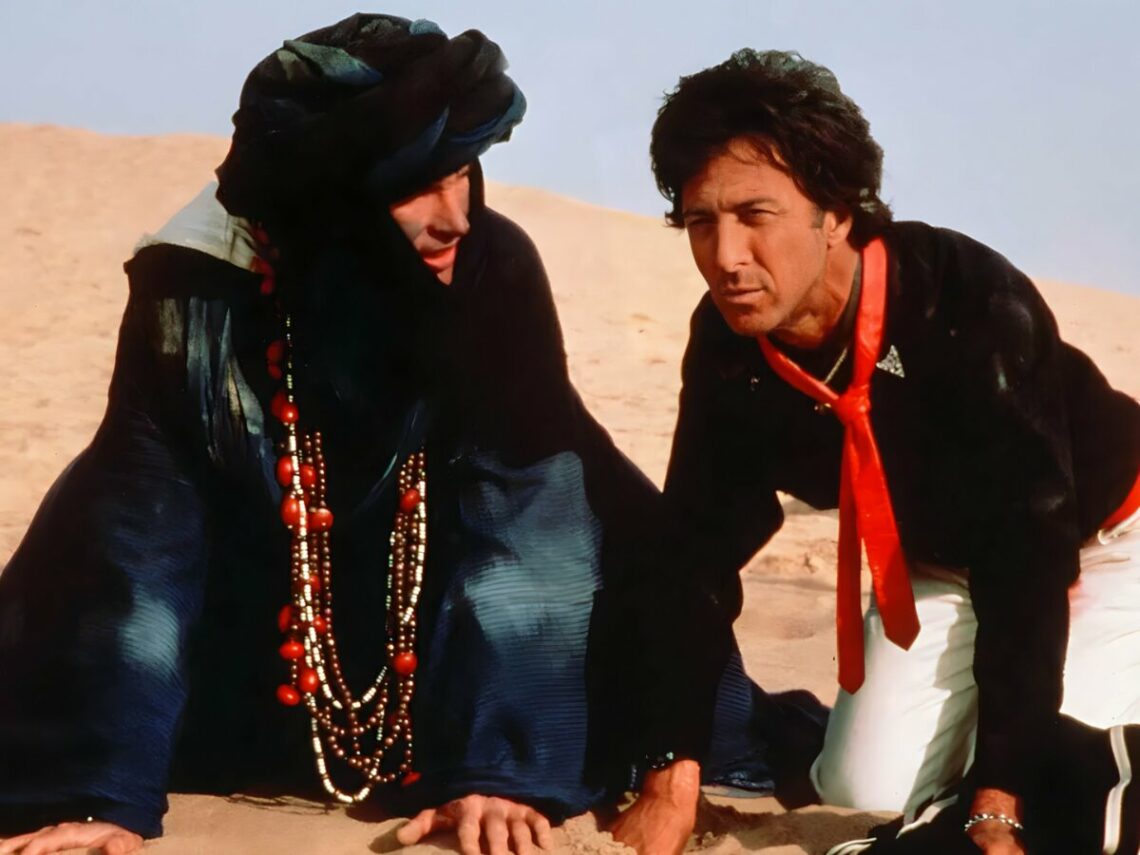
‘Ishtar’: The comedy flop adored by Quentin Tarantino and Martin Scorsese

We all have guilty pleasure movies – the films we’d rather enjoy solitarily – and the world’s premiere directors are just the same. While Quentin Tarantino and Martin Scorsese have rarely been afraid to share the movies they have loved over their decades-long careers, there’s a good reason that Ishtar rarely features on their publicised lists of favourite movies.
Ishtar is a 1987 American comedy film directed by Elaine May, starring Warren Beatty (one of Tarantino’s oft-cited heroes) and Dustin Hoffman. Despite its pre-release hype and the notable cast, the movie is often remembered as a critical and commercial failure, derided by those who saw it as a fleshless skeleton of what a movie should be.
Set in the Middle East, the film follows the misadventures of two untalented and hapless singer-songwriters, played by Beatty and Hoffman, who dream of Simon & Garfunkel levels of success but find themselves embroiled in a series of comic mishaps, espionage, and political intrigue. While the premise had potential, the movie failed to deliver on its comedic promise and was criticised for its disjointed plot and humour that fell flat with both critics and audiences.
The movie is cited as one of the prime examples of a Hollywood flop, given that it struggled to recoup its substantial budget of $51million and became a symbol of overhyped productions that fail to live up to expectations. But numbers don’t always tell the full story, and box office numbers and critical stars attributed don’t always confirm the history of a project.
Despite its initial failure, the film has gained a cult following in recent years, with some viewers appreciating its quirky charm and offbeat humour. Nevertheless, Ishtar remains a polarizing entry in the world of comedy cinema, unless, of course, you are speaking to Quentin Tarantino or Martin Scorsese, who have both shown their admiration for the movie.
Hoffman, too, shared his appreciation for the film, sharing: “I love the movie,” during an interview with Jeremy Smith in 2009. During the conversation, Smith regularly notes a host of directors and musicians who love the movie, including Tarantino, Edgar Wright, Paul Simon and Sting. In fact, Tarantino values it so much that he willingly sang the song ‘Hot Fudge Love’ in front of a paying audience before a private screening of the movie.
But the biggest acclaim comes from Scorsese, who, in a long piece about the movie, said: “In 1987, a lot of people claimed that Ishtar wasn’t funny—it was as if they couldn’t allow themselves to laugh. I can only speak for myself, but I think it’s hilarious. Beatty and Hoffman play a pair of New York songwriters. Their music is unspeakably awful, and the humour comes from the fact that they think they’re great; they’re bumbling and neurotic, but they think they’re cool and suave.”
The movie may have taken a lot of flack when it was first released, and it may have disappointed its critics and commercial benefactors, but film, unlike many other art forms, can weave its way back into the collective consciousness through a series of personal viewings and instinctual reactions. If there was a better example than Ishtar, we haven’t seen it.

Never Miss A Take
The Far Out Quentin Tarantino Newsletter
All the latest Quentin Tarantino content from the independent voice of culture.
Straight to your inbox.