


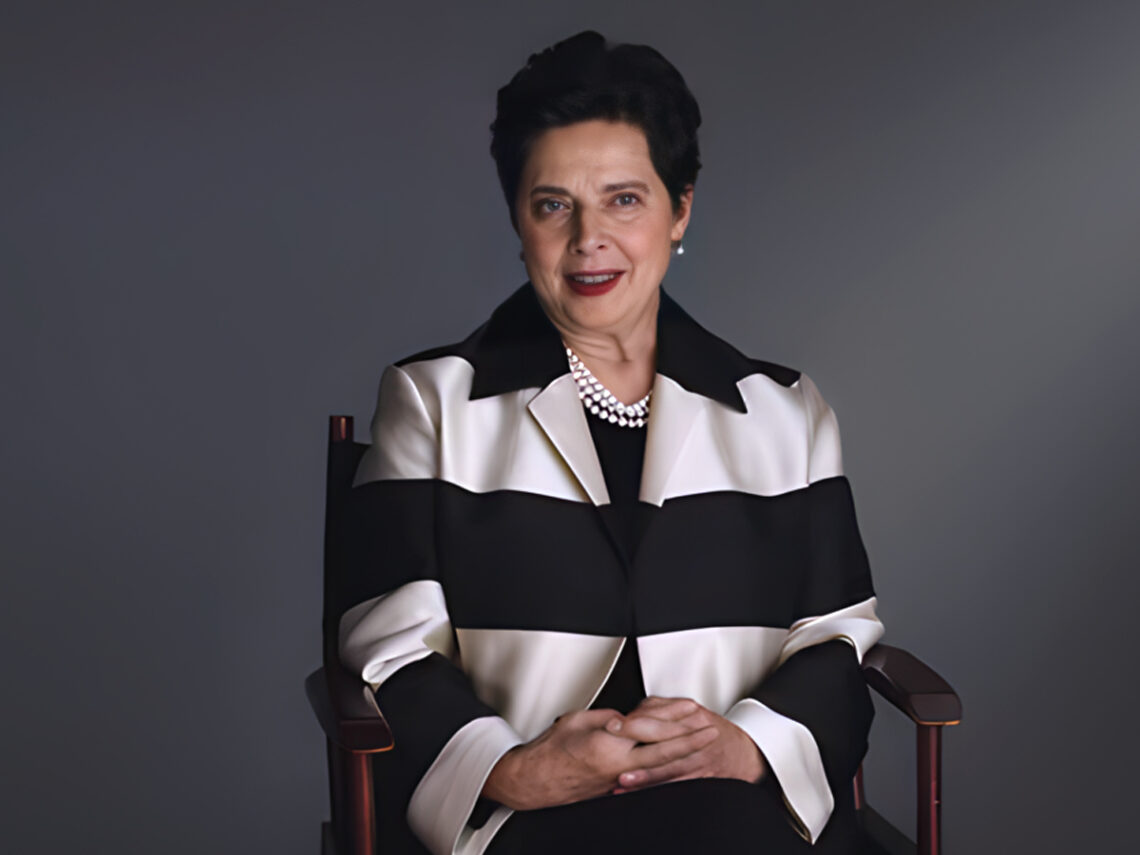
Isabella Rossellini responds to claims David Lynch exploited her

Isabella Rossellini has spoken about her experience of making Blue Velvet with David Lynch, refuting Roger Ebert’s claims that the director humiliated her.
Rossellini took on the role of Dorothy Vallens in the film, a singer who is subject to abuse by the terrifying Frank Booth, played by Dennis Hopper. Lynch’s frequent collaborators Kyle MacLachlan and Laura Dern also starred in the movie. Rossellini’s raw performance won her an Independent Spirit Award and remains one of her signature roles.
When it was first released in 1986, Blue Velvet received praise and criticism in equal measure. While some critics commended Lynch’s filmmaking, including the Academy, others struggled to look past the sexual violence at the centre of the film. One such critic was Roger Ebert.
In his one-star review of the film, the celebrated critic suggested that Lynch had humiliated Rossellini on-screen, noting how she was “degraded, slapped around, humiliated and undressed in front of the camera.” Ebert suggested that the director didn’t keep up his “side of the bargain” by putting her in an “important film” in return.
Now, Rossellini has responded to Ebert’s comments. During a conversation with IndieWire, she admitted that she doesn’t like reading reviews, but someone else had informed her of Ebert’s words. “I remember I was told that Roger Ebert said that [Lynch] exploited me,” she recalled, “and I was surprised, because I was an adult. I was 31 or 32. I chose to play the character.”
Rossellini remembered rehearsing the script with Lynch for an entire day, feeling “reassured” that they were on the same page about the character. She concluded that the film was one of Lynch’s best, declaring, “I thought he did a fantastic film. I love Blue Velvet.”
The situation prompts further questions about agency and exploitation within filmmaking. As Rossellini rightly notes, she was an adult who chose to take on the part. She would go on to afford the character great depth with her vulnerable performance, working with Lynch to do so.
Dorothy was certainly subjected to terrible abuse in the film, a theme that would become commonplace in Lynch’s work and would earn him more accusations of misogyny, but Rossellini was not her character.
Decades on from the film’s initial release and the debates that followed, Blue Velvet has become a cult classic and remains a staple in Lynch’s filmography.
Revisit the trailer for Blue Velvet below.

Never Miss A Scene
The Far Out Film Newsletter
All the latest film news from the independent voice of culture.
Straight to your inbox.