


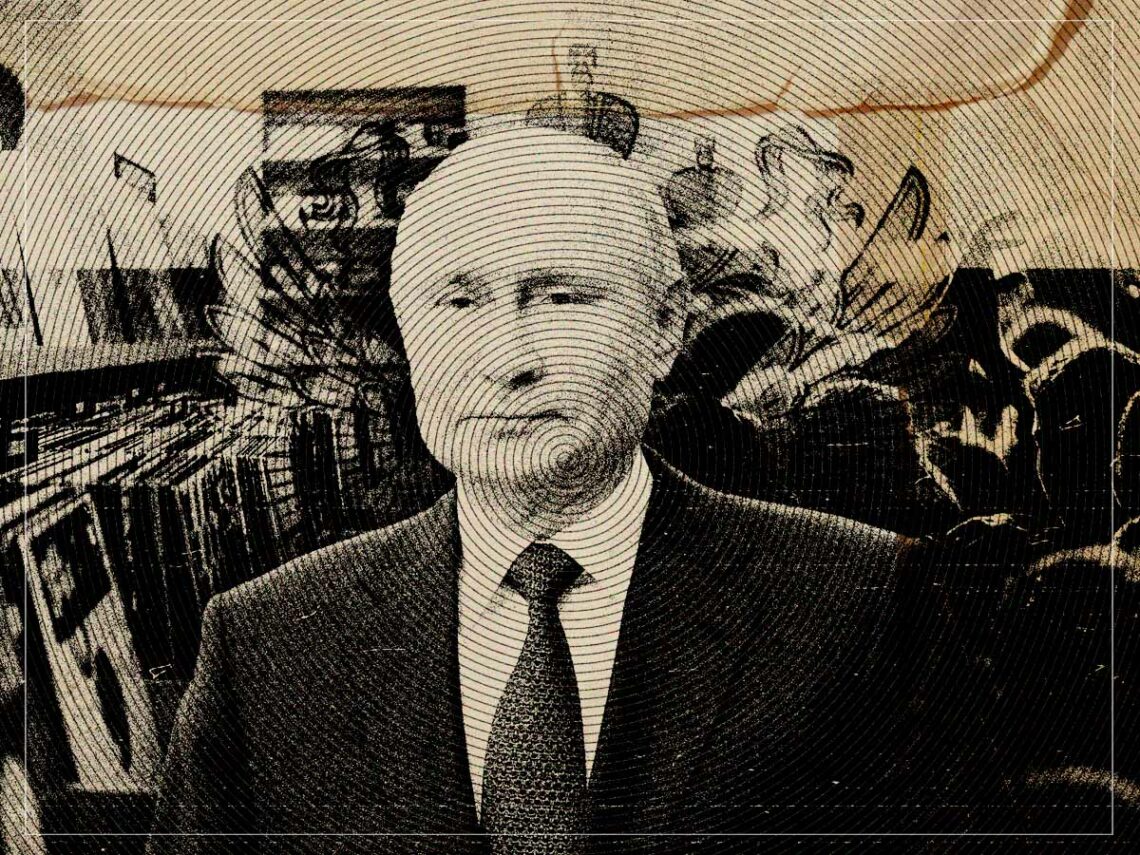
Is Western music currently prohibited in Russia?

While it may be stating the obvious, music is the soul of our everyday lives, from the most mundane instances when we don’t even realise it’s there to some of the most affirming moments all experienced through the medium of song. Without trying to steer off too far down the peace and love train, it also has the ability to unite people from all walks of life and give them some token, however small, of commonality – against the backdrop of certain countries like Russia, musically or otherwise, trying to tear us apart.
Although this is not the place for a groundbreaking analysis of the current geopolitical plagues, it is interesting to consider what effect music plays in consolidating the cultural image of a dictatorial landscape, as well as the history behind it. It goes without saying that politically, Russia has a longtime fraught relationship with the Western world, but how far does this extend into the sonic realm produced from our shores, and how does it impact the Russian population’s access to a global cultural worldview?
Of course, the history of the country banning Western music stretches back over an extensive period, formerly into the days of the USSR. Over the decades of the communist regime, rock music hailing from the Western world was banned from reaching Russian ears in order to comply with a socialist realist vision of strict ideological control. Naturally, citizens didn’t always stick to the rules, and over time, prohibited music began to be smuggled via ‘ribs’ recordings on gramophones.
However, this microcosm, at the antithesis to its desired effect, became the artistic muse for rockers the world over, not least the Beatles with 1968’s ‘Back in the USSR’ from the White Album. It was a landscape, although seemingly cut off from the rest of the world, that held all the same dramatic allure of the United States, making it the prime unsuspecting source of Macca and Co.’s next big rebellious rock anthem.
In this sense, breaking into the heights of Russia was a badge of honour among Western artists up until the collapse of the Soviet Union in 1991. For around the next 30 years, this pride was diminished as the musical backdrop became much more of a cultural free rein, but as the cogs of war began to turn again, some of the old musical prohibitions also began to creep back in.
What effect did Russia’s invasion of Ukraine have?
As a result of Russia’s invasion of Ukraine starting in 2022, the country’s hostility towards any aspect of the Western world has returned to its former level of vengeance. Without straying too far into the obvious political ramifications of this at a population level, the cultural crackdowns also came into force not too far behind.
Although not impressed upon the whole breadth of Russia, the Republic of Chechnya enforced a ban at the start of 2024 on songs with beats either too fast or too slow in a bid to return to its own cultural roots and rat out the influence of Western music. Currently, if your track doesn’t fall within the parameters of 80 to 116 beats per minute – sorry, you’re not cutting it in parts of Russia.
This obviously speaks to much more sinister elements of cultural control within the Russian population, but it also highlights the need for music as a force for good more than ever. Across borders, there may be a lot setting out to divide people, but surely nothing extends the olive branch better than the power of a great tune.
