


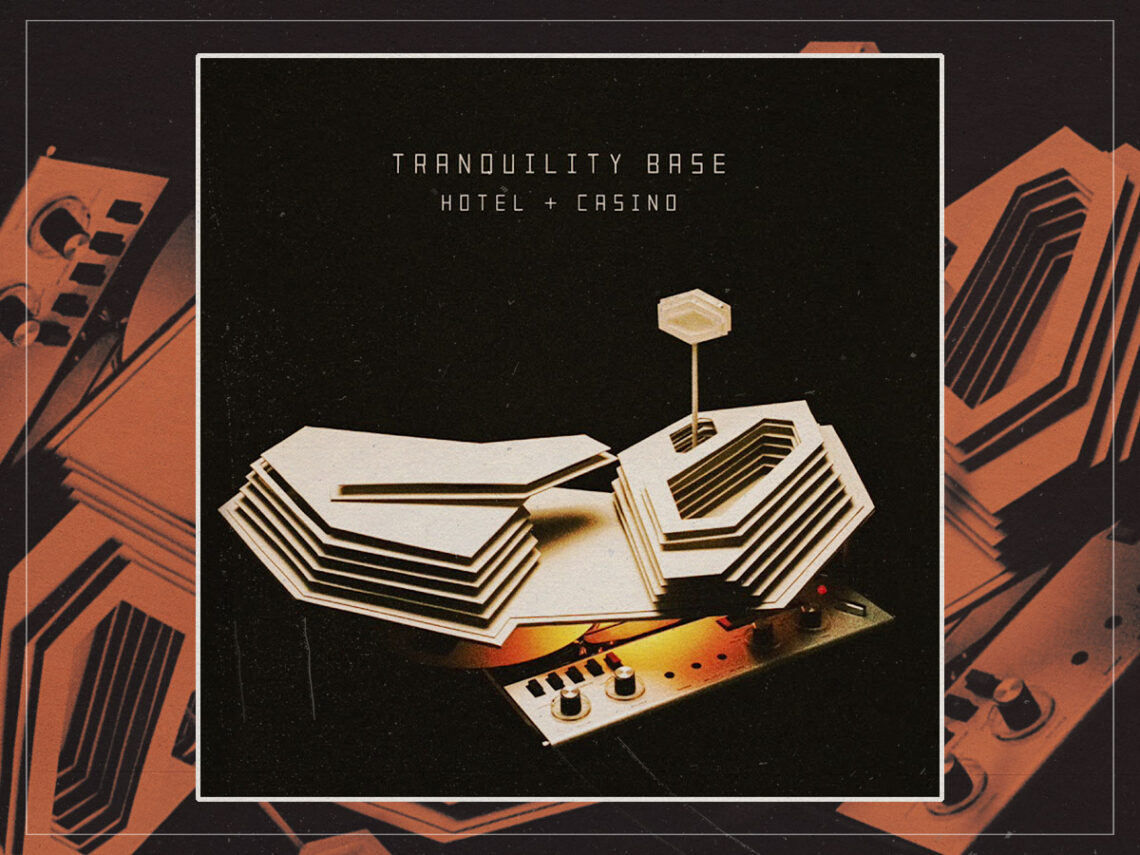
Ambituous, extensive, and overwhelmingly conceptual: Is ‘Tranquility Base Hotel and Casino’ a prog-rock album?

Technically, the criterion for being prog rock is as follows: complex and extensive songs that draw from various styles to experiment with sounds and structures, incorporing various instruments like the piano, keyboards, alongside the usual rock ‘n’ roll suspects (guitars, drums) with a tendency for leaning into the more conceptual side of music storytelling. Sounds an awful lot like Arctic Monkeys‘ Tranquility Base Hotel and Casino, right? So why is it rarely attached to the label?
When we think of prog-rock, it’s usually followed by a list of the same familiar names, like Genesis, Rush, Jethro Tull, Pink Floyd…all firmly ticking the boxes for what actually constitutes as such. Aside from the elements already listed, the idea of prog rock can often take on a relatively fluid meaning itself, especially when going into the conceptual side of things.
For instance, Pink Floyd might boast all of these bare essentials, but it’s arguably their abstract atmospheres that made them adhere to the label the most, pushing boundaries through thematic exploration rather than the structures and sounds that also pushed them into this space. But Tranquility Base also seems to firmly sit in this camp, with structures that veer off in different directions, overt experimentation with expectation and other musical cues, and abstract themes that seem to pinball in all sorts of directions with the type of disassociated fervour typically associated with prog rock greats.
While many of the tracks prove as such, it’s hard to ignore this particularly with songs like ‘Batphone’, ‘One Point Perspective’, ‘Science Fiction’ and ‘Golden Trunks’, which each oscillate between the dreary piano ballads and eccentric musings of a lone figure spinning a scuffed globe in the comfort of his lonely smoke-filled room, two fingers of whiskey to his side as he spews long-lost thoughts like trying to recollect a planet he’s not sure ever existed at all.
Peering at the surrealist nature of Alex Turner’s lyrical oddities through a prog rock lens, he also blends abstraction with stark realism like many of the genre’s heroes, like “Have I told you all about the time that I got sucked into a black hole through a handheld device?” and the more spiritual-meets-real-existentialism leaning musings like, “Do you remember where it all went wrong? Technological advances really bloody get me in thе mood.”

On top of all of this, Turner leaned heavily into his late-1960s and 1970s influences while crafting the record, like the maestro of space himself, David Bowie, and many of the era’s defining scientific cinematic wonders, like 2001: A Space Odyssey. Unlike the band’s major breakthrough record AM, Tranquility also departed with a hard pivot into what others have described as “lounge”, taking the sharp stoicism of many of his favourites like Serge Gainsbourg and Leonard Cohen and mixing them with prog rock’s satirical conceptualism to spin something deeply politically embedded but also mind-spinningly aloof.
Set in a hotel on the moon, the record takes shape from the perspective of different narrators, each as unreliable as the last, navigating many of our real-world political debacles with an otherworldly edge, almost like Turner opted for a more nuanced and intellectual word-salad to point out the absurdity of the state of the world by looking at it from somewhere else entirely. Somewhere detached, from a place far away from Earth, where things simultaneously become more blurry but sharper to observe and criticise.
Discussing the freedom he took while making the record compared to others, the frontman once said he “became less concerned on this album compartmentalising every idea to the point where each song became this episode that starts and ends in three minutes.” Thus, he allowed the prog rock elements to roam freely without constriction, letting the concept thrive by being as extensive, far-reaching, and exhaustive as it wanted, like its own entity breaking free from the shackles of musical expectation. To the detriment of the Monkeys’ reputation, some might argue.
But does all of that make Tranquility Base a prog rock record? In short, yes and no. There are undeniable parts there that place it firmly in that category, but that’s not all that it is. For instance, while strongly linked to ’70s pop culture (also the golden era of prog rock), the record also reaches into different eras, like the 1960s, 1980s, and perhaps most importantly, today. All of its notes work because they’re deeply relevant to modern culture, pulling apart those seminal ’70s checkboxes with fresh eyes that feel distant yet overwhelmingly close, using prog rock as a springboard to explore different facets, like lounge, traditional rock ‘n’ roll, and even jazz.
While a highly ambitious affair that may share many similarities with records like Dark Side of the Moon, Tranquility doesn’t lump itself anywhere specific, pushing itself beyond any singular category with confident defiance. While many say that the record’s equal parts self-assuredness and overt decisiveness was its downfall, this was in fact what made it one of the band’s most innovative and musically dense, signalling a new pillar for modern indie-rock that can’t be placed anywhere, or can appear everywhere all at once.
