

Prince’s favourite song of all time
Read More


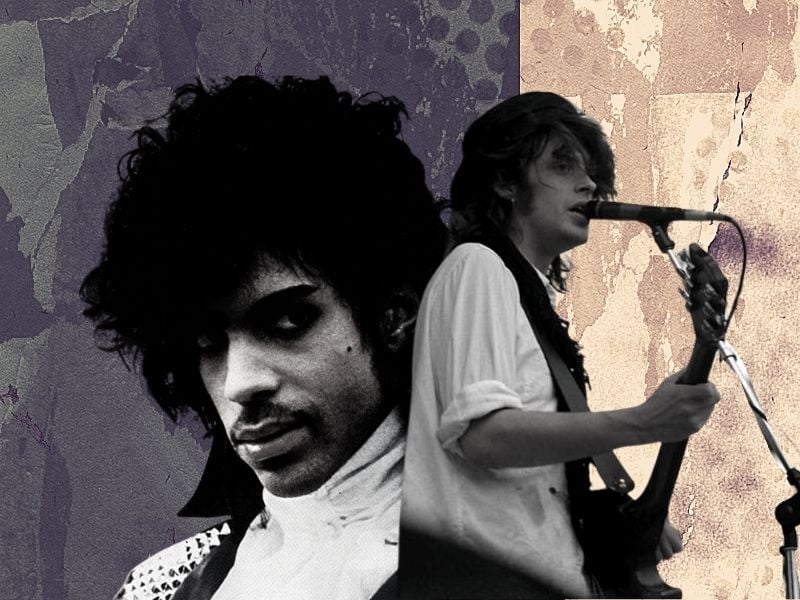
So the story goes, The Waterboys’ soaring classic ‘The Whole of the Moon’ was written in honour of Prince. The reason he was heralded as the impetus behind the rafter rattling epic was because of the transcendent way that he approached his art—in a sense, where other artists might be content to invent the musical wheel, after packing away their tools and cracking open a cider, Prince would gleefully sail by them on a sonic bicycle. The little Purple One looked at the world differently and he applied these rose-tinted eyes to his work.
As a result, he bestrode the 1980s like a little colossus inspiring his fellow musicians not to be merely happy with the innovative sounds of the era, but to see how they could transfigure them into something special. With the 1985 anthem, ‘The Whole of the Moon’, The Waterboys did just that and landed an emotive hit that even the most contrarian chorus-hater could not begrudge as a rousing classic. Surely?
The theory that the song was about Prince also stemmed from the message on the record’s label which Waterboys songwriter Mike Scott penned reading: “For Prince, U saw the whole of the moon”, utilising the guitar God’s penchant for abbreviating words down to the Nokia days of text talk (which incidentally Prince used when writing his fan mail to Joni Mitchell). However, the notion that it was merely Prince that pushed Scott to see beyond the crescent has been dismissed.
As Scott later clarified in a Waterboys FAQ forum: “The Whole of the Moon is about someone like CS Lewis, who seemed to see so much and explore issues much more deeply than most people, or it could be about a Jimi Hendrix-type person who comes “like a comet, blazing your trail” and is gone too soon, but it’s not specifically about anyone.” In other interviews, he has similarly described how Prince was just one of the rare pantheon of artists who have looked at creativity through expanded horizons.
Scott channelled these rarefied trailblazers into his own epic which remains one of the finest songs of the ‘80s, if not all time. With trumpet sections inspired by the flugelhorns of ‘Penny Lane’ which Scott described poetically as sounding “like sunlight bursting through clouds,” the track is an elegy to the exultant power of art and the new eyes it can inspire you to view the world with.
Similar to The Beatles-esque brass, Prince also inspires the musicology in a more direct sense too. The synth backbone to the song was lifted from the style used by Prince in ‘1999’, while a four-note topline from his classic ‘Paisley Park’ track was transposed onto the top of it to get the song its billowing feel where elements rush in like a musical mosh pit just to be part of the swelling euphoria.
Thus, the song was inspired by Prince and borrowed techniques from him, but it wasn’t specifically about him in the spiritual sense. As Scott told Number One upon release, “When we wrote and recorded the song, we wanted it to sound just like Prince. His records are really positive and that’s something I like very much.” But there was plenty more wonder in the welter, which is why it’s a rainbow and not just purple that The Waterboys joyously wail about.
