


Is the internet turning ‘proper’ music into jingles?

To understand just how warped we are, as an internet and television-fed generation, allow me to give you a somewhat flippant, yet very true and very worrying situational example.
Let’s just say that tomorrow I take a tumble, lose my phone and fall horribly injured, without anyone to call. Once I finally receive help and crucially a phone that gives me the opportunity to call a loved one, I genuinely wouldn’t know anybody’s phone number by heart. Buried under the myriad of contact points, my brain has simply removed all capacity to remember all numbers, but one.
You see, were something to happen to me, I would end up calling Hastings Insurance in a blind panic, because since childhood I’ve always been able to remember their number: 0800 00 1066.
Those reading this article, who grew up in millennial Britain will know exactly why I know those digits. It was the number that rang out in the country’s most infectious advert jingle that no matter how much or how little television you may have been watching, was burnt into our memory. In fact, I almost guarantee that on the first read of that paragraph, you read the number once out of curiosity, before immediately repeating it in the famed melody.
You see, jingles have traditionally been a surefire way to infect our brains with some sort of commercial intent. Need insurance? Call Hastings Direct. Chipped your windscreen? Autoglass repair (I’ll leave you to finish that line). Now, as a music journalist, it gives me a deep sense of sadness to tell you that in 2025, jingles have been replaced by actual music.
Now, let’s first look at the global landscape of consumerism. The internet has outright levelled the playing fields and no longer is one singular product being sold to one nation. In creating that landscape, jingles driven by colloquialisms are no longer in vogue, because they would quite simply alienate the remaining members of a global market and damage the brand in question.
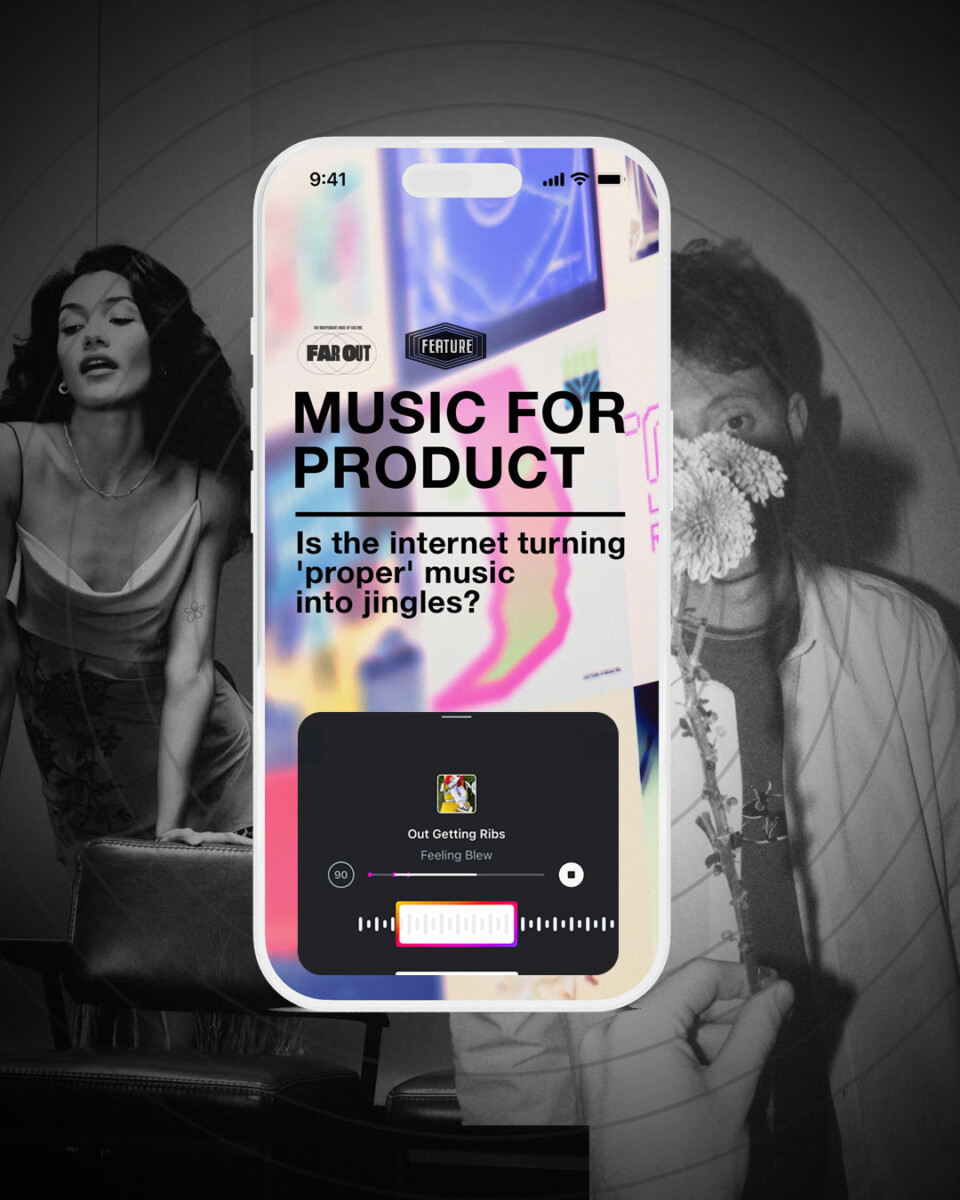
Moreover, products are no longer advertised on television. Instagram, TikTok, and the vertical format have a chokehold over the world’s attention, and crucially, those platforms offer an ability to engage with actual music that doesn’t leave brands beholden to licensing laws. Both apps offer exclusive use to what seems like an endless bank of legitimately released songs, meaning music from pretty much any artist is now fair game.
So now songs, and more specifically, 30-second segments of those songs, are reduced to ‘trending audio’ playlists, leveraged by companies to catapult their branded reel into the realms of social consciousness. It’s the ultimate play of consumerist manipulation for brands, given how the jingle was originally invented to evoke a sense of emotional nostalgia that will forever link a customer to their product. But now those jingles have given way to actual music, the ultimate vehicle of emotion and the last bastion of authenticity, and thus allowing brands all over the world to completely warp the identity of a song and turn it into something wholly commercial.
In fact, in a research paper titled I’ve heard that brand before: the role of music recognition on consumer choice, led by Manuel Anglada-Tort, found, “Results showed that pairing brands with music that can be recognised by the target consumers increased brand choice by 6%. Importantly, participants’ preferences for the advertising music also influenced brand choice, increasing the effect of recognition when the music was liked and suppressing it in extreme cases when the music was most disliked.”
Now, in 2025, genuine artistry is caught in the crosshairs of late-stage capitalism, mired in loss of context. For instance, perhaps the most exciting new musical voice to come out of Britain this year is Olivia Dean. Ever since her 2023 debut album Messy, she’s proven to be an artist who mastered the art of songwriting integrity, yet it’s taken the commercial manipulation of her latest track ‘Man I Need’ for me to be put off her music for the foreseeable future.
Like wildfire, the song spread across the internet to a point where it no longer exists within her grasp and has become something else entirely. As the definitive anthem of trending audio, it has become something to peddle consumerist nonsense or worse yet, something to cutify an influencing day in the life reel, which will once again have some advertising subtext. Through Dean’s brilliant and exciting ability to write a song that captures the soulful essence of joy and jubilation, she’s created a song that the internet has kidnapped and taken as its next global jingle.
Because this is exactly what the internet and brands are looking for: modern advertising preys on the false perception of authenticity, so when a song comes along and genuinely displays that, it doesn’t stand a chance at existing under the strength of its own narrative.
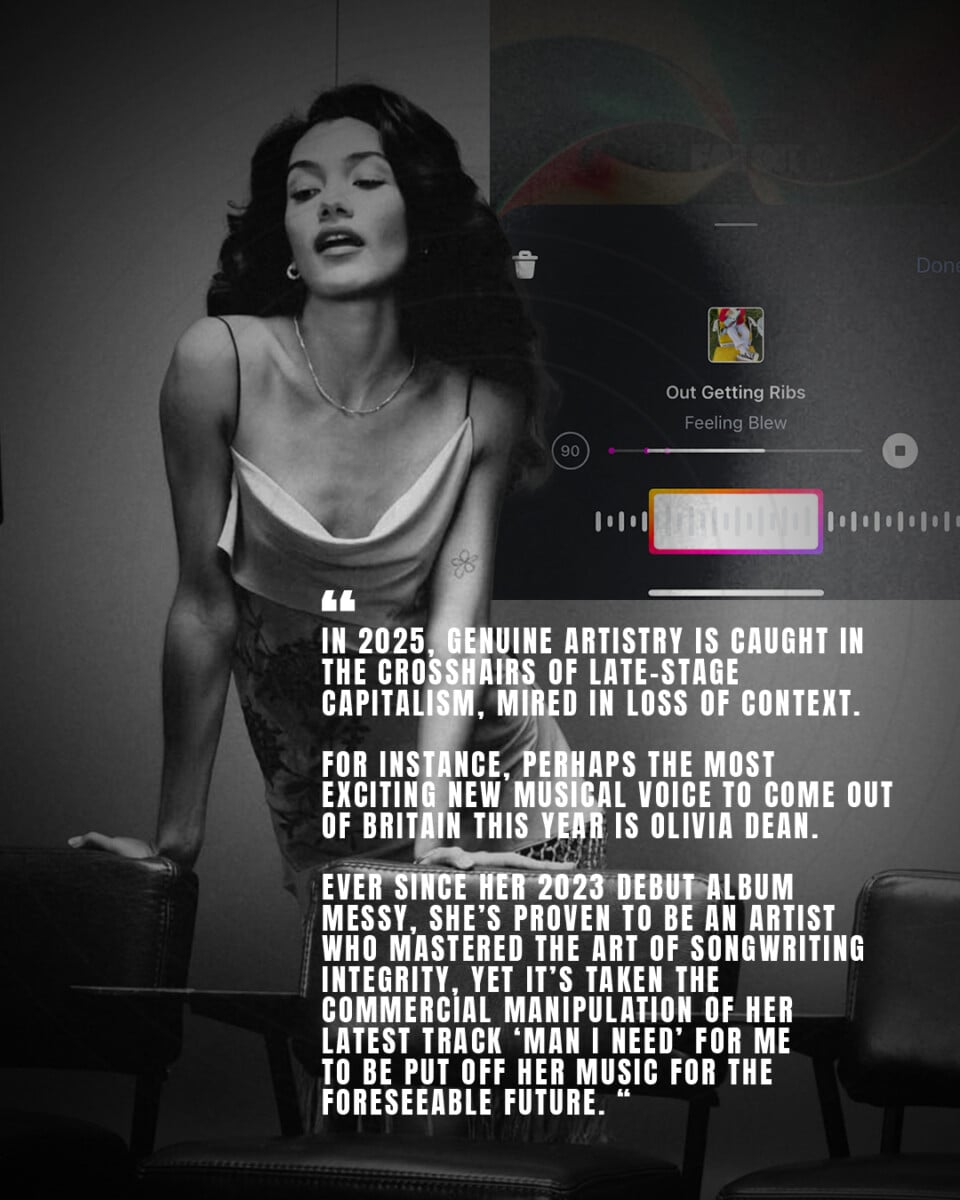
It’s not just Dean either; bizarrely, King Krule has found himself in the clutches of internet manipulation, and he’s not even being credited for it. This struck a unique chord with me, because his 2013 album 6ft Beneath The Moon is one of my favourites of all time, and a genuinely formative album for me in my adolescence. It made my teenage existence feel heard and understood, and ‘Out Getting Ribs’ became the subtle soundtrack of that.
But the quintessence of that emotional connection I, and many others, formed with this album has been sussed out by the digital overlords. Now, ‘Out Getting Ribs’ features on my reel timeline regularly as the score for whatever serene atmospheric context is being peddled by either an influencer or brand. I partly get it, because of how emotionally evocative the melody is, so largely, I can swallow it, but who the hell is Feeling Blew? Who is the artist whose name features alongside the song title I so regularly see online and is being credited as the musician responsible for this melody that has now been co-opted by social media?
You may think this entire subject is relatively baseless, in terms of all the battles that we should be fighting in music right now, but the point is the original context of King Krule’s track has been completely lost, and the album from which it originally came doesn’t even exist in the consciousness of most of its users. The album format has once again taken an unnecessary hit, and art has once again been reduced to a cog in the capitalist machine.
You may have just read this and never known who King Krule was. Maybe this article will take you to him, and allow you to understand ‘Out Getting Ribs’ beyond the work of Feeling Blew, which in this current musical landscape, is as good a victory as we’re likely to experience.
But I would be willing to bet that amidst the madness of Olivia Dean’s rise to supremacy, fuelled by the jet fumes of ‘Man I Need’, that you know exactly who she is. But what happens when you step off the app as a listener, and she’s thrown off the feed as an artist? Perhaps the best way to honour a musician today is simply to step back from passive listening and engage in an artistic world that is increasingly under threat by intense late-stage capitalism to ensure they exist beyond the scroll, and today’s soul doesn’t become tomorrow’s 1066.
