


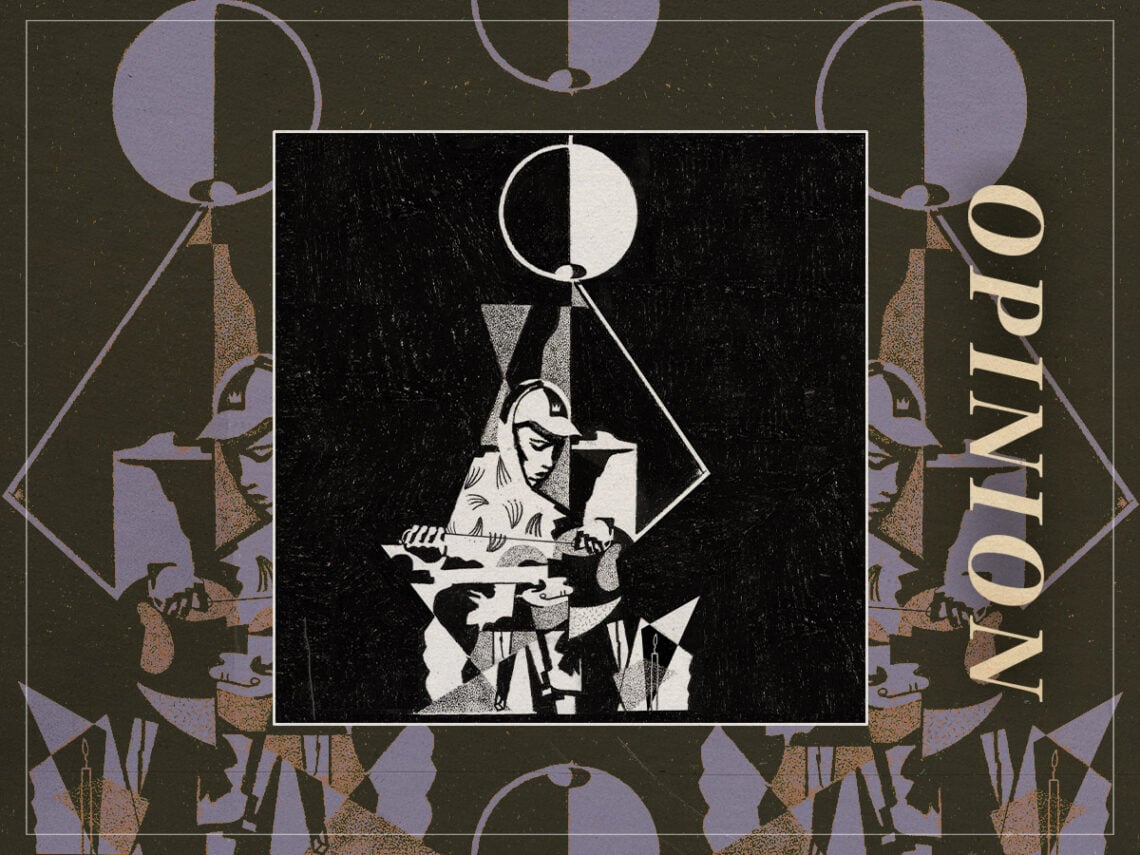
Hear Me Out: ‘6 Feet Beneath the Moon’ is still King Krule’s best album

King Krule has made some career-defining albums over the years.
While the release of The Ooz in 2017 did take the cake as the mass favourite, one record often slips beneath the radar. Though his third studio album did showcase another side of Krule, otherwise known as Archy Marshall, which was more intense and offered a sense of world-building hitherto unexplored by him. Other favourites include his 2020 project Man Alive, with more mature subject matter discussing fatherhood and domestic life. But to me, both lack Krule’s classic feelings of angst and despair, the type of emotion his core fan base knows him best for.
The popularity of an album, while a justifiable measure of success, still doesn’t mean it’s an artist’s finest. Everything is subjective, and listeners will draw from their own worldviews and perspectives when diving into some new music. However, a musician’s best work is one that is steeped in authenticity and vulnerability, because it offers listeners the tools to have an emotional reaction. An album that, while feeling wholly specific to the artist, can still be widely relatable to us regular folk listening in. And Krule’s 2013 debut album, 6 Feet Beneath the Moon, is the perfect ‘tool’ for this.
The opening track, ‘Easy Easy’, immediately hooks you in. With vocals that pierce through to provide storytelling you can’t ignore. Everything from production to vocals feels monotonous, right until the chorus hits with a change in production, with the guitar riffs getting louder, letting you know he’s finally fed up with the regularity. It instantly sets the scene for the rest of the album.
It’s easy to dismiss this debut as a throwaway, due to the teenage angst and subject matter, but this is what lends itself to the sheer amount of passion infused throughout the project. Despite topics others would see as frivolous, Krule’s talent for songwriting delivers his feelings in a calculated and novel way. Take ‘Borderline’ as an example, classic feelings of heartbreak are nothing new and groundbreaking. Yet, Krule doesn’t just tell us how terrible he feels; he describes how the breakdown of a relationship has impacted him both physically and spiritually. “My body has merged to the deep cruel sea/ But my soul floats, the soul is broken down.” Krule was just 19 when he released this project, yet the lyricism is remarkably developed, indicating a fierce sense of confidence to discuss genuine, complex thoughts.

Make no mistake, though, there were other undisputed albums exploring intricate feelings of identity back in 2013—let’s not forget Lorde’s Pure Heroine. But finally, here was someone young who was open and honest about a deeper youthful angst that many teetering on the edge of adulthood carried, especially in London. It’s not that his later work is not good; he hits the nail on the head almost every time he puts out something new. And other albums, such as The Ooz, seem more cohesive and thematic, providing a more refined version of his sound.
But one thing that ultimately provides the DNA for the type of artist Krule is his gritty and unfiltered display of emotion. Something necessary at the time when the young adults didn’t know they needed it, but were grateful for once they had a mirror for their condition, in his words. His later projects can’t replicate the sheer impact this album, which he wrote as a teen, had on teens who were just figuring out how to explore their conflicted feelings.
It makes sense that his songwriting was so developed, even though this was his debut; Krule had time to work on his craft, writing his first song as early as 12. It feels as though he was a step ahead with this project. This is echoed in the production, so simple, but so defined at such an early stage in his career. The passion radiates from the instruments mixed so loudly, with the harsh upstrokes of the guitar—he wants you to feel what he is saying, not just hear it.
Written by someone experiencing early adulthood anxieties, trying to work out who they are and how they feel, reaffirming that everything is temporary, coupled with the melancholy production, this album created a space for young male musicians to get real about their emotions. And in a similar guise to hip-hop, where listeners often love their favourite artists’ ‘come up’ albums, discussing trials and triumphs that led them to an illustrious career, that reminiscent feeling is littered all over this debut.
Even the genre was not set in stone. Krule showcased that emotive and eccentric vocals could operate on any musical form you wanted them to, from jazz to hip-hop or lo-fi indie rock. Even with tracks like ‘Baby Blue’ explaining failed relationships and just how life-shattering they can feel at a young age, set to the sound of a sparse, jazzy guitar tune, there’s a space for it all in this record.
This genre-defying sound offers a distinct blend of hip-hop, jazz and modulated vocals, which wasn’t popular or experimented with frequently before this album. It’s why this project is difficult to categorise, almost like the musician stepped onto the scene and said, “I’m just going to create something meaningful to me”, painting his emotions onto an entirely new canvas. It can’t be labelled or boxed in, a truly authentic labour of love. A record to express his urban alienation in London, navigating life through unfiltered expression, which makes it one of the most defining moments of his discography.
