


Is rock and roll really a genre?

The term rock and roll first arrived in the 1950s, allegedly coined by the radio DJ Alan Freed. He used the tag to describe the avalanche of up-tempo rhythm and blues music that began to rattle his studio door. This was the first time such a term was used in musical spheres, but it existed many years before in other pertinent realms.
As far back as the 17th century, sailors on the high seas would use the term “rocking and rolling” to describe the very literal action of the tide on their vessel. But if we fast forward a few hundred years to the 1920s, jazz-age partygoers of F. Scott Fitzgerald’s ilk would often use the term in a more euphemistic sense while describing the rhythmic undulations of coitus.
Today, it is more in vogue to get right down to business and use the F-word, which you might describe as a more rock ‘n’ roll term for rocking and rolling. It may be a coincidence, but in 1922, Trixie Smith released the early blues ballad ‘My Man Rocks Me (With One Steady Roll)’ using the fashionable euphemism for the first time in the genre that birthed rock and roll some three decades later.
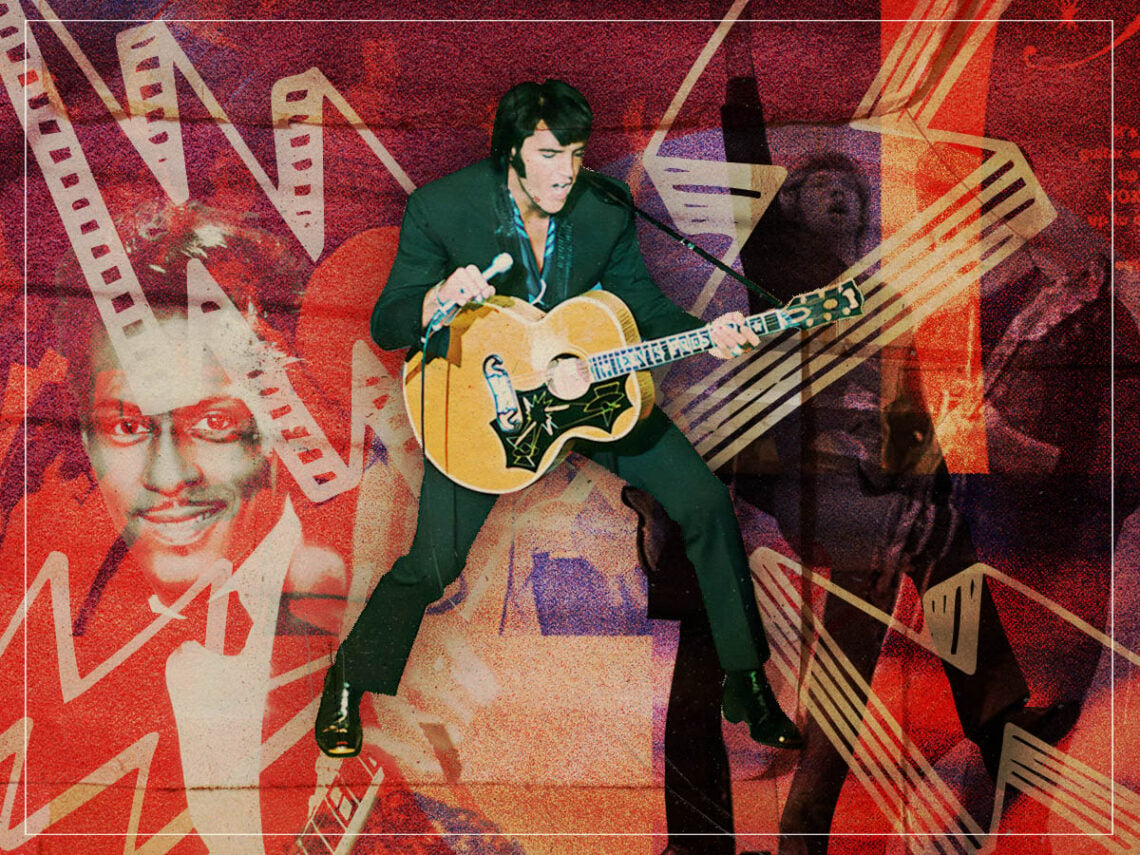
DJ Freed’s use of the previously euphemistic term was also no coincidence. The harder, heavier sound may resemble a rock, but he also recognised a primal attitude in the music that made listeners want to dance in rhythmic rocks and rolls with their courting partners. Approaching the 1960s, rock and roll loosened in unison with Elvis Presley’s knees, duly ascribed to Chuck Berry’s signature guitar riffs and the rhythmic ivory work of Little Richard and Jerry Lee Lewis.
Since rock music can involve several varying instrumental configurations, it is often arbitrarily defined as music with a heavy beat, energetic rhythm, and simplistic melodies. Although Little Richard, Jerry Lee Lewis, and Fats Domino are considered key early proponents of the so-called genre, it is often associated with a guitar-led sound involving a rhythm section playing 4/4 signatures and intense lyrical deliveries.
Vague rules, as such, are extremely vulnerable to the winds of change. In the 1960s, British invasion bands like The Beatles and The Rolling Stones profited handsomely from childhood fascinations with American blues and rock ‘n’ roll icons. Once they started writing their own material, they soon became bored of standardised lyrical concepts and compositional traits, thus beckoning the psychedelic era.

Ignoring the considerable role rock music played in the countercultural movement for one moment and facing the music on a strictly musical level, the hippies played their part in redefining the bounds of rock. For starters, jazz-inspired drummers of the psychedelic wave, like Cream’s Ginger Baker and Jimi Hendrix’s Mitch Mitchell, threw a heavy spanner in the works for adherents of the 4/4 doctrine. Perhaps these artists were no longer rock and roll. But if that’s the case, was Fats Domino not a boogie-woogie pianist? And wasn’t Elvis Presley a gospel, blues and country alchemist?
Of course, the above questions, like my titular one, are difficult to answer and often liable to subjective conclusions. As far as I’m concerned, rock isn’t a true genre. From a modern perspective, the term has been diluted, crossbred and battered into inadequacy. It can only really be used to differentiate guitar-based music from electronic, jazz and other primary genres, with which it often mingles with pleasure.
As a descriptor, punk is more accurate in its intended use, considering the discernable nature of its original sound. By comparison, rock ‘n’ roll was an amalgamation even at its outset in the 1950s: a pick ‘n’ mix of rhythm and blues, up-tempo jazz, boogie-woogie, swing, gospel, country and traditional folk. Blues was the main driver, but with such sprawling influences, this dog sure ain’t a pedigree.
Rock and roll is as much a genre as “Britpop” or “indie”. These terms encompass a broad and ill-defined swathe of music stemming from a multitude of genres. However, they more effectively convey a certain spirit, attitude or cultural epoch. As for rock and roll, it was the perfect euphemistic term for the energising grooves that dragged Western culture from post-war inertia into a period of socio-political transition, secular icon worship, and all the sex, drugs and anarchy you could get your sticky fingers on.
