


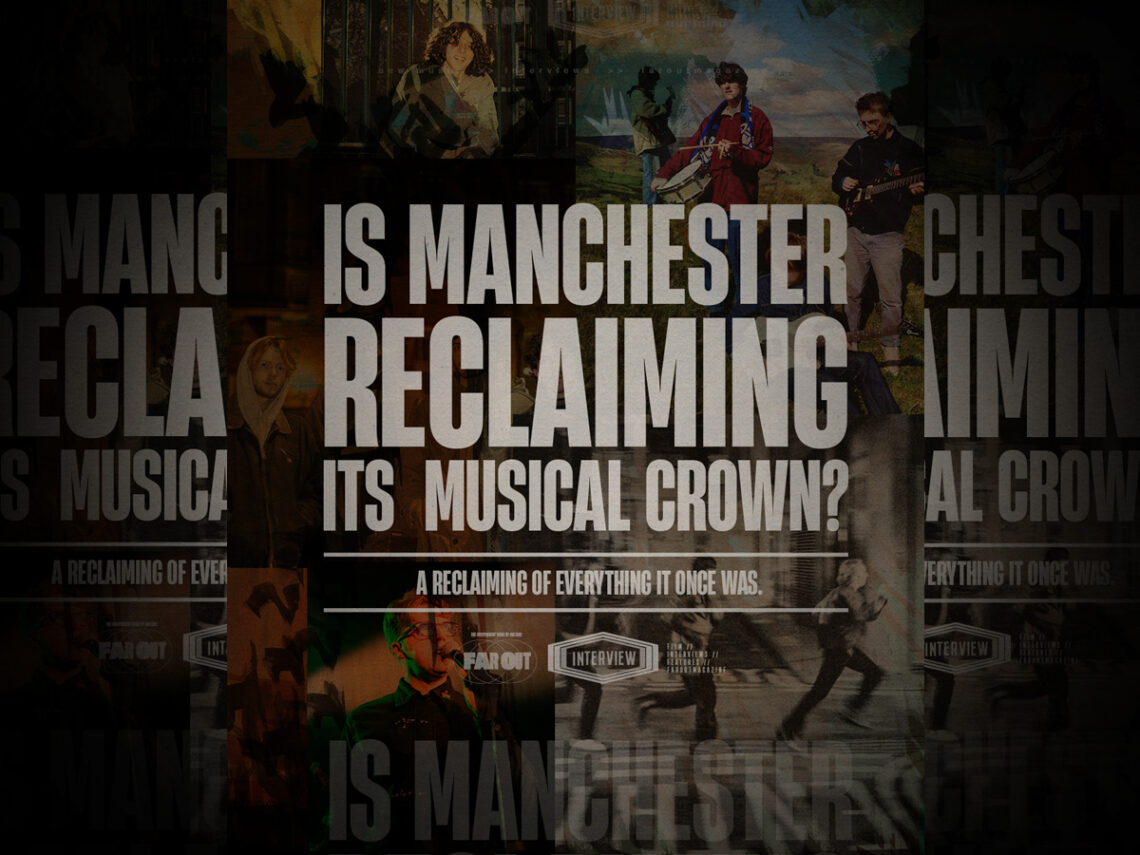
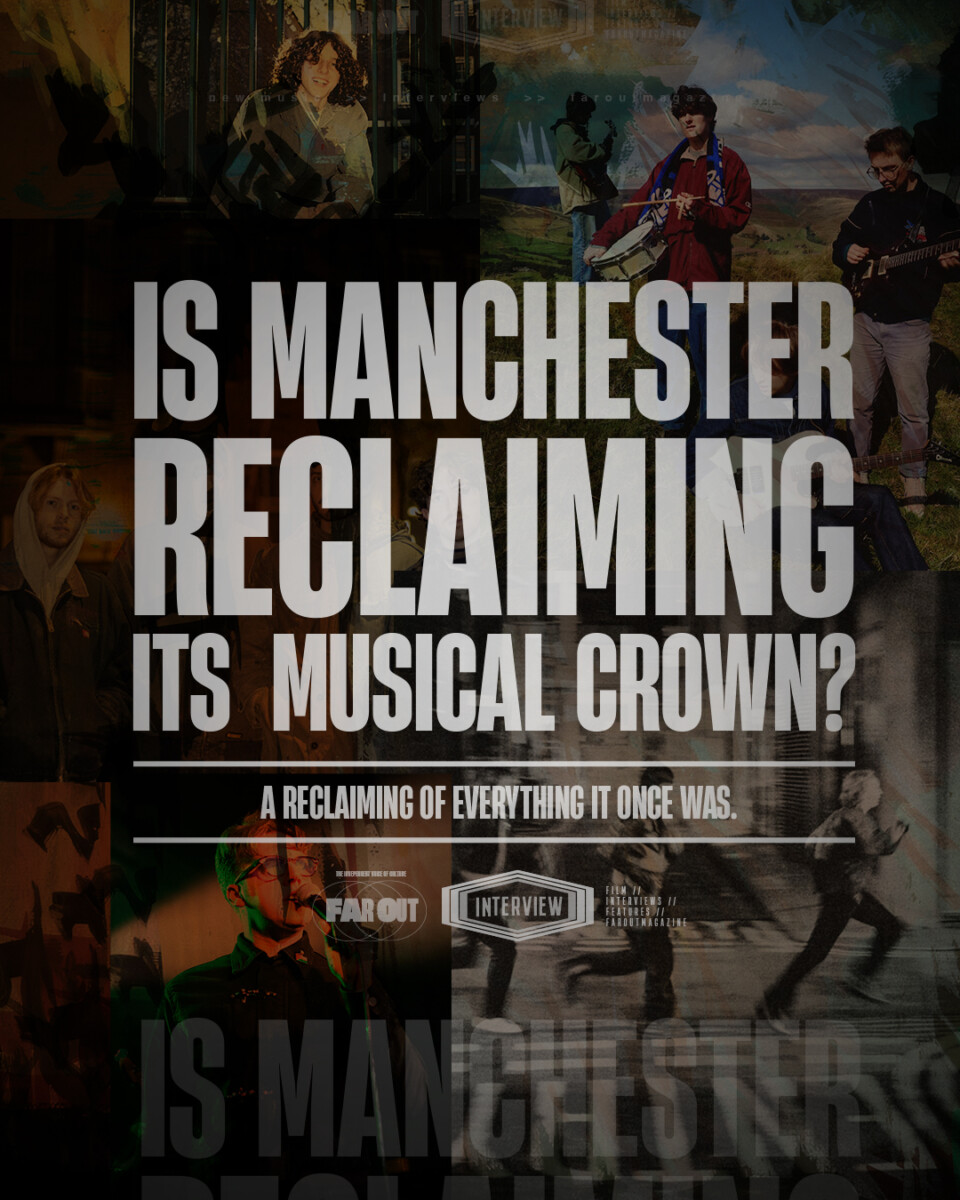
Is Manchester reclaiming its musical crown?

Any music-loving rising star in the 1970s knew that Manchester was the place to be, and back then, the rainy city’s rich music atmosphere could be found anywhere: in clubs, in bars, even in the streets, if you caught the mood at the right time of day.
For a while, Manchester was ‘it’, a bustling location for self-expression and influential scenes, the home that birthed names like the Oasis, the Buzzcocks, The Smiths, Joy Division, and many more who transformed its gritty charm into something beautiful and legendary, and then came the Madchester movement, which solidified the city’s dominance as the go-to music hub, with artists like The Stone Roses and Happy Mondays further spearheading the revolution that had taken place outside of the capital city.
Back then, it was – to borrow a few terms of endearment from Oasis – electric, full of eccentrics, doing things that most people never expected. “Can I be electric too?” passersby would ask themselves, wanting in on the explosion that was the heart of Manchester’s musical microcosm, the place where you theoretically didn’t have to be anyone from privilege to join in: you just had to have something to say.
Over the years, it started to lose this spark. For whatever reason, the explosion that was baggy sounds, rave late-nights and funk-leaning styles dispersed into a quiet hum of a dimmed light, and whatever was once the city’s innovative and revolutionary nucleus soon frayed into a ghost of its former self. It didn’t completely disappear, of course, but it certainly took a backseat, loosening its grip and letting other localised arts communities surge forth.
In recent years, however, there’s been a shift, a slow drag back towards its glory days: a reclaiming of everything it once was. This transformation happened for a variety of reasons, credited to things like new venue openings, broader opportunities for rising talent, community investments, and a re-shuffling with some of the industry’s most iconic flagship events.
In 2024, the opening of Coop Live marked a major turning point for the city’s local entertainment scene, with an opening rollout that included performances by Elbow, Liam Gallagher, The Killers, and more. The Eagles also joined in on the fun with a residency as part of their farewell tour, while also paying host to the MTV Europe Music Awards in the same year.
Other major names included the venue as part of their tour cycle, including Sabrina Carpenter, Billie Eilish, and Paul McCartney, while 2026 will also see the first-ever Brit Awards hosted outside London. When this was first announced, Jason Iley MBE, Chairman and CEO, Sony Music UK and Ireland, said the move to Manchester will “invigorate the show and build on the Brits legacy of celebrating and reinvesting in world-class music”.
Andy Burnham, Mayor of Greater Manchester, called Manchester “an unparalleled music heritage known around the world,” while BPI CEO and Brits Committee member Dr Jo Twist OBE said that the change “celebrates not only the city’s exceptional musical heritage and its status as a powerhouse of British creativity, but the great depth of artistic energy and potential that exists all across the UK.”
Describing Manchester as a “powerhouse of British creativity” seems especially ambitious in today’s climate, but when we look at all the facts, could this be closer to the truth than we think? Beyond the opportunities established by Coop Live and the implications of the Brits’ move, Manchester has also made a cultural comeback in the music industry in different ways. The AO Arena, for instance, recently underwent a £50million transformation.
Aviva Studios, an arts organisation for exhibitions, live music, cinema, and more, has also sought to enrich the local arts community over recent years, while countless other groups have brought back that once-familiar livelihood that set Manchester apart as the greatest music-led scene in the country. And that’s not to mention the revival caused by the recent Oasis comeback, plus everything that occurred around that – including how their gigs in Manchester went towards helping grassroots music venues in the city.
So, once again, we arrive at: Is Manchester regaining its musical crown? Based on all of those factors and another, glaring truth – that we’re now seeing more of a talent influx coming out of Manchester now than in previous years – yes. With acts like TTSSFU, YAANG, Alex Spencer, Westside Cowboy, Holly Head, and GETNER at the helm, it’s clear that Manchester is well and truly winning back its spark.
According to GETNER, the best part about the current scene is the sense of community. “There are some great venues, like the Eagle Inn, Gulliver’s, Castle Hotel and Rat and Pigeon, all of which have been formative for us,” GETNER told Far Out. “It’s a very supportive scene apart from a few stray dickheads, we always try to be sound and support everyone even if the music is not for us, difference is an accident of birth as a wise Derry man once said.”
Continuing, “There’s something in the water in Manchester, and it seems that people are finally starting to take notice and why our resident Irish boys have made it their home.”
This was echoed by Alex Spencer, who recently told Far Out that the best thing about Manchester was its atmosphere. Discussing the local scene for a recent interview, YAANG also told us how much “pride” there is in young, Mancunian artists, while praising their very own The Rat and Pigeon and Band on the Wall venues, and running their respective “small pockets” of Manchester where fractions of the community can thrive.
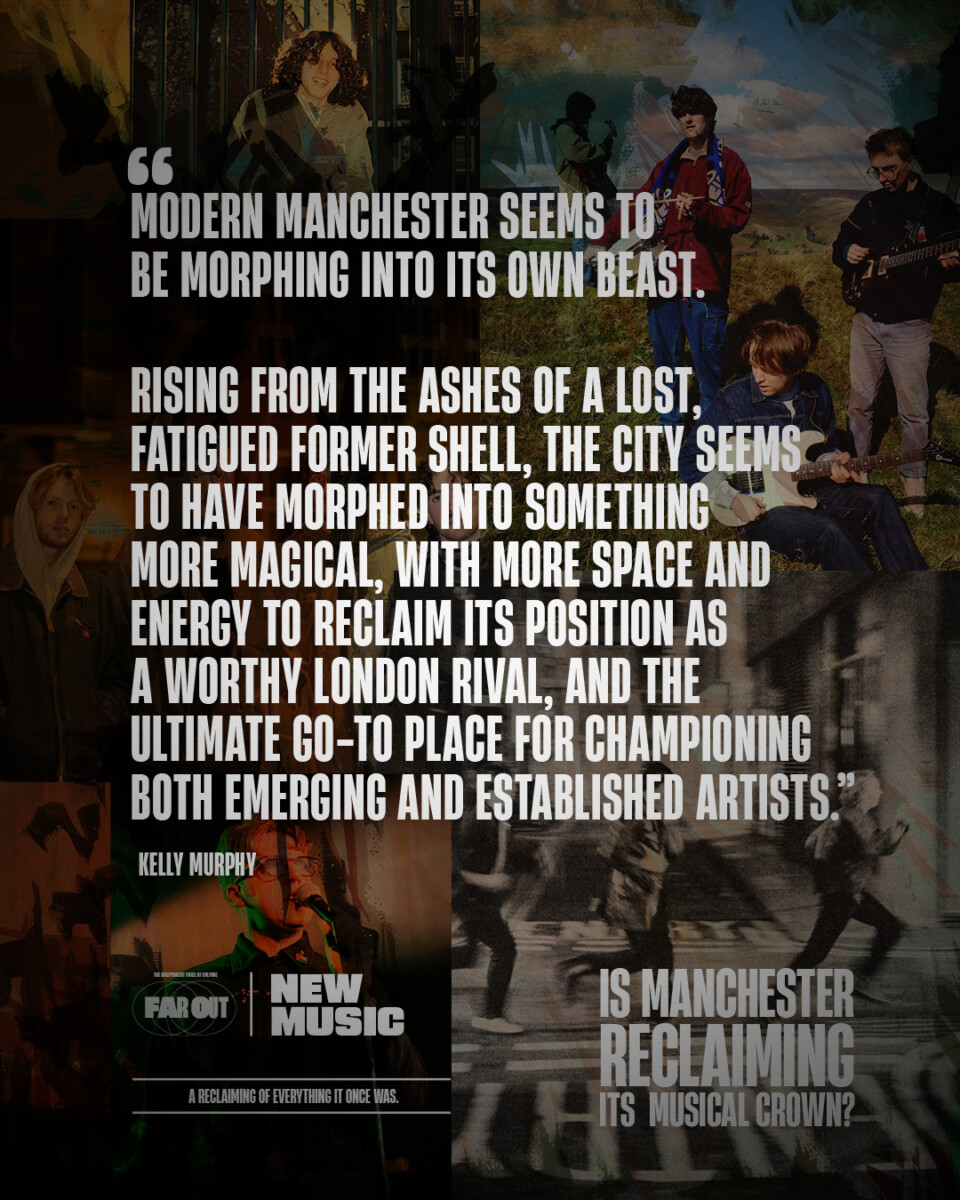
As such, Modern Manchester seems to be morphing into its own beast. Rising from the ashes of a lost, fatigued former shell, the city seems to have morphed into something more magical, with more space and energy to reclaim its position as a worthy London rival, and the ultimate go-to place for championing both emerging and established artists.
Many cities with such a rich musical history become victims of decay past their prime, and for a while, it seemed Manchester was following in the same footsteps. But as we charge on, it’s hard to ignore the subtle clarion call that whispers something familiar in the industrial-smelling breeze: “Watch this space.”
