


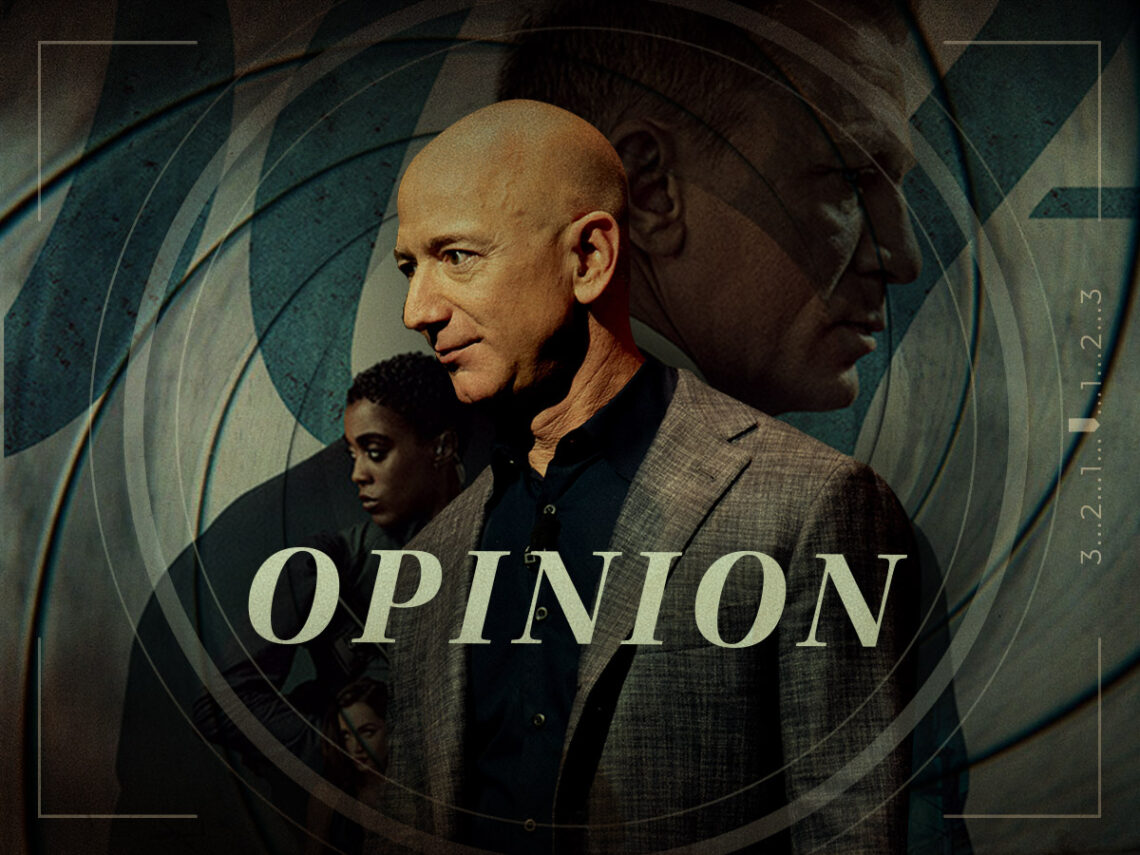
James Bond is about to be franchised to death

With the breaking news that Amazon MGM Studios has taken creative control of the James Bond franchise from the Broccoli family, fans of the venerable British filmmaking institution are reeling. On one hand, some will be excited that the series can finally move forward from No Time to Die, which—four years on—is still desperately awaiting a new body to fill Bond’s suit. On the other hand, those more attuned to the inner workings of modern Hollywood and its obsession with intellectual property are probably feeling more nervous than 007 strapped to a slowly dipping cage heading towards a villain’s molten lava pool filled with laser sharks.
The Broccoli family has controlled Bond since the very first movie, 1962’s Dr No. For the first 33 years, the legendary Albert R ‘Cubby’ Broccoli guided the films, and he was succeeded by his daughter Barbara and her half-brother Michael G Wilson in 1995. At the helm of Eon Productions, Barbara and Michael shepherded the iconic super spy into the modern cinematic era.
During their tenure, Eon Productions has been extremely careful and strategic in handling their prized asset, producing only nine films in that time. As a result, just two actors—Pierce Brosnan and Daniel Craig—have portrayed the debonair spy over the past three decades. Eon has always maintained that they never intended to dilute the brand with TV series or spin-off movies. But will that sparing use of the character continue now that the IP is in Amazon’s hands? It seems depressingly unlikely.
The Hollywood landscape of 2025 is more closely akin to a hellscape than any heavenly plane of creation. Every studio, producer, director, and actor nervously looks around for the next name-brand character or story they can milk for all its worth. This isn’t the 1980s or the ’90s anymore, a time when original ideas could be more readily guaranteed to put butts on seats with a box of popcorn in hand. These days, audiences barely leave their houses unless they’re going to see something they recognise and know they will manage to return a heap of joy in their not-minimal monetary investment in the evening’s entertainment. Hell, they don’t even need to venture to a cinema to see a new instalment of a series they love half the time because it’s already been spun off into a TV show.
In truth, Amazon MGM’s deal to get its grubby mitts on Bond is like Manna From Heaven for a film studio in this risk-averse landscape. It wouldn’t be the least bit surprising if there is a flurry of announcements in the coming weeks of all the myriad ways Bond “content” will be fired out of a metaphorical T-shirt cannon.
There’ll be a new Bond for the big screen, obviously. That casting decision has been talked about and rumoured to death ever since Craig exited stage left. But now, with the two head honchos no longer there to carefully select the perfect candidate to fill Craig’s expertly cobbled brogues, the process could be very different. There will almost certainly be TV and movie spin-offs, too, as Amazon look to cash in on their mammoth investment. How about Moneypenny: Origins? Pussy Galore: A New Era? Q: The College Years?
In a world where the Marvel Cinematic Universe is faltering, and Amazon has already experienced some success exploiting IPs like The Lord of the Rings and Jack Ryan, it seems a foregone conclusion that the world is about to be inundated with Bond content.
To play devil’s advocate, some fans will love this, as they’ll view more Bond as a good thing. The maths on that one is fairly simple. However, as longtime Marvel fans who have been smacked in the head with a never-ending parade of subpar streaming TV shows and ramshackle movies after 2019’s Avengers: Endgame will attest, sometimes there really is too much of a good thing. In this scenario, being given so much Bond may actually turn them off the character because he won’t seem special anymore. Who will sing the theme tune? How will they deliver the classic gunshot to the audience? Other such tantalising questions will be answered so often that they will no longer be asked.
In reality, that is what Eon has done so successfully for the last three decades – it’s ensured every new Bond movie is an event. It has (mostly) prided creative integrity over the craven desire to make as much money as possible. The franchise killed Bond at the end of No Time to Die – and now that seems pretty damn symbolic. Was that truly the death of James Bond as we know it – and the birth of the Bond Cinematic Universe?
