


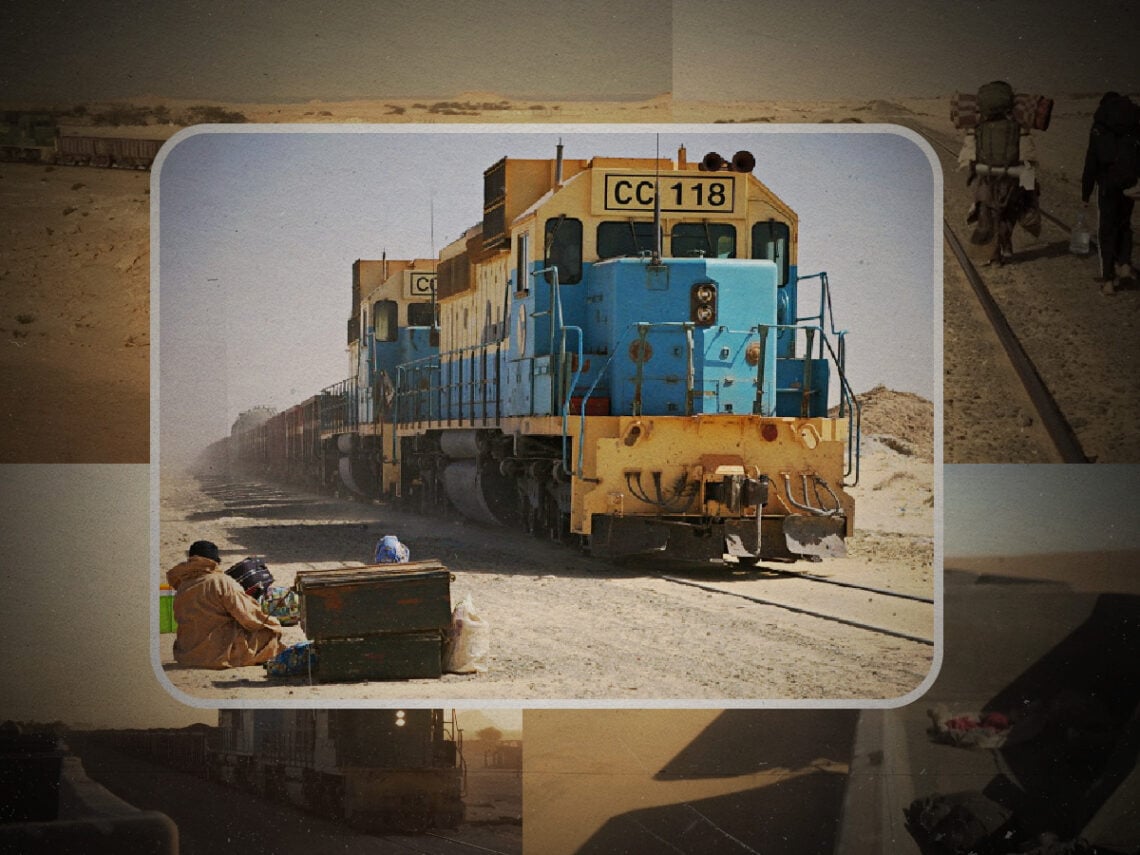
Hot Iron: Riding the Iron Ore train across Mauritania is the most extreme train journey in the world

There’s no question about it, trains are simply the best way to travel, but not all such journeys are equal, and there’s one rising train travel trend that is beyond extreme.
We adore train travel, something we’ve covered before at Far Out, but in Mauritania, there’s one track that’s become the pinnacle of adventure tourism. Every day in the deserts of Mauritania, one of the longest and heaviest freight trains on the planet, known simply as the Iron Ore Train, crosses the Sahara, and it carries thousands of tonnes of ore from Zouerat to Nouadhibou, a port city.
These wagons are open to the air and the elements, each carrying precious ore from the mines at Zouerat, and while their principal job is one of carrying freight, they’ve become passenger routes for opportune travellers. In some cases, locals hop onto the Iron Ore Train as a practical way to cover ground in what is one of the world’s most sparsely populated terrains. However, it’s also become a popular adventure travel route, with daredevils, often with their DJI Pocket 3 or Insta360 cameras, documenting every step of the way.
The journey itself takes between 16 and 20 hours, with the contents of the train impacting travel time, due to the extreme weight that can be loaded onboard, as well as the huge distance of 704km that it can travel. At times, the cargo exceeds 17,000 tonnes, and each of the train’s 200+ wagons carries approximately 84 tonnes of iron ore, which is why the locomotive itself can be as long as three kilometres on a busy day.
Given the remote nature of the region, there are passenger carriages attached to the train, but there are few of these, and they’re often very busy. That, combined with the cost, forces many locals to simply jump on, sit on the iron ore, and travel that way. After all, this is a poor part of the country, and with few roads and very little infrastructure, this is often the best way to travel.
Sometimes you’ll even see livestock, or people carrying fruit and vegetables for the market, on the back of the freight wagons, and then there’s the tourists. With the world getting smaller and YouTube showing us more diverse and exciting travel stories, there’s been a rise in backpackers and vloggers attempting this journey, looking to try something unusual and different from the norm.
Crossing the Sahara is in itself very exciting, but combine that with the chance to stargaze with next to no light pollution, and to experience a truly unique, but difficult journey, and it’s easy to see what attracts people. This isn’t like hopping on a Great Western train at Paddington; this is truly extreme. Much like the last train out of London on a Saturday night, you won’t get a seat, although this time you won’t be standing next to a pissed-up football fan eating a Whopper. There’s no roof, no toilets and crucially, no safety railings, so if the train stops sharply, or accelerates quickly, which it will, then you could go flying.

Travelling at speeds of up to 60km per hour, through the middle of the desert, while you’re sitting on iron ore, there’s a lot of dust whipped up, making breathing incredibly hard and dangerous, which is why travellers must wrap scarves around their faces and cover their mouths, and most wear goggles to cover their eyes.
Falling off the train is dangerous, and people have died in that fashion before, but it’s the weather that is the real threat. With Saharan temperatures and no trolley service offering you a lukewarm BLT and a bottle of Buxton water, dehydration is very easy and can be fatal. While temperatures might be 40°C during the daylight, they can drop to freezing at night in winter, both of which are dangerous when there’s no shelter from the elements.
The mining company that operates the train service has tried hard to discourage tourists from taking this dangerous transport, but their calls have been largely ignored. Now the Iron Ore train lives in a strange half-space of being a bucket list ride for thrill-seeking adventurers, a logistical tool for a mining business, and an essential piece of basic travel infrastructure for locals.
