


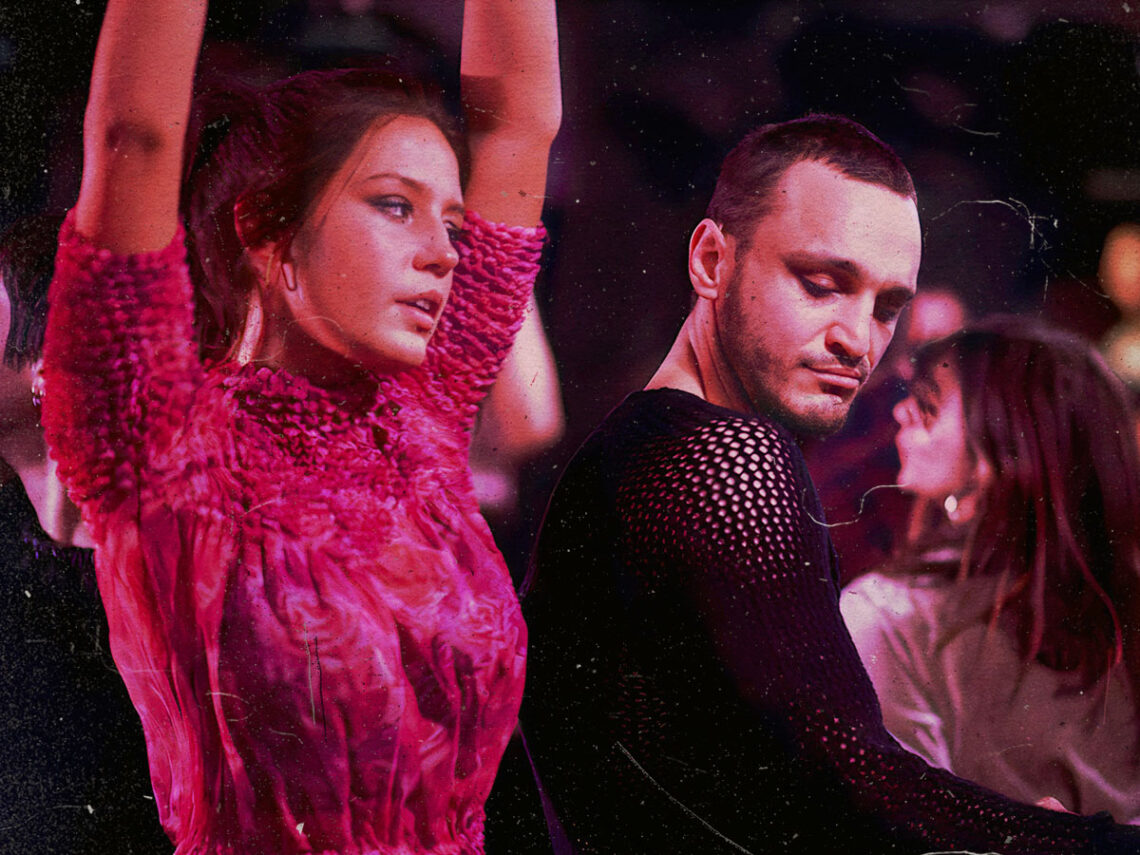
‘Passages’ movie review: another Franz Rogowski masterclass

Over the last decade, many new and exciting acting talents have emerged, but almost none of them have the raw dynamism of Franz Rogowski. Through incredible collaborations with acclaimed auteurs such as Terrence Malick and Michael Haneke, the German actor routinely surfaces in the global film festival circuit with stunning performances that elevate the entire project. Ira Sachs’ latest project, Passages, is certainly no exception.
In the wake of recent disasters like Christoph Petzold’s Afire, nobody can be blamed for being especially cautious of movies that revolve around self-obsessed artists. However, Passages is quite different from the genre’s usual offerings because it doesn’t concern itself with the painful artificiality of narrative self-actualisation. Instead, we are taken on a dizzying journey of self-destruction, beautifully captured by the cinematography of Josée Deshaies.
Rogowski, following his powerful work in moving dramas like Great Freedom, takes on the role of a filmmaker named Tomas who finds himself in a difficult position. After wrapping up the shoot of a new project and disenchanted with his husband Martin (beautifully portrayed by Ben Whishaw), Tomas decides to have an affair with a woman named Agathe (Adèle Exarchopoulos). Pursuing his pleasure at the cost of everything else, the director embarks on a journey permanently marked by loss.
An unthinkable amoung of movies have been made about the toxic romantic entanglements of Parisian couples, with younger audiences still flocking to those works hoping to gain insights about their own lives. Passages is both mired in the same ooze and also separated from it, with Sachs choosing to highlight the contours of a modern relationship in a different way. One that is more sensitive and is broad enough to look at our perspectives of sexuality, modernity and modern love.
Always driven by bouts of insecurity, jealousy and lust, Tomas oscillates between Martin and Agathe like a wrecking ball until those two pillars of his life are reduced to dust. From the opening scene itself (which shows hin teaching someone how to walk down the stairs the “right way”), his tendency to have an obsessive control over his reality is more than evident. It’s his pathetic inability to do so that becomes apparent over the course of the film, resulting in a complete collapse.
Passages is a solid effort but you leave with the unshakeable feeling that it could have been greater if it was handled by someone else, since the cast itself is phenomenal. Adèle Exarchopoulos, fuelled by the momentum of her incredible work in projects like Zero Fucks Given and The Five Devils, manages to shine despite being severely restricted by a script that neglects her almost as much as Rogowski’s problematic character in the movie.
There is a glimmer of redemption in the final scene, as Tomas cycles recklessly through the busy streets of Paris, almost hoping to crash while the brilliantly-chosen discordant notes of the score crash all around us. But it’s just one of the many interesting vignettes of Passages that fail to form any sort of meaningful link with each other, reaching us as isolated moments of magic.
Watch the trailer below.
