


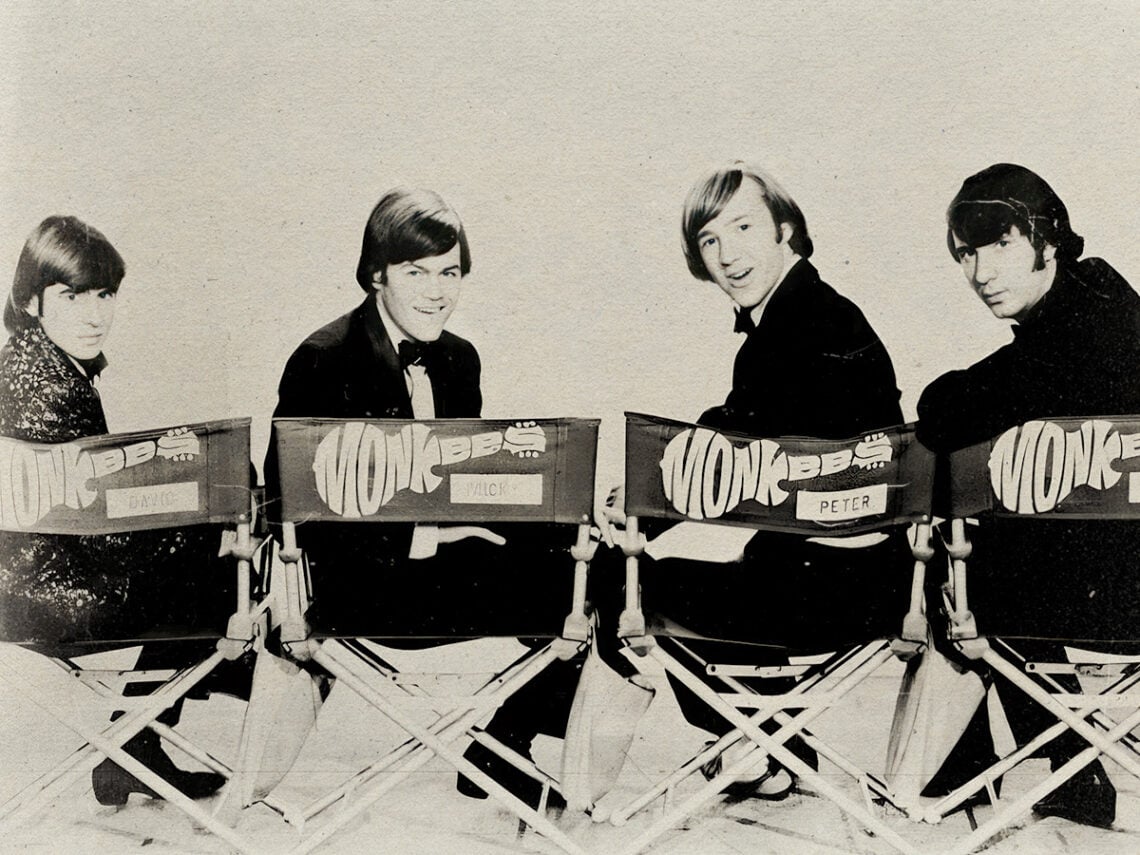
Inside the FBI’s dossier on The Monkees

Before Bob Rafelson and Bert Schneider rose to prominence as key figures of the New Hollywood movement, working on films such as Five Easy Pieces and Easy Rider, they created The Monkees. Inspired by Richard Lester’s A Hard Day’s Night, which saw The Beatles play semi-fictionalised versions of themselves, the pair decided to make their own show about a band.
After several hundred young men auditioned for the chance to join the fictional band, David Jones, Micky Dolenz, Michael Nesmith, and Peter Tork were the final choices. The first episode aired in September 1966 before coming to an end in March 1968. In the series, the band attempted to make it into a successful rock and roll outfit like The Beatles, with each character loosely reflecting one of the Fab Four. For example, Tork was modelled on Ringo Starr, while drummer and vocalist Dolenz reflected John Lennon.
Rafelson and Schneider used lots of innovative formal techniques which had not been widely used in television before, taking inspiration from European directors, such as those emerging from the French New Wave. Moreover, The Monkees reflected the growing counterculture that defined the 1960s, which was particularly youth-focused. With lines such as “We’re the young generation, and we’ve got somethin’ to say” in the theme song, the show represented a significant development in cultural attitudes, music and television production.
However, this resulted in the band attracting the attention of the FBI, although this wasn’t discovered until many years later. In 2022, Dolenz, with his attorney, Mark Zaid, decided to sue the FBI over a “secret dossier”. It turns out a small section of the FBI’s file on The Monkees was released in 2011 – something Dolenz would like to know more about.
In the files, the FBI expresses concern over The Monkees’ live performances, writing, “During the concert, subliminal messages were depicted on the screen which, in the opinion of [informant’s name redacted], constituted ‘left-wing intervention of a political nature.'”
It continued: “These messages and pictures were flashed of riots, in Berkley, anti-U.S. messages on the war in Vietnam, racial riots in Selma, Alabama, and similar messages which had unfavourable response[s] from the audience.”
On one section of a page that isn’t blacked out, unlike many others in the file, The Monkees is described as “quite successful”. It explains how the series “features four young men who dress as ‘beatnik types'” and “is geared primarily to the teenage market. During recent weeks, the four stars of the show have been making public appearance tours throughout the U.S.”
Although The Monkees weren’t an overtly political band, their popularity apparently warranted the creation of an FBI file. Zaid told Rolling Stone: “The Monkees reflected, especially in their later years with projects like [their movie] Head, a counterculture from what institutional authority was at the time. And [J. Edgar] Hoover’s FBI, in the Sixties in particular, was infamous for monitoring the counterculture, whether they committed unlawful actions or not.”
