


The inherently private experience of watching your favourite films

If art is meant to be such a universal thing – something that can connect strangers, unite lovers, and glue friendships together – why is it often so hard to share your favourite film with another person?
Think about it. There must have been a time when someone brought up a film that you really, really love, and you found yourself wishing that they’d picked something else to declare their love for. Is it to do with having a superiority complex? Or is it perhaps down to the fact that your favourite movie, that piece of cinema that understands you better than any other and makes you feel at home, is suddenly grabbed from deep in the corner of your mind where it resides, only to be placed out in the open, picked at, and indulged in by others? Your favourite film no longer feels like ‘yours’.
Of course, we know that other people watch our favourite films. Sometimes, our most coveted picks are listed on rankings of the greatest movies of all time, or perhaps the most romantic, the funniest, or the scariest. But when you meet another person who loves a film that you hold so close to your heart, a sense of possessiveness can often rise to the surface. Deep down, you know that this person could be a kindred spirit or someone you could go to the cinema with, but that feeling of jealousy or protectiveness certainly still lingers.
Additionally, it depends on the person who claims your favourite film as their own. If they’re genuinely lovely, perhaps the feelings of possessiveness are lessened. But if they’re not your cup of tea, you might wish to erase your favourite film from their mind, Eternal Sunshine of the Spotless Mind-style.
This might all sound quite preposterous – is someone liking your favourite film really that serious? While yes, it might seem like a non-issue, and in the grand scheme of things it certainly is, it’s fascinating to investigate these feelings nonetheless because, really, why do we think we have any right to claim a certain film as ‘ours’?

The thing is, cinema has an unshakeable power, and sometimes you stumble upon a film that comes at exactly the right moment in your life, hitting you right in the very core of your being and lingering for years to come. You’ll never forget the first time you watched your favourite film, or the countless other instances when you rewatched it. You’ll likely remember your surroundings, the room’s smell, the snack you were eating, or the person you watched it with. That’ll all become burned into your brain alongside the characters and the plot.
Those scenes that always make you cry – the ones that you anticipate in fear of tearing up in front of the person you’re showing the film to – become unforgettable memories that you might as well have lived yourself. The characters can also come to feel like friends, particularly those whom you always feel a slight jealousy over when you see them having a good time with someone else, and you weren’t invited. How dare someone else spend intimate time with your beloved characters, whose struggles might reflect your own?
For me, discovering Paris, Texas as a teenager was a revolutionary moment in my life. I was so moved by the conversations between Travis and Jane or Travis and Hunter, or even the lack of conversation between Travis and his brother, Walt. The stunning cinematography of vast desert landscapes or cities in motion, happening off in the distance in skyscrapers or within passing cars, felt so personal somehow. While I couldn’t exactly relate to any of the characters’ situations, I couldn’t help but feel connected to the themes of nostalgia and memories, family, and letting go, which Wim Wenders explored with such potency and grace.
When I think of the film now, sitting at my desk, the images that come to mind are the ones that have made me cry while watching it many times over the years. Travis walking on the opposite side of the road to Hunter, trying to make him laugh. Travis watching the Super 8 footage of the family when they were happy. Travis and Jane’s long conversation in the peep show booth. Jane and Hunter’s reunion and Travis’ decision to drive off into the night.
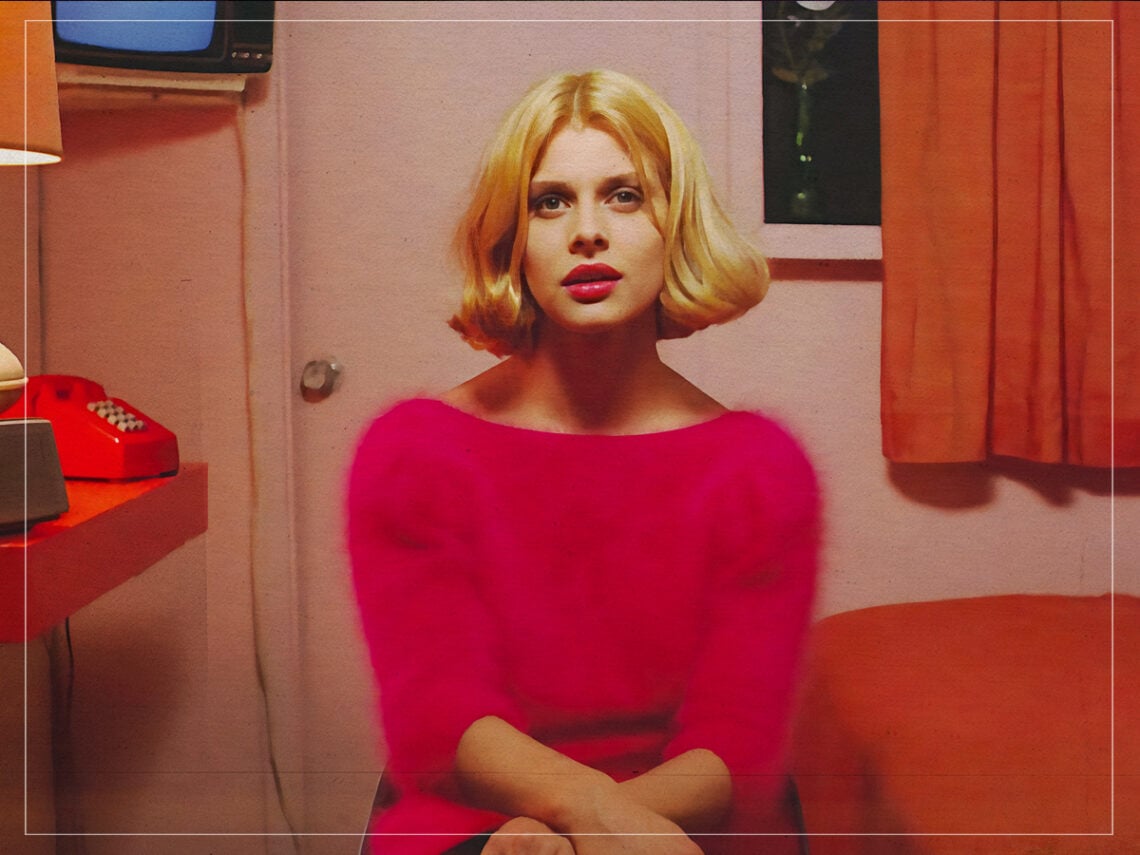
Even hearing the twang of Ry Cooder’s slide guitar score while in a particularly fragile mood can make me cry, and if I’m feeling brave enough, I’ll put my copy of the soundtrack on my record player and soak up the whole score in full. I see the image of Jane, played by Nastassja Kinski, on my wall every day, wearing her pink jumper and blonde bob, staring with parted lips at the camera. It serves as a reminder of that cinematic world full of simultaneous melancholy and hope, a desolate land of dreams and disaster that perfectly intersects.
Paris, Texas, feels like a part of me. For my dad, it’s Jaws – his memories of sneaking into the cinema to watch it when he was ten years old always come up in conversation when he references the film. Meanwhile, I have tender memories of watching my friend tear up at the end of his favourite film, Kes, which I later bought him a poster of, immediately thinking of him when I saw it. Films are wrapped up in memories and deep emotions, and it’s truly delightful to hear someone tell you why they love their favourite film so much.
But what about when that film is the same as yours? We can’t gatekeep films from other people, and it’s a special thing to be able to discuss something so personal to you with another person. It might help them understand you better, or vice versa, and it could allow the pair of you to properly connect. Still, it’s perfectly normal to want to keep a film all to yourself, allowing yourself to inhabit it like it was made just for you.
However, the joy of cinema is that viewers can take different things from the same film, meaning that even if you have the same favourite movie as someone else, you’re still going to have experienced it in a totally unique way, which is such a beautiful thing.
