


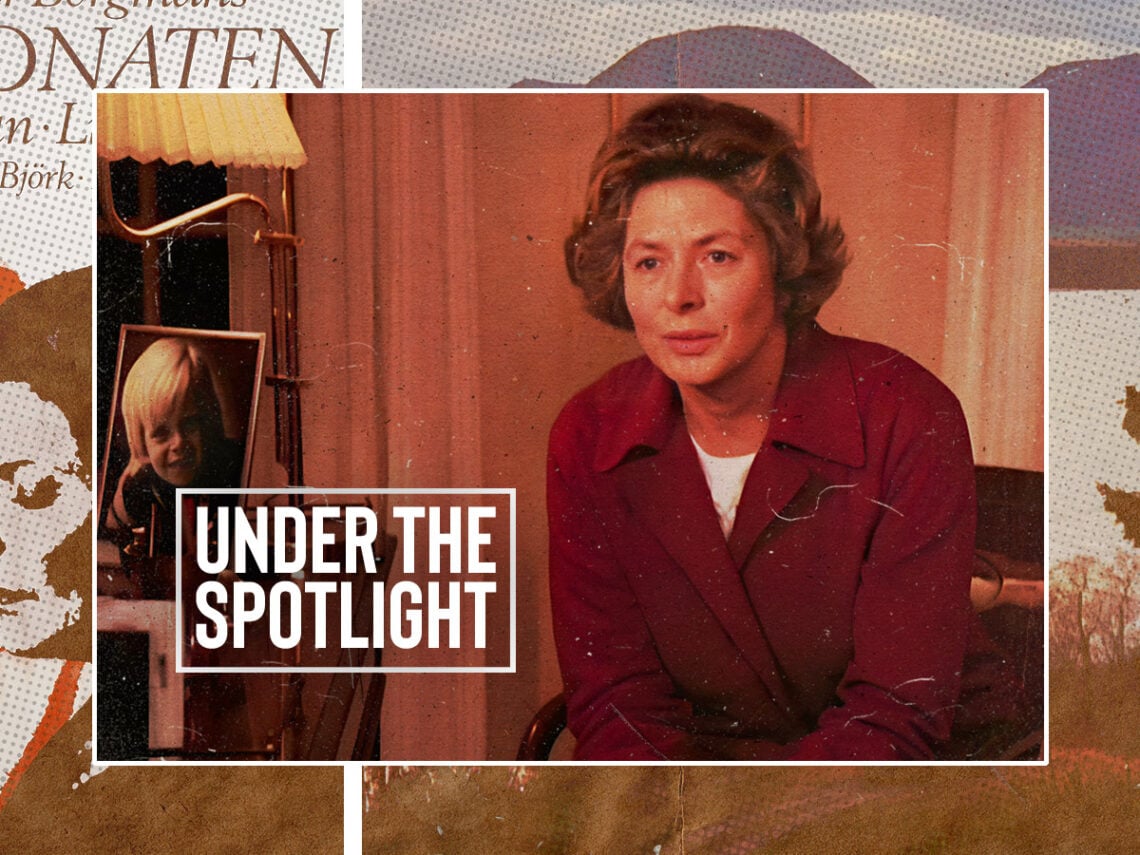
Under the Spotlight: Ingrid Bergman’s vulnerable performance in ‘Autumn Sonata’

In 1976, Ingmar Bergman went into self-imposed exile after being falsely charged with tax evasion. The shame and anguish he experienced were incredibly strong, and these emotions bled into his work, such as 1978’s Autumn Sonata, which became one of his greatest films.
Although the plot of Autumn Sonata follows the complicated relationship between a mother and daughter, Bergman invokes themes of regret, vulnerability, shame, bitterness, and hopelessness, which reflect the emotional state he found himself in. Moreover, Bergman hired his unrelated namesake, Ingrid Bergman, to play the mother, Charlotte, a character who, years prior, neglected her daughter and husband in favour of her artistic desires. In real life, Bergman, known for her starring roles in Casablanca and Gaslight, had abandoned her family in pursuit of her career and a relationship with director Roberto Rossellini. Thus, Autumn Sonata is perhaps both respective Bergmans at their most honest, channelling very real emotions and experiences into the film.
Bergman performs opposite Liv Ullmann, who plays Eva, the neglected child-turned-insecure adult who confronts her mother about their past. Both give incredible performances which can only be described as masterclasses in restraint and nuance. It would be easy for Autumn Sonata to morph into a melodramatic Hollywood drama in the wrong hands, with the extensive conversation between Charlotte and Eva at the heart of the film turning into an explosive, over-the-top display. Yet, Bergman and Ullmann imbue their performances with such magnificence, utilising a slight tilt of the head or a glint in the eye, giving the movie an overwhelming sense of realism.
As Charlotte, Bergman arguably gives the best performance of her career. Autumn Sonata marked the actor’s final on-screen appearance before she lost her battle with cancer just a few years later. In fact, she received her diagnosis at the beginning of filming, which undoubtedly influenced her portrayal of a woman reckoning with her past. Of course, Bergman didn’t need real-life experiences to evoke these emotions successfully – her acting prowess speaks for itself. Yet, when you consider the parallels between the movie’s themes and Bergman’s own life, you can’t help but find yourself flawed by the vulnerability of her performance.
The actor carefully demonstrates the complex interior world of her character by allowing her to move through emotions seamlessly. In one scene, Charlotte tears up as she discusses the death of her lover, Leonardo. However, within a matter of seconds, she conceals her tears and asks Eva, “Have I changed much since we last met?” Ignoring the fact she was just talking about loss and grief, she transitions to the topic of her outward appearance and new trouser suit. The immediate change of topic reflects her innate nervousness and desire to mask her insecurities, and as she smiles in the mirror and fixes her hair, Charlotte’s weakness is put on full display.
Later, during the movie’s centrepiece, where Eva and Charlotte discuss their relationship, the latter is forced to confront her role as a mother. Ullmann gives an emotionally charged monologue about the insecurity and neglect she experienced as a child. You can see years of regret, confusion, guilt and pain on Bergman’s face as she is given no choice but to relive the past, haunted by the fact that her decisions have had a life-long impact on her daughter’s mental state.
Autumn Sonata is one of cinema’s most realistic and soul-crushing portrayals of a strained mother-daughter relationship. Bergman’s terrific portrayal of a woman reckoning with her past decisions and grief is career-defining, rightfully earning her a nomination for ‘Best Actress’ from the Academy Awards. While she comes alive around her piano, Bergman’s character puts on a brave facade that doesn’t take long to crack. With her powerful performance, Bergman’s cinematic swan song couldn’t have been more perfect.
