


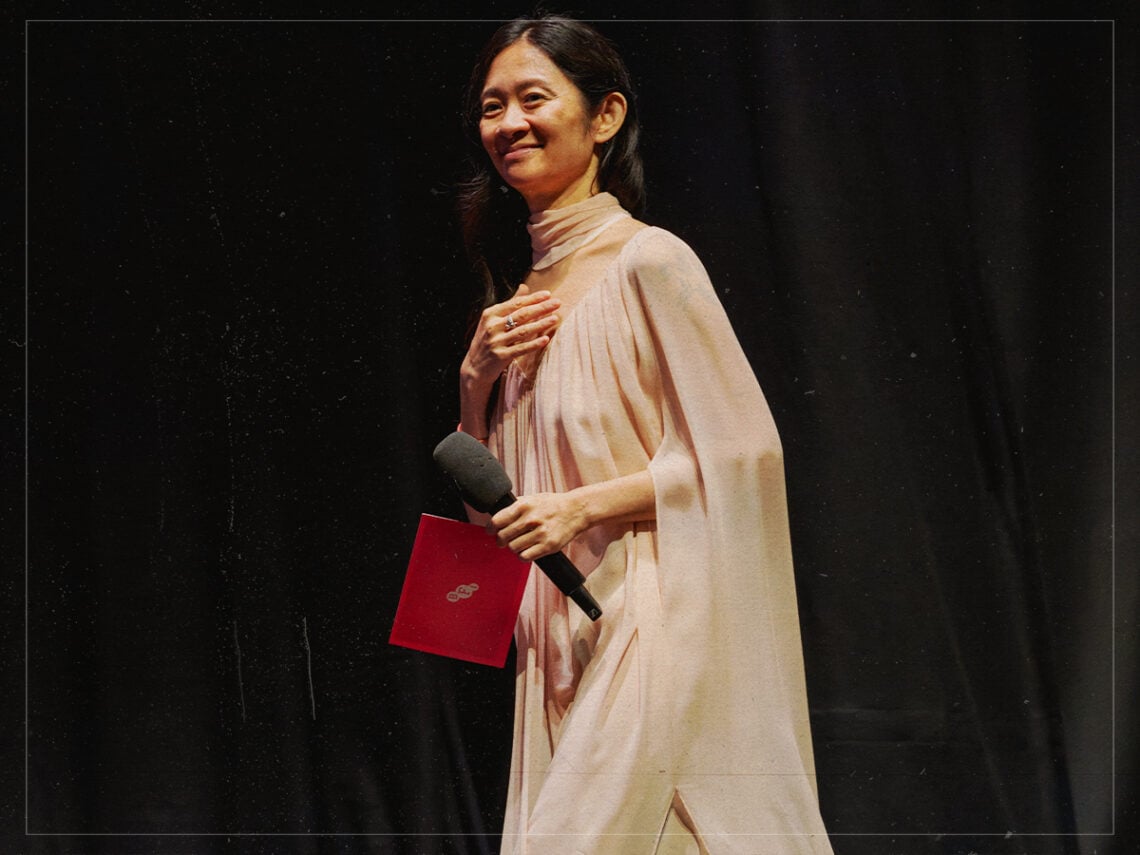
The influential movie Chloé Zhao called the “film that made me want to make films”

Chloé Zhao feels like an anomaly among contemporary filmmakers because of the sensitivity that she has shown in telling stories about vastly different cultures, with the Chinese director gaining attention from the independent film community thanks to her breakthrough feature, The Rider, a contemporary western about rodeos in America’s heartland.
It was Zhao’s second film, Nomadland, that offered a stunning exploration of the nomadic people in America who travelled between living situations, and earned her the Oscars for both ‘Best Picture’ and ‘Best Director’, but the choices that she made in the immediate aftermath were not what one might expect from a recent Oscar-winner.
She also (somewhat surprisingly) dipped her toes into the Marvel Cinematic Universe when she directed Eternals, and is currently working on a reboot of Buffy the Vampire Slayer that will see Sarah Michelle Gellar reprising her titular role. Although Eternals underperformed and there’s a healthy degree of scepticism about what the revival show will end up being, Zhao spent her time in the middle making her adaptation of the hit novel Hamnet, which is considered to be a major contender in this year’s awards race.
It’s evident that Zhao has become a prominent figure within English-language cinema, but she was first inspired to get into filmmaking by one of the most beloved Chinese directors of all time, as she told USA Today that the “film that made me want to make films” was Happy Together, a tragic romantic drama directed by Wong Kar-Wai.
Where Chunking Express and In the Mood for Love are often cited as his most famous films, Happy Together is one of the best romantic dramas of the 1990s, and featured impeccable chemistry between Leslie Cheung and Tony Leung Chiu-wai against an incredibly saturated and colour-blocked setting that the director is uniquely known for.
Considered to be one of the greatest living filmmakers, Wong has developed a unique style of naturalism and existentialism to tell profound stories of human relationships, and while his subject material often ranges wildly, there is a consistency to the emotional authenticity of his work that cannot be ignored.
Even if Zhao hasn’t made a Chinese drama in the same style as Happy Together, she has certainly taken the same approach to telling realistic stories that go an extra step to feel authentic, as both The Rider and Nomadland were notable because she hired many non-actors to play extras and supporting roles, which allowed the stories to be more immersive.
Even if Eternals ended up being received as one of the most disappointing superhero films in recent memory, the fact that the director was willing to shoot it on practical locations with real sets as opposed to MCU projects that are vastly enamoured with too much computer-generated imagery, such as The Marvels and Ant-Man and the Wasp: Quantumania, marks a striking contrast.
Zhao’s fascination with Happy Together is most relevant to Hamnet, which is a similarly downbeat romantic drama telling the story of a young William Shakespeare, played by Paul Mescal, and his wife Agnes, played by Jessie Buckley, as they recover from the death of their son, which inadvertently inspires one of the greatest works of drama ever in the form of Hamlet, and although the stripped-down, impressionistic approach has divided critics, its unusual stylistic choices may be familiar to those who have seen Happy Together, making the link ever clearer between the personal and the inspiration.
