


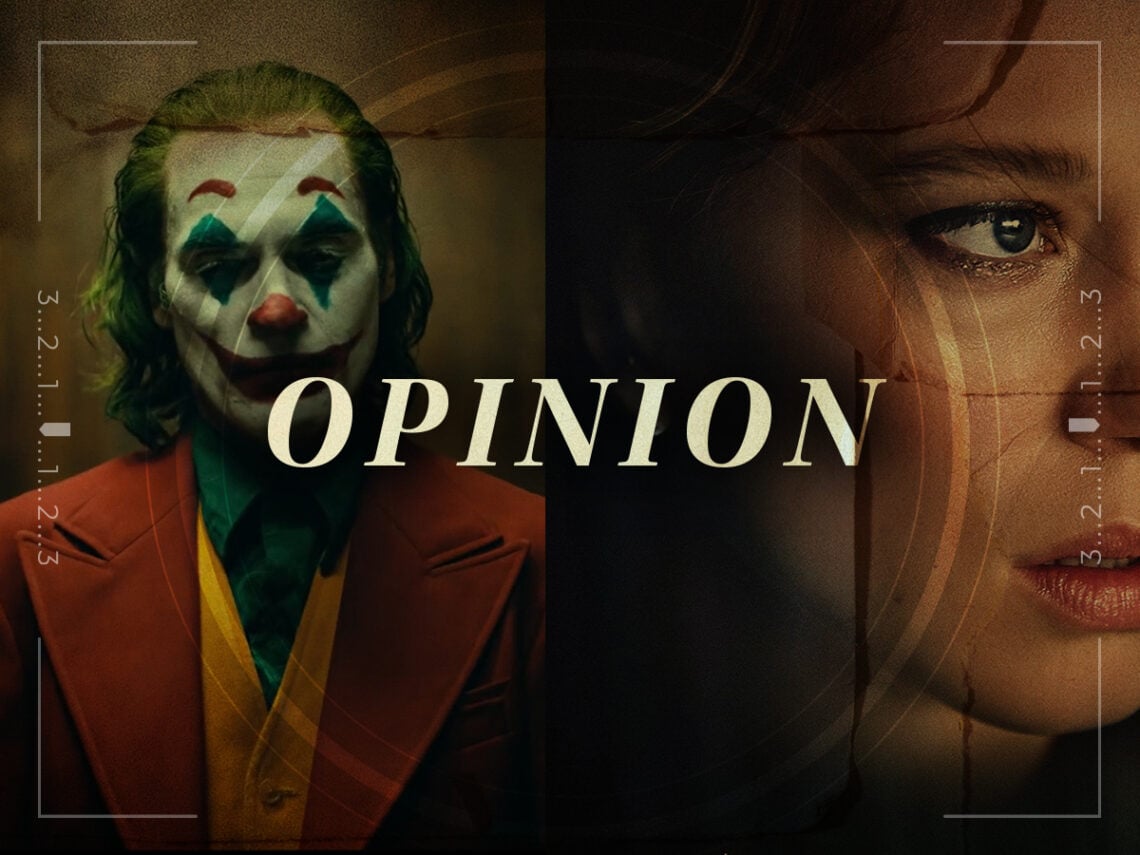
Hear Me Out: Incel cinema can’t be OK in 2025

I’ve never really cared what is in films. I know some people care deeply about it. They count the times a woman is naked versus a man; they count the conversations female characters have alone; they analyse the world of the fictional film through the lens of our real one as if even the most far-off universes in cinema must adhere to our moral code or societal standards. I’ve never cared much about that, but I think we all might need to start, at least about the treatment of women and the deception of incels.
In 2024, the year when violence against women was announced to have hit terrorism threat levels and declared as a state of emergency in the UK, I sat in the cinema watching The Beast and felt sick. It was one of the only times I’ve ever considered getting up and walking out. But as the film hit its third act and the tale of this century-spanning, reincarnated connection entered its most modern and recognisable chapter, the plot line of the incel and the inevitable victim felt anxiety-inducing and horrific with no real benefit to it.
The connection between Léa Seydoux and George Mackay’s characters in the movie is complex. It’s billed as a sci-fi romance film, so in some ways, these two figures are tethered together lifetime after lifetime as if they’re meant to be in some way. It’s set up that Seydoux’s character has forever had this lingering feeling that something horrible would one day happen to her. In each lifetime, we see it played out. But in the third, when that thing is being murdered by an incel, predicted by a long lead-in of ominous gothic clues and clips of Mackay’s character doing the classic incel video diaries, complete with lines borrowed directly from those of Elliot Rodger, who shot six students and then himself the same year the movie was made, it became sickening. I couldn’t laugh along with Mackay’s funny little liners, as the director seemed to want us to. I couldn’t mock the character, given that he is all too real and getting more real in the world. And in the hour-long build-up to Seydoux’s inevitable attack, I quite simply didn’t want to watch it.
Honestly, for the first time, I wondered why I should have to watch it. One in three women globally will experience sexual or gender-based violence – the sad fact is that for the high proportion of women in that audience, violence at the hands of a man will one day be, or already has been a reality. In 2023, the UN estimated that men intentionally murdered at least 51,000 women and girls. Between 2018 and 2023, these statistics have seen a rise of 37%. By July 2024, the statistics already reported in the UK prompted the NPCC and College of Policing to announce that violence against women was now an “epidemic” and declare it a “national emergency”.
What good does having these scenes on screen do for us? Especially in a case like The Beast, where the plotline isn’t really questioned or condemned beyond being another inevitable horror faced by Seydoux’s character. Perhaps more worryingly, the attack is noted as a strange way to tether these two leads together in a quasi-romance that fails to truly critique incel culture beyond mocking gags at Mackay’s caricature of one.
I’m not one to believe that art always has a social responsibility. But given the climate we’re living in, I think films should consider the characters, their writing and their existence in this world more. Right now, we’re witnessing a time where Donald Trump is tearing rights away from everyone but straight white men. We’re witnessing his attempt to put restrictions on women’s healthcare. He’s trying to ban words like ‘women’, ‘discrimination’, ‘equality’, ‘gender’, ‘hate speech’, ‘trauma’ and ‘victim’ from research papers submitted to bodies like the National Science Foundation, essentially making it impossible to report on the rise in gender and sexual violence or the psychological impact these things have.
We’re witnessing Elon Musk, a man who exists as a king in the eyes of the incel culture of the ‘manverse’, grabbing at more and more power while crushing things like DEI programmes that protect the rights, safety and opportunities of women. As we watch men like this take power and enact terrifying things, it empowers incel communities hungry to see women weakened and vulnerable at the wills of men or inferior to their perceived superiority, and, in doing so, it puts women in danger.
As violence against women hits epidemic levels, we’re watching the world get worse and undeniably less safe. We’re also watching Trump’s crackdown on publications, research findings and the ability to talk about these things. So, if the media becomes more restricted, art needs to step up.
Todd Phillips seemed to understand that. Upon the release of Joker, perhaps the ultimate incel film, there was a lingering sense that the movie was dangerous. James Holmes, dressed in a Joker outfit, shot at a cinema audience in 2012, immediately tethering this character to real-life atrocities. The month Phillips’ film premiered, there were two more attacks of the same nature, with the US military putting out a warning about attacks tied to this character who had become a symbol of this ideology – an unloved and isolated man turning violent against the world that has abandoned him.
The film feeds into it totally, and when it came to making the sequel, it seemed that Phillips realised that and refused to repeat it. Joker: Folie à Deux is a musical starring Lady Gaga, a fact that would immediately put off the kind of toxic hypermasculine audience the first catered to. Perhaps it was that the director witnessed the way the character was being used as a symbol of real-world violence and decided to flip it on its head. If so, that feels like a radical act of deeply responsible directing and artistry.
Incel cinema has a long history, with films like Taxi Driver and Fight Club at the apex as the ultimate depiction of this kind of isolated male figure becoming a threat to society. But as we watch that happen on a global scale, both with world leaders and with the growing threat of online communities coming to life in acts of fatal violence against women, cinema needs to start being more responsible with the stories being told, questioning if audiences really need to see fictional gender-based violence when there is more and more in the real world, and at least making sure that critique is clear at a time when more and more celebration of prejudice and violence is happening around us.
