


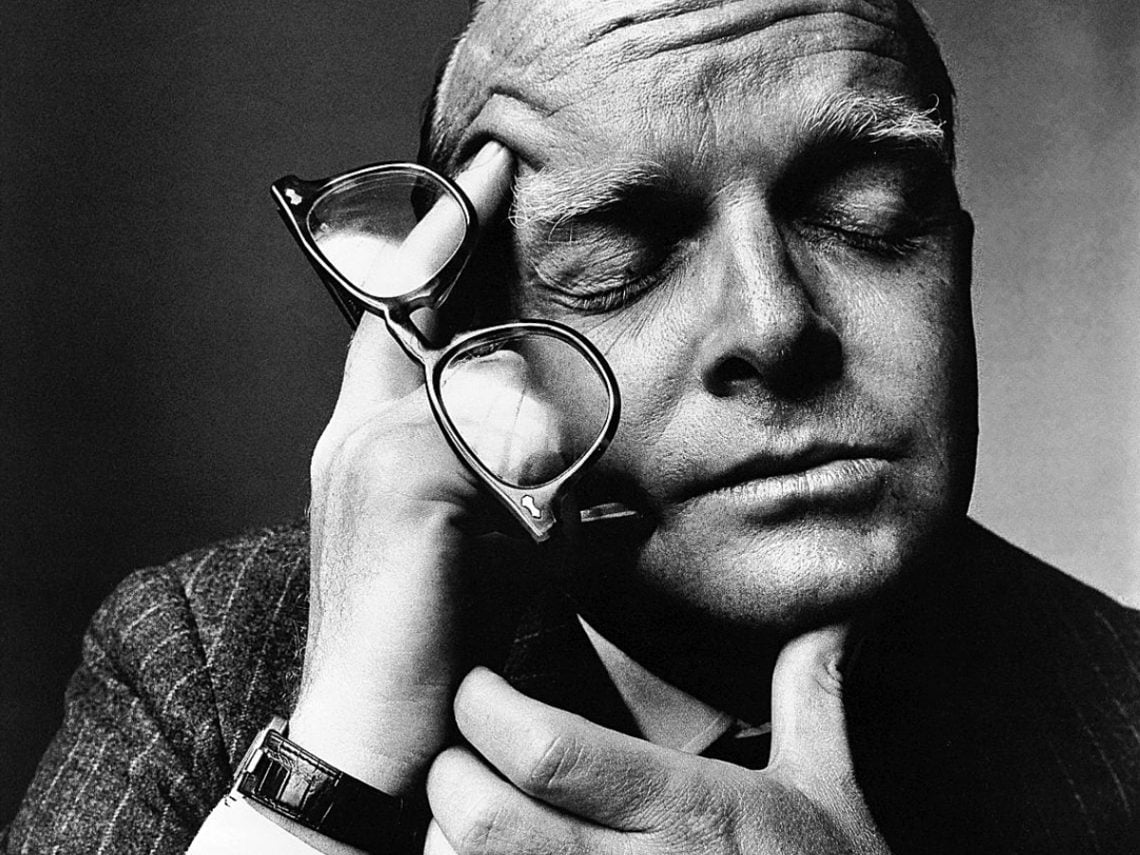
‘In Cold Blood’: The novelisation of a murder that foretold the darkness of the 1960s

“No one will ever know what In Cold Blood took out of me,” Truman Capote once told his biographer, Gerald Clarke, “It scraped me right down to the marrow of my bones. It nearly killed me. I think, in a way, it did kill me.”
The range of Capote’s works of journalism, fiction and nonfiction is expansive. From his 1958 novel Breakfast at Tiffany’s that follows his socialite protagonist, Holly Golightly’s escapades in New York City, to the semi-autobiographical 1948 southern gothic novel Other Voices, Other Rooms, his work dove into the central theme of humanity and, in turn, identity, analysing character archetypes that, while possibly mirroring people Capote encountered in his life (himself, included), also served as personas through which the writer could parse through his thoughts on society, at large.
As a pioneer of New Journalism alongside the likes of Joan Didion and Norman Mailer, his distinct approach to writing reached its peak with his 1966 ‘nonfiction novel’ In Cold Blood, his definitive work that, as he told The New York Times in 1966, he believed was the beginning of a new literary tradition. “It seemed to be that journalism, reportage, could be forced to yield a serious new art form: the ‘nonfiction novel’, as I thought of it,” he explained to George Plimpton, later describing journalism as “the most underestimated, the least explored of literary mediums”.
In Cold Blood is a fictionalised account of the murder of the Clutter family, which transpired on November 15th, 1959, in the small farming community of Holcomb, Kansas. It saw the four-member family of a presumed wealthy farmer, Herb, his wife, Bonnie, and their teenage children, Nancy and Kenyon, brutally murdered by Perry Edward Smith and Richard Hickock, two ex-convicts on parole from the Kansas State Penitentiary, for seemingly no reason.
They had learned of the family through Hickock’s former cellmate, Floyd Wells, a one-time farmhand for Herb, while Capote found out about it from a 300-word article in The New York Times, headlined, ‘Kansas Farmer Slain. Family of Four Is Slain in Kansas’, printed a day after the incident, which described the unexplainable event and quoted the local sheriff as saying, “This is apparently the case of a psychopathic killer”.
Three days later, Capote, joined by his childhood friend, writer Harper Lee, travelled to Kansas to investigate, and over the course of the next six years, the former became familiar with those involved in the investigation and the residents of Holcomb and the surrounding area. Lee was also essential to his project, as Capote detailed to The New York Times, “She was extremely helpful in the beginning, when we weren’t making much headway with the townspeople, by making friends with the wives of the people I wanted to meet. She became friendly with all the churchgoers.”
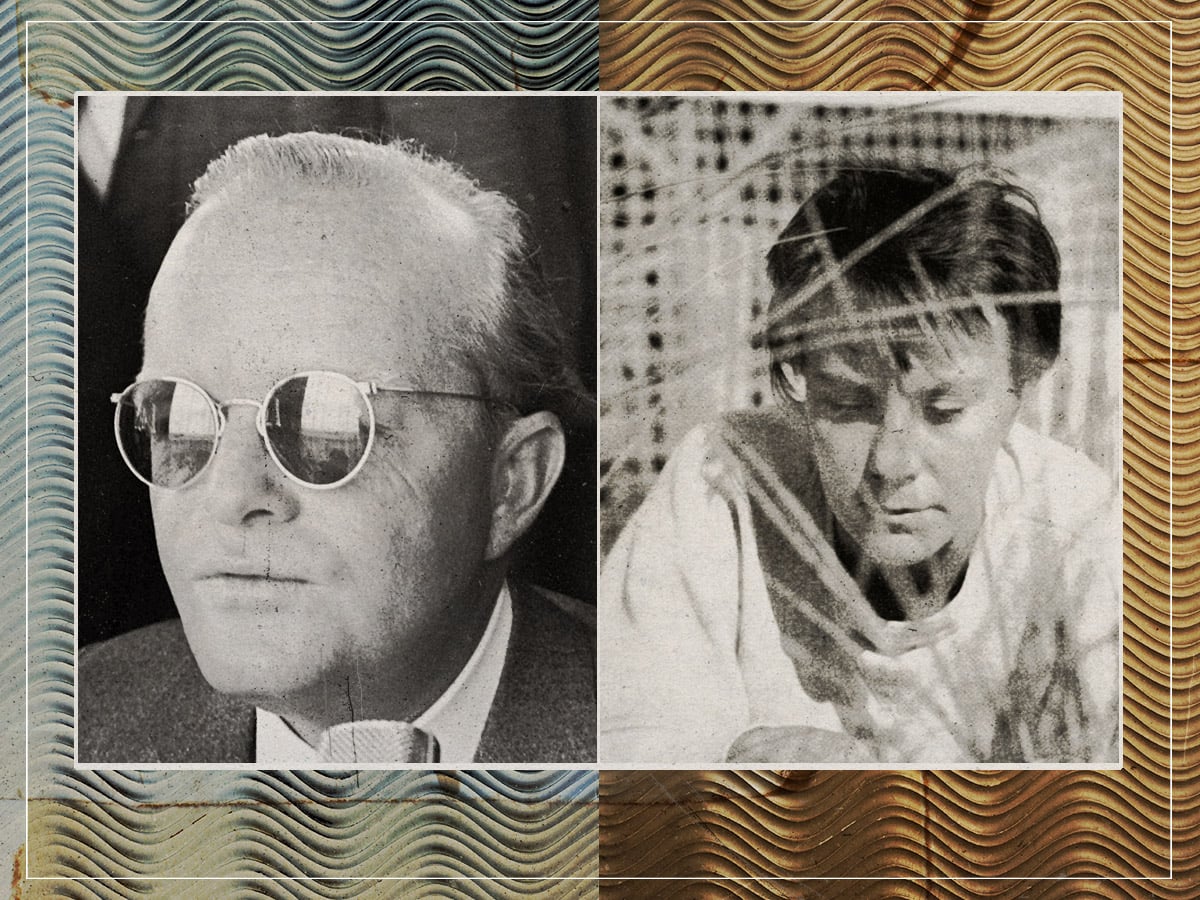
Intentionally, Capote never recorded nor took notes during his interviews, believing that such practices “artificialise[d] the atmosphere”. He had trained himself to memorise lengthy conversations by having a friend read passages from a book which he, in turn, attempted to transcribe from memory. He did, however, compile a supposed 8,000 pages of research, including court records, newspaper articles, letters and various other documents.
Capote eventually established a rapport with the two murderers, interviewing them extensively over the course of four years, during his visits to the prison that held them while awaiting their execution. “I saw Perry first, but he was so cornered and suspicious, and quite rightly so, and paranoid that he couldn’t have been less communicative. It was always easier with Dick,” he explained, “He was like someone you meet on a train, immensely garrulous, who starts up a conversation and is only too obliged to tell you everything. Perry [was] much easier after the third or fourth month, but it wasn’t until the last five years of his life that he was totally and absolutely honest with me, and came to trust me. I came to have great rapport with him right up through his last day.”
Of Perry Smith, the author stated that he consistently questioned his reasoning for writing In Cold Blood in the first place, to which he’d respond that he wanted to create a book that could result in a work of art. Smith, according to Capote, found this ironic, revealing, “He’d tell me that all he ever wanted to do in his life was to produce a work of art. ‘That’s all I ever wanted in my whole life’, he said, ‘And now, what happened? An incredible situation where I kill four people, and you’re going to produce a work of art’. Well, I’d have to agree with him. It was a pretty ironic situation.”
First serialised in The New Yorker and later published by Random House in 1966, In Cold Blood became a terrifying tale of American tragedy that captivated readers and, as Capote envisioned, opened the floodgates for a new subgenre that fused journalism with the literary. In alignment with the wave of New Journalism, chronicled for instance in Didion’s 1968 nonfiction collection Slouching Towards Bethlehem, the 1960s saw a preoccupation with analysing society, at large: how people could allow such atrocities to occur, and where the motives may lie.
In Cold Blood, then, while a novelisation of real-life savagery, was an effective gaze into the crime that ran rampant in America, at the time, particularly in stark contrast to the hippie idealism that was optimistically trying to shift social consciousness. Casting a journalistic eye onto the terrors that took place, Capote crafted one of the decade’s most poignant scrutinies of societal collapse.
