


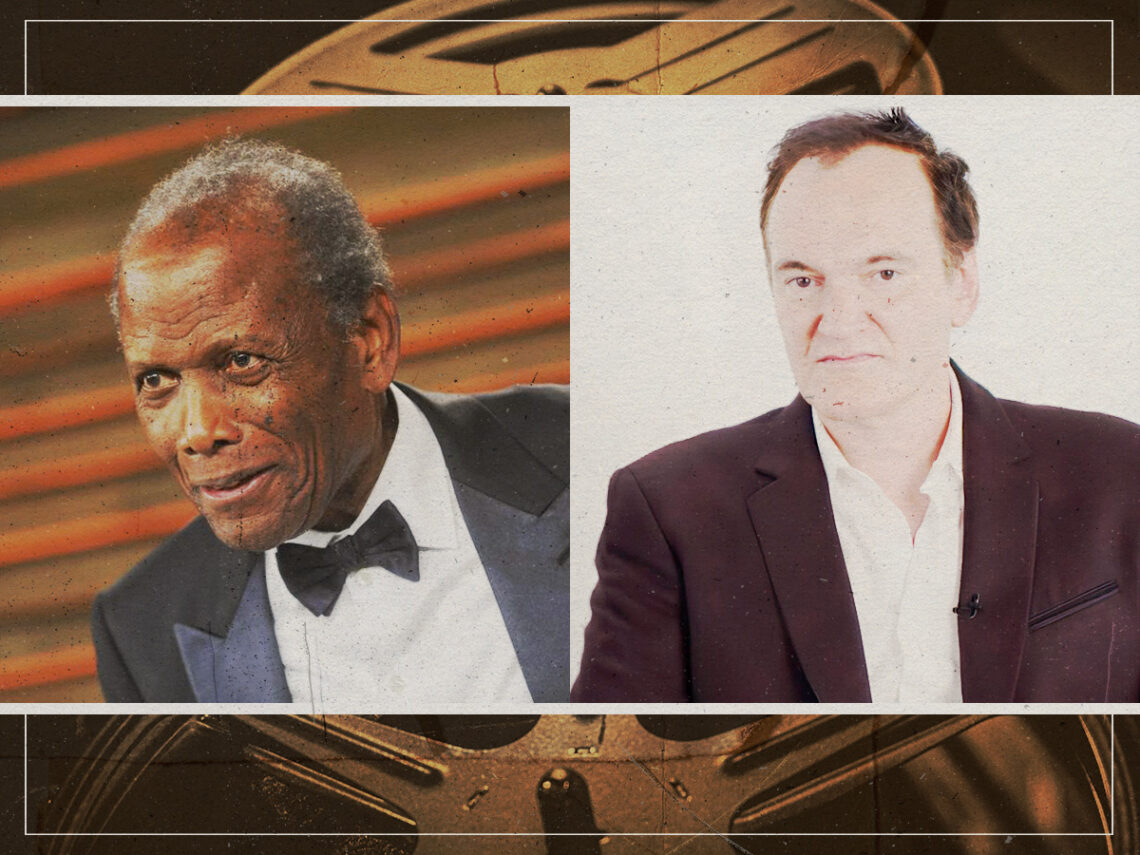
The advice Sidney Poitier gave to Quentin Tarantino: “I don’t think you should do that”

When it comes to writing scripts, Quentin Tarantino seems attracted to the power of violence, brutality, and conflict, whether physical or verbal. Each of his films centres around clashes in opinions and personalities, typically resulting in intense acts of aggression, which often become the focal points of the narratives.
Naturally, Tarantino’s penchant for violence has landed him in hot water at times, with some critics questioning his treatment of women (such as in The Hateful Eight) or his depiction of race-related brutality. Some viewers have also expressed distaste for Tarantino’s frequent use of the N-word within his scripts, stating that as a white man, his readiness to slip the word into his screenplays is bizarre.
The offensive word is used most in his 2012 film Django Unchained – around 110 times, in fact. The movie is set in the Old West and follows Jamie Foxx’s titular character, who strives to free his wife from a tyrannical white supremacist after he escapes enslavement. Many people accused Tarantino of being a little heavy-handed with his use of the N-word within the film, regardless of its setting and the themes it explores. Spike Lee was among many who condemned the film, finding the overuse of the word “disrespectful”.
As a result of criticisms, Tarantino once said, “Then see something else. If you have a problem with my movies then they aren’t the movies to go see. Apparently, I’m not making them for you.”
Yet, the filmmaker once shared a story (via NPR) that suggested he was apprehensive to depict white supremacy, racism and violence within his film. It wasn’t until he spoke to a certain legendary actor, Sidney Poitier, that he found the courage to go ahead with the film, regardless of criticism.
“I actually went out after I finished the script … with Sidney Poitier for dinner,” he revealed. “And was telling him about my story, and then telling him about my trepidation and my little plan of how I was going to get past it.” His plan involved filming outside of the United States, but Poitier thought he was getting too caught up in his worries.
“He said, ‘Quentin, I don’t think you should do that. What you’re just telling me is you’re a little afraid of your own movie, and you just need to get over that. If you’re going to tell this story, you need to not be afraid of it. You need to do it. Everyone gets it. Everyone knows what’s going on. We’re making a movie. They get it.’”
In the end, Django Unchained became the filmmaker’s highest-grossing movie, although it was marred in controversy before it even hit theatres. Poitier’s advice seemed to encourage Tarantino not to doubt the divisive nature of his work, and many critics did eventually praise the film’s message and its overall direction and performances. Tarantino won ‘Best Original Screenplay’ at the Academy Awards, while Christoph Waltz won ‘Best Supporting Actor’, making the film one of his most critically and commercially successful.

Never Miss A Take
The Far Out Quentin Tarantino Newsletter
All the latest Quentin Tarantino content from the independent voice of culture.
Straight to your inbox.