


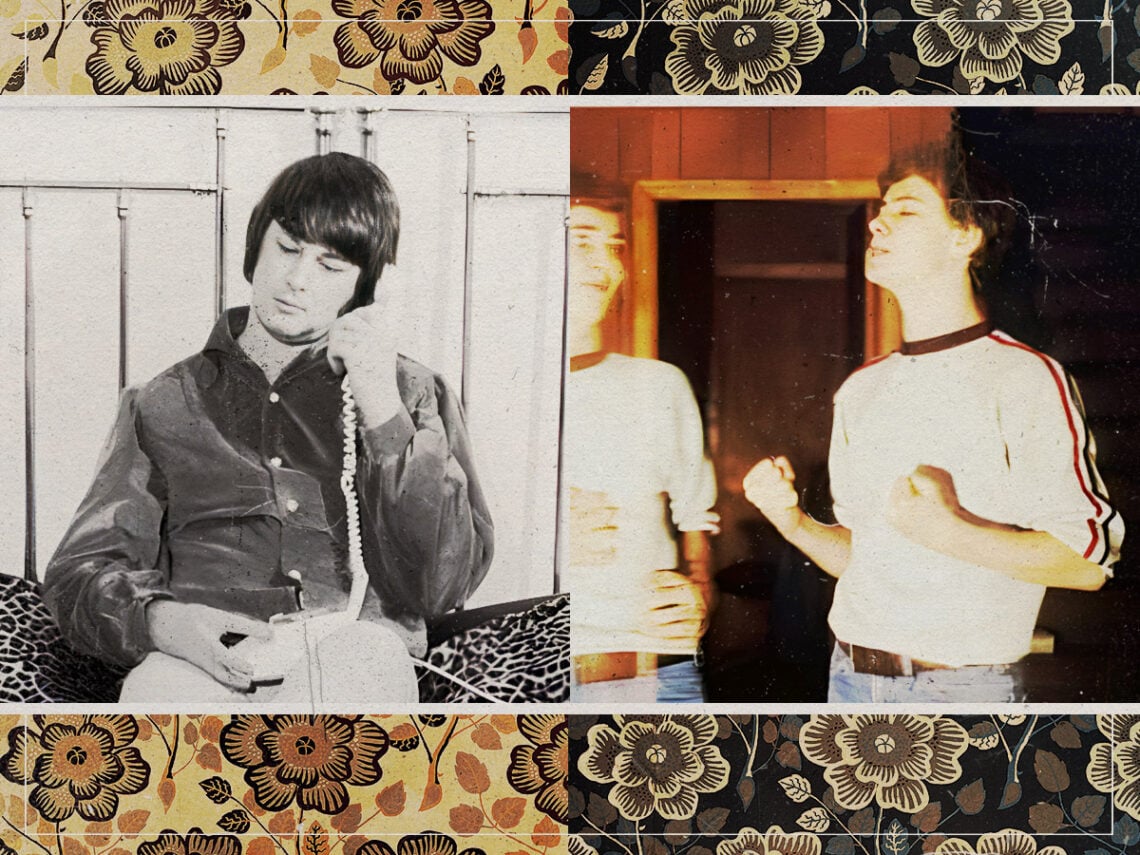
The impact of The Beach Boys on Daniel Johnston

It’s difficult to consume any media surrounding cult lo-fi artist Daniel Johnston without also stumbling across the name Brian Wilson. Everyone, from your average music journalist to David Bowie, seems to have drawn a comparison between the two artists, and it’s not difficult to see why.
Both musicians struggled with harrowing mental health issues in their personal lives while making music that often seemed youthful and innocent. While Wilson’s harmonies, pop sensibilities and romantic lyrics infused his compositions with a sense of optimism, Johnston’s more melancholic form of pop was informed by his lo-fi recording techniques and endearing vocals.
Though Johnston would never quite achieve the same worldwide success as the Beach Boy, he did garner a devoted cult following, which included the likes of Kurt Cobain and Bowie. The latter once even deemed him a “one-man Brian Wilson/Beach Boys” during a conversation with Mojo. “He comes out of Austin, Texas,” he added, “Also another lad who had a lot of problems with thinking.”
The likening of Johnston to Wilson is not just something that was imposed upon the outsider artist for his sound and mental health struggles. The comparison was acknowledged in the 2005 documentary The Devil and Daniel Johnston, which starred the musician and noted the impact of the Beach Boys on him.
After a friend played the Beach Boys’ magnum opus, Pet Sounds, to Johnston for the first time, Johnston, like many of us, was left stunned. Amazed by the sounds of Wilson and the Beach Boys, the musician reportedly went out and bought “every Beach Boys record you could possibly imagine”. It’s easy to see how this obsession with the Beach Boys might have informed his own music in all of its tender beauty.
Even Johnston’s parents acknowledged the similarities between their son and the Beach Boy, suggesting that Wilson’s story influenced them, too. His father, William, implied that the two had similar characteristics and stages of development before sharing, “We’re learning from it,” he acknowledged, “We don’t want to make the same mistakes. He did well, actually, in the end, and we’d like Dan to do well too because he needs to.”
Though the two figures have done well in completely different ways, Johnston certainly lived up to those hopes. His tender home recordings, his openness about his struggles with mental health, and even his drawings have changed the lives of countless listeners. Almost five years after his death, the gentle genius of Johnston remains just as important as ever, and though comparisons can be well founded, his impact stretches far beyond his similarities to Wilson.
