


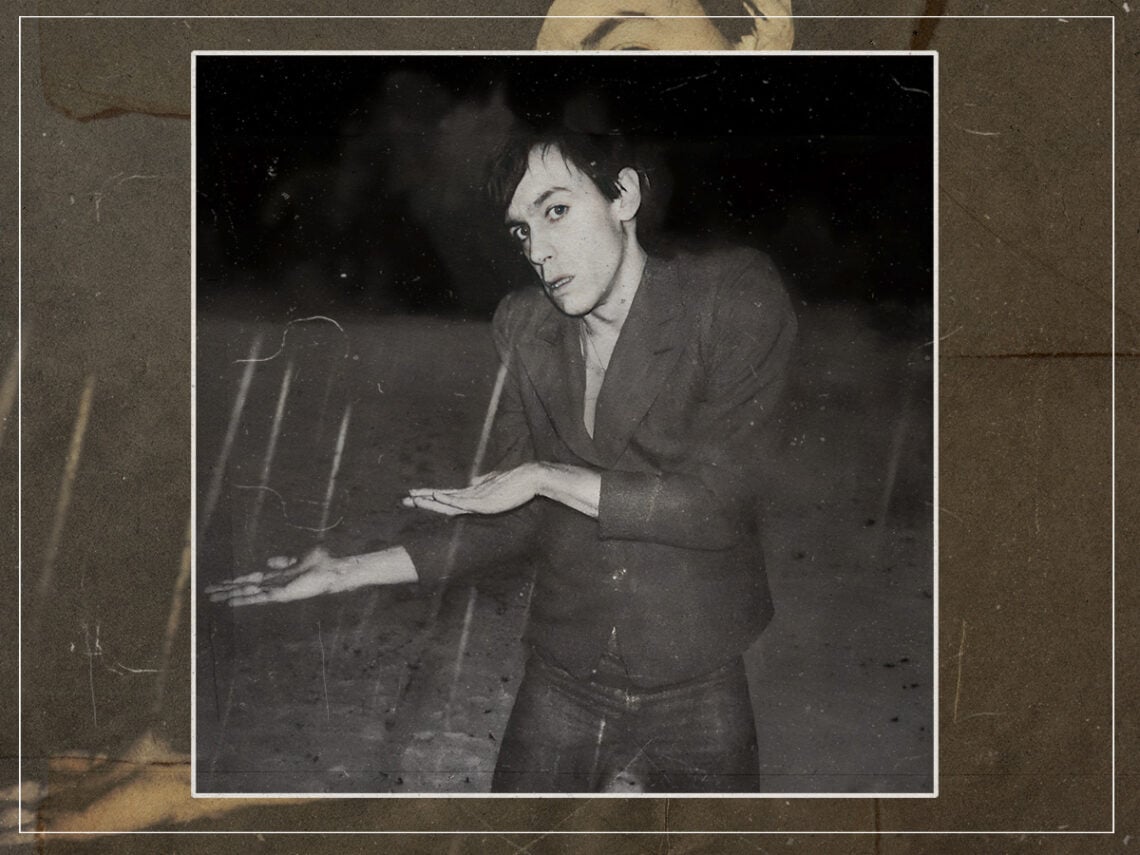
Iggy Pop, ‘The Idiot’, and dreams of dystopia

It’s summer in 1976, and amid the blistering heat lies a battered and bruised Iggy Pop, holed up in Château d’Hérouville, picking up the pieces of his musical career. By the mid-point of the 1970s, the proto-punk dream of The Stooges was over, and Iggy had taken it badly. Never one to throw in the towel, a sweat-stained Pop took his catastrophic downfall as an opportunity for a musical rebirth, the results of which would change the face of alternative music forever.
With The Stooges, Iggy paved the way for the punk boom of the mid-1970s. The group were ruthlessly ahead of their time, but in a depressing case of tragic irony, Iggy was in no fit state to capitalise on it by the time music caught up to them. His reliance on drugs had not only led to the downfall of his band. They were preventing the endlessly energetic frontman from getting his act together enough to start again. However, unlike most addicts, Iggy had the helping hand of one of the most influential artists of all time. So, retreating to a château shortly outside Paris, Iggy Pop and David Bowie set about recording The Idiot.
Within the walls of Château d’Hérouville, saturated with history dating back to the French Revolution, Pop and Bowie began to form their own revolution. Built up gradually through ad-hoc recording sessions and the free exchange of ideas, The Idiot was soon formulated. Influenced by industrial dystopia, electronic music and the most subdued side of his earlier work, the album confirmed the rebirth of a musical genius. The industrial noise influence was something that Bowie was fascinated by. Still, it held a special place in the heart of Detroit native Iggy Pop, who recalls being fascinated by the industrial landscape of his home state, “Like the beautiful smokestacks and factories… whole cities devoted to factories!”
Aside from sounding like the set-up for an excellent sitcom, a cold turkey Iggy Pop and a post-Ziggy David Bowie holed up in an 18th-century French mansion could either be a recipe for success or disaster. Generally, as his later work would support, a sober Iggy tends to lose the edge and angry desperation that made his early work with The Stooges so infectious. However, on The Idiot, Pop deliberately departs from the proto-punk assault of his band to create a much more mellow, tender album.
With Bowie supplying the vast majority of the musical backing for the album, it was down to Iggy to craft the lyrics. With his lyrical compositions, the singer showed that, although he was down, he certainly was not out. Crafting some of the best prose of his career, in ‘Nightclubbing’ and ‘Sister Midnight’, Pop not only confirmed his musical renaissance, he birthed an entirely new musical genre.
Not satisfied with being the harbinger of punk rock, Iggy indirectly birthed post-punk on The Idiot. The inherent moodiness and industrial influences of the album would later be replicated by a plethora of post-punk groups. However, few ever managed to replicate the genuine emotion that can be heard through Iggy’s performance on this album. The Idiot is certainly an album from somebody with nothing left to lose. Although nowadays he is hailed as an object of musical worship, living in a Miami mansion, in the mid-1970s, he was just another junkie artist whose band had failed.
Subverting expectations of himself as the madman of punk rock, the sullen nature of The Idiot was necessary for the wailing guitar-fuelled adrenaline hit of Lust for Life, released the very same year. Though it could just as easily be considered a Bowie record as an Iggy record, it still maintains its sense of industrial wonder decades after its initial release. It is no surprise that the album went on to re-energise Pop’s career, as well as sparking inspiration for the blossoming post-punk scene, which dominated the alternative music scene in the years following.
