


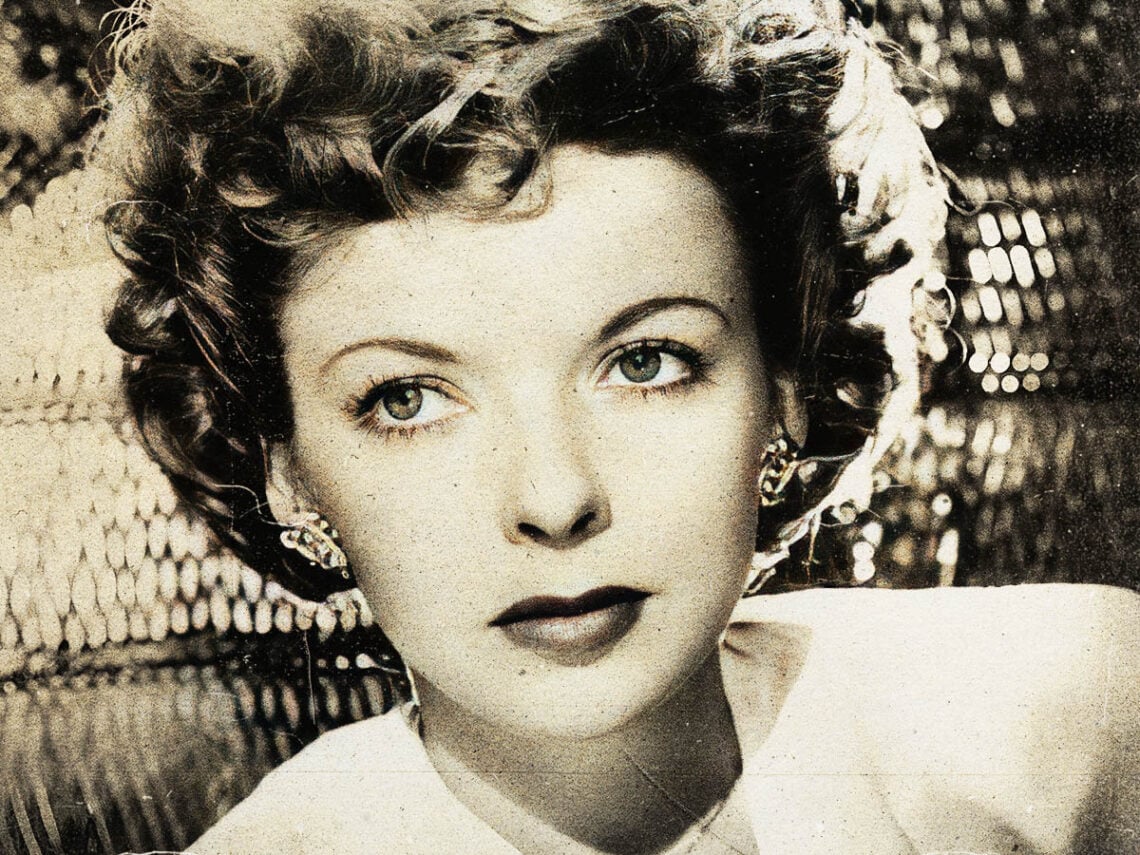
Ida Lupino: the pioneering female director who inspired Martin Scorsese

The history of cinema has always been told as unequivocally male, despite women acting as essential components in the development of the medium, such as Alice Guy-Blache pioneering the first narrative film. Unfortunately, many female filmmakers have been overlooked, with their male counterparts receiving all the credit. Sadly, this comes as no surprise, considering that it took the Academy Awards 81 years to honour a woman with the ‘Best Director’ prize.
However, the film industry wouldn’t exist in its current shape if not for female filmmakers, such as Ida Lupino, who significantly influenced one of today’s most celebrated directors – Martin Scorsese. Born into a prestigious acting family, Lupino was encouraged to join the theatre from a young age, learning every leading female role from Shakespeare’s plays by the time she was ten.
Lupino earned her first film role in 1931’s The Love Race, and by 1933, she had secured a five-year contract with Paramount. Throughout the 1930s and the following decade, the actor starred in hits such as They Drive By Night, High Sierra and The Hard Way, establishing her as a highly in-demand star. Despite her success, she was a defiant figure that often rejected roles she wasn’t comfortable with, such as those that presented women in a negative and stereotypical light. Thus, she was frequently suspended by Warner Bros, with whom she signed in the 1940s.
Despite her acting talents, Lupino was always drawn to writing, penning her first play when she was only seven. While suspended from acting, she formed a production company, The Filmakers Inc, with her then-husband, Collier Young. Lupino’s company prioritised low-budget, independent movies that highlighted social issues. In a piece for the New York Times, Scorsese explained: “She was a true pioneer: the six films she directed between 1949 and 1953 are remarkable chamber pieces that deal with challenging subjects in a clear, almost documentary fashion, and are a singular achievement in American cinema.”
After directing scenes in Elmer Clifton’s Not Wanted, refusing to receive any credit, she made her directorial debut with Never Fear, which she wrote with Young. The movie was inspired by Lupino’s own battle with polio, with Sally Forrest playing a dancer whose career is halted when she is diagnosed with the disease. However, her second picture, 1950’s Outrage, is arguably one of her most significant outputs. It was one of the first movies to deal with rape, establishing Lupino as a proto-feminist filmmaker.
Despite garnering controversy due to its themes, Outrage is an essential B-movie that gracefully tackles a particularly weighty topic – something filmmakers still struggle to portray respectfully today. Scorsese said, “In Outrage, she portrayed rape not in melodramatic terms but in a cool behavioural study of evil in the most ordinary setting.”
He explained: “Her heroines were young women whose middle-class security was shattered by trauma, unwanted pregnancy, polio, rape, bigamy, parental abuse. There’s a sense of pain, panic and cruelty that colors every frame.”
The following year, she released the sports drama Hard, Fast and Beautiful, one of her least successful efforts. However, Lupino made history once again when she released 1953’s The Hitch-Hiker, the first female-directed mainstream film noir. Inspired by the serial killer Billy Cook, the film is widely praised as one of her best works, noted for its incredible atmosphere and thematic complexity.
In her penultimate film, The Bigamist, Lupino starred as one of the leading characters alongside Young’s new wife, Joan Fontaine. The movie was critically acclaimed, as was her final feature, The Trouble With Angels, a comedy revolving around an all-girls Catholic school, released in 1966. During the 1960s, Lupino directed multiple episodes of television shows such as The Twilight Zone, Bewitched, and Thriller, before returning to acting in the 1970s.
Despite her monumental achievements, Lupino, who died in 1995, and her impact have largely been forgotten. Luckily, Scorsese has carried her influence with him, writing: “What is at stake in Lupino’s films is the psyche of the victim. They addressed the wounded soul and traced the slow, painful process of women trying to wrestle with despair and reclaim their lives. Her work is resilient, with a remarkable empathy for the fragile and the heartbroken. It is essential.”
