


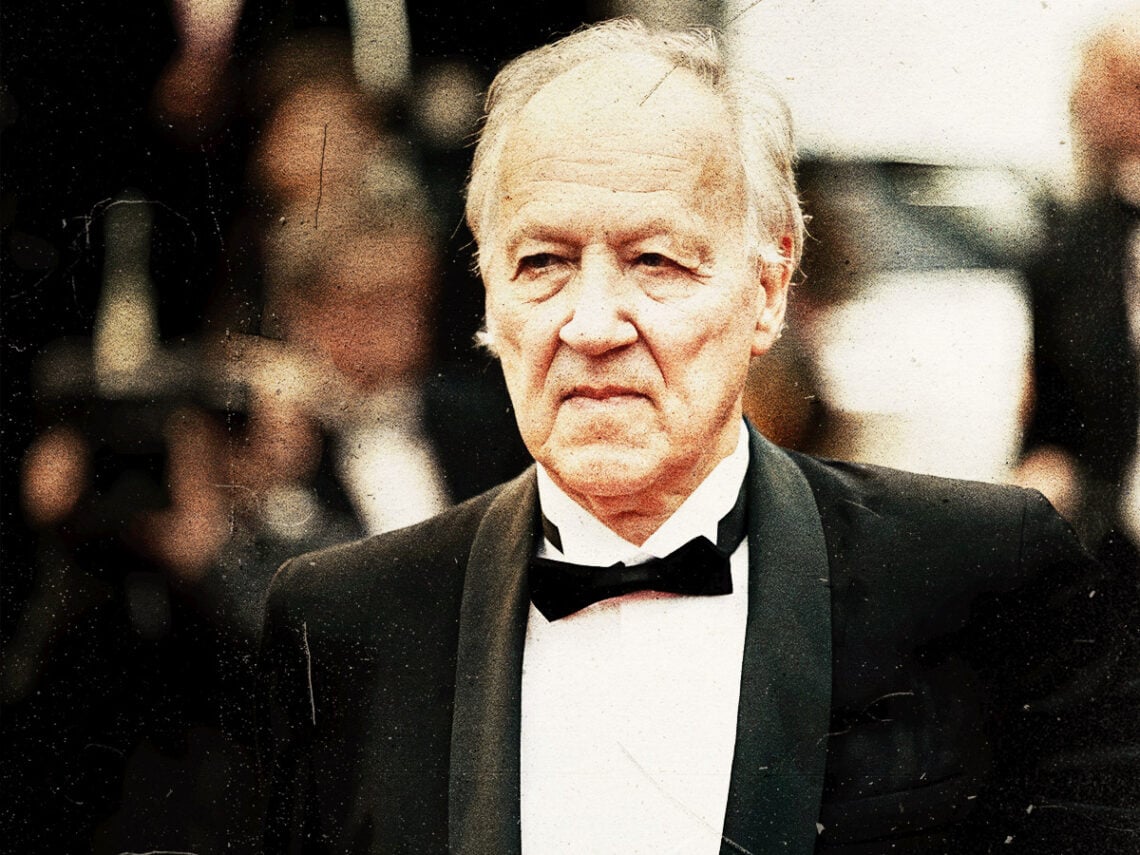
The iconic director Werner Herzog called “counterfeit”

There’s no love lost in the world of cinema, even when it comes to world-renowned directors taking shots at each other’s filmographies. Hardly a shrinking violet, Werner Herzog has never shown any interest in withholding his unvarnished opinions.
A maverick in every sense of the word, Herzog’s off-screen eccentricities have become almost as famous as his on-camera efforts, many of which have gone down as indisputable classics. As great as many of his movies have been, though, the filmmaker has never shown any interest in playing the game.
His legendarily fractious relationship with creative soulmate Klaus Kinski put them both through personal and professional hell on a number of occasions, but Herzog always refused to get involved with the self-aggrandizing side of his profession. He wasn’t trying to change the world or blaze a new trail for the art form; instead, he maintained his focus on telling the kind of stories he wanted to tell in the way that he wanted to tell them.
As a result, he ended up deeming the works of Jean-Luc Godard as lesser than a martial arts flick, and he was far from the only legendary director to hold that opinion. The pioneer of the French New Wave movement may have left behind an indelible mark on cinema, but many of his peers and contemporaries found him to be deliberately obtuse to the point of pretentiousness.
From Herzog’s point of view, he’d much rather watch something else than sit through one of Godard’s elegiac epics, which, be believed, tried to manufacture their intelligence and innovation at the expense of entertainment and authenticity. “Someone like Jean-Luc Godard is for me intellectual counterfeit money when compared to a good kung-fu film,” was his fairly low appraisal.
He wasn’t alone, though, with Ingmar Bergman admitting he’d “never gotten anything out of his movies.” Describing Godard’s back catalogue as “constructed, faux-intellectual, and completely dead,” he even went so far as to label the massively influential filmmaker as “a fucking bore” who’d “made his films for the critics.”
Orson Welles was in a similar boat, too, although he did at least acknowledge “his gifts as a director are enormous.” The issues, however, arose because Welles “can’t take him very seriously as a thinker.” In his mind, Godard’s message “is what he cares about, and like most movie messages, it could be written on the head of a pin.”
As he tends to do, Herzog put his own unique spin on it by branding one of celluloid’s most influential figures as an “intellectual counterfeit,” concocting the fantastic visual image of him accidentally stumbling across one of Godard’s movies on TV before scrambling desperately to locate his copy of Drunken Master instead to save himself the hassle.
