


“Luck and happenstance”: the iconic American movie written in a Dutch coffee shop

Inspiration can strike from anywhere, and just because a movie came along and single-handedly transformed the landscape of American cinema almost overnight, it didn’t need to be written Stateside.
In fact, it was a deliberate decision on the filmmaker’s part to gain some much-needed cross-continental alone time, although you can’t help but wonder if the location ensured that there was at least some chemical assistance provided, as anyone who’s been to an Amsterdam coffee shop can surely attest.
There’s no rule that says you can’t pen one of the most important pictures of the decade while stoned off your tits, and despite Amsterdam being inundated by tourists who visit the Dutch capital to enjoy its herbal remedies and nightlife free from the restrictions prevalent in other countries, Quentin Tarantino insisted that his jaunt to the Netherlands to crack Pulp Fiction was strictly work-related.
That said, Roger Avary disagreed. “We always said, ‘I want to get Amsterdammed!'” he told Vanity Fair. That’s a fairly, well, damning indictment, but the director disagreed. “It was all about living in another country,” Tarantino maintained, and he brought bespoke notebooks to aid the cause, even telling himself, “This is the notebook in which I am going to write Pulp Fiction.”
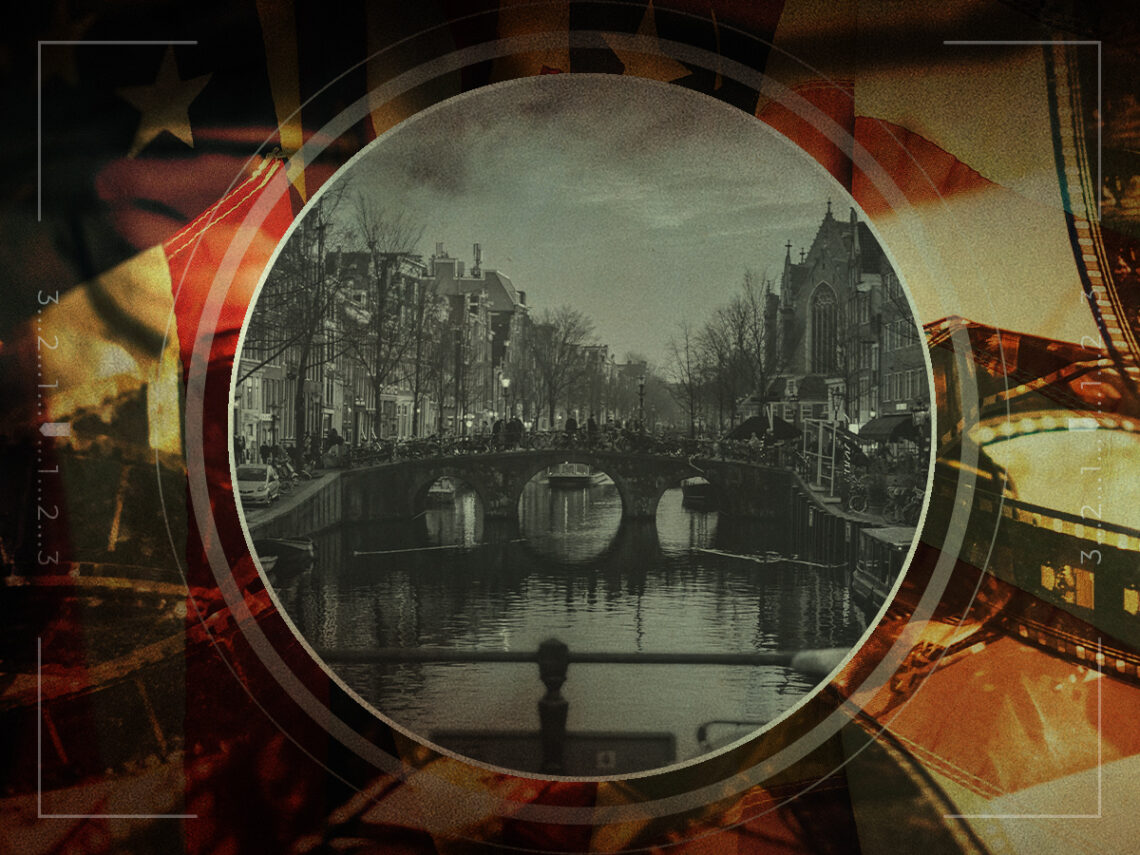
That’s what he did, so you can’t accuse him of lying. “I just had this cool writing existence,” the eventual winner of the Academy Award for ‘Best Original Screenplay’ elaborated. “I didn’t have to worry about money. Through luck and happenstance, I found an apartment to rent right off a canal. I would get up and walk around Amsterdam, and then drink like 12 cups of coffee, spending my entire morning writing.”
Tarantino’s departure to Europe definitely worked, and Pulp Fiction would have been the most talked-about release of 1994 if it wasn’t for Forrest Gump, which became an increasingly sharp thorn in the auteur’s side when he began to realise that his script was the film’s only real chance of awards season success when Robert Zemeckis and Tom Hanks kept steamrolling the competition.
He technically got the last laugh, though: whereas Forrest Gump was a cultural phenomenon that eventually sidled out of the spotlight, Pulp Fiction ushered in a new era for independent cinema in America, to the point where it began to feel like every second or third low-budget release was a blatant rip-off.
By the end of the decade, non-linear narratives populated by an ensemble cast of oddball characters firing barbed dialogue back and forth while dropping obscure pop culture references became the norm, and as oversaturated as the market became, it can nonetheless be traced back to that Amsterdam coffee shop where Tarantino dedicated himself to his work.
Maybe it would have been a smarter decision for every Pulp Fiction imitator to make a European jaunt of their own to see if they’d be struck by a similar creative lightning bolt, instead of copying the director’s homework and hoping that it would strike again for them.
