


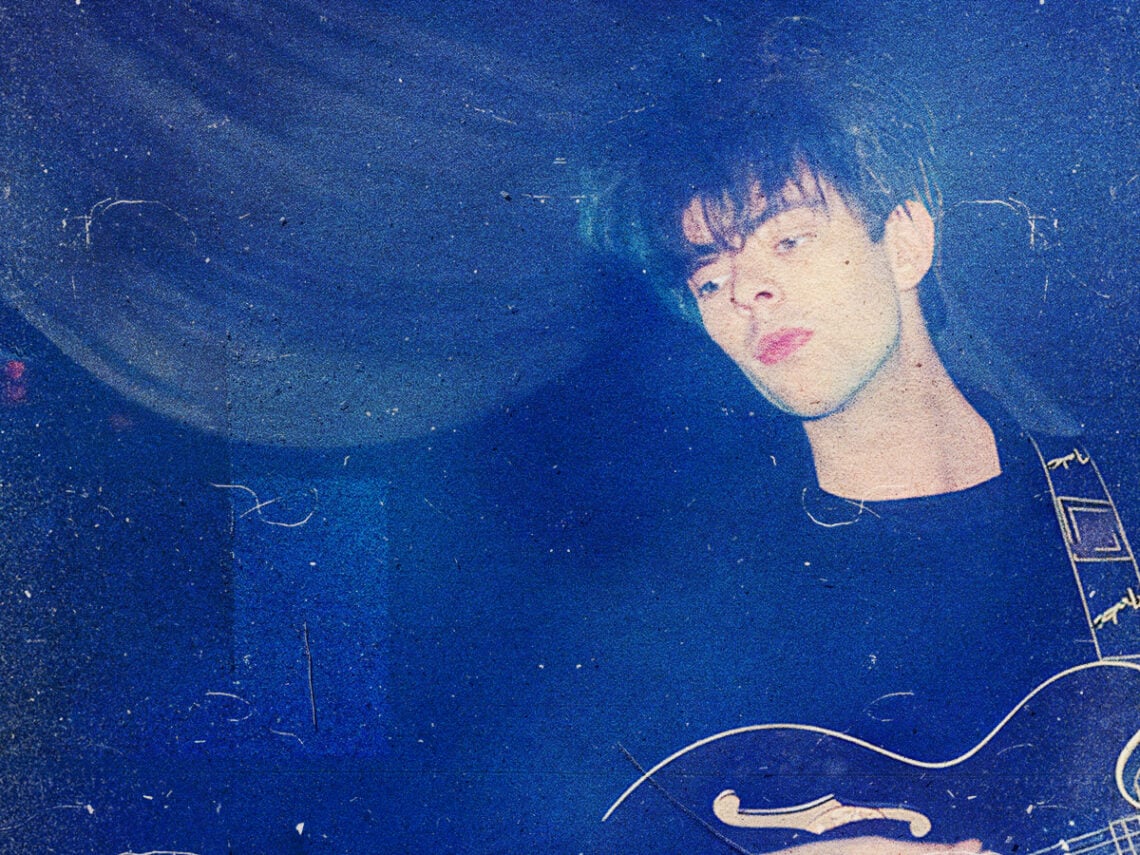
Ian McCulloch of Echo and the Bunnymen discusses his favourite Velvet Underground album

In the late 1970s, a Liverpool band formed by the audacious name The Crucial Three. The three members, Ian McCulloch, Julian Cope and Pete Wylie, gravitated to one another over a shared passion for contemporary punk and its lineage through the retrospective tangle of rock and roll. The Velvet Underground was one such progenitor with which the three were particularly infatuated.
The Crucial Three performed a meagre run of local gigs over their six weeks of existence before Wylie’s departure; he would subsequently find his musical footing as the frontman of Wah! Heat. With Wylie’s exit, Cope and McCulloch continued as A Shallow Madness before renaming themselves The Teardrop Explodes. Shortly after the rebrand, McCulloch became estranged amid an artistic dispute between him and Cope and departed to form Echo and the Bunnymen.
Beginning with their debut album of 1980, Crocodiles, Echo and the Bunnymen fashioned their own distinctive plot on the musical map over the 1980s. Melding the dark psychedelia of The Doors and The Velvet Underground with contemporary post-punk flavourings, McCulloch and his band gathered a strong cult following, reaching a commercial and creative peak in the 1984 masterpiece Ocean Rain.
Reflecting on the band’s biggest influences in a feature with The Quietus, McCulloch picked out some of his favourite albums. Alongside David Bowie, Lou Reed was one of the most prominent artists on the list, appearing four times, twice as a solo artist and twice on Velvet Underground albums.
“I had a beer with him once in New York and ended up paying nine hundred dollars for it,” McCulloch said, recounting the time he met Reed. “I had to borrow some money ’cause I’d come out with $500 thinking that would be okay for a piss-up, and then the bill came. I’d only had a house salad and three glasses of wine – which he’d made me have. I said I wanted red, and he said: [in New York accent] ‘Well, we’re having white’.”
Adding: “We just sat there with his mates, and he switched like a bastard. I just looked at my mate and thought, I hope it’s not one of them seven-course jobs. He’s a cantankerous bastard. And he looks like Rhea Perlman from Cheers. He makes me laugh just talking about him.”
McCulloch’s first Velvet Underground selection was The Velvet Underground & Nico, the band’s 1967 debut album. The Liverpudlian nicknamed the album ‘Banana’ in relation to its famous Andy Warhol-created artwork.
“The whole New York thing was kind of like the Bowie outer space thing – you’d see it on films. And when I first went out to New York, I thought how right the music was for the place. It was the antithesis of the California thing,” McCulloch observed. “I bought a Velvets compilation with ‘I’m Waiting For The Man’ on, and every title fascinated me. When I got ‘Banana’, everything about it was cool, a different kind of cool to Bowie, just this disrespective, narky cunt, with the greatest rock ‘n’ roll band in the history of time.”
“Technically, it doesn’t matter; the chemistry between them was incredible,” he continued. “Every rhythm guitar part I’ve ever played I’ve just nicked from Lou Reed, even some of the punkier stuff. There were all these punky little rhythms. Not as important as Bowie in what he decided to do, but up there because it was a band with a definite frontman. When I met the right people later in life, I would use the Velvets model.”
Despite his early infatuation with the Velvets’ debut, McCulloch’s favourite was 1969’s The Velvet Underground – often nicknamed ‘The Grey Album’. He said: “I love ‘Banana’ to bits, but the third one is my favourite; it’s the one that I play more. I don’t know exactly what it is about it. I bought their albums in order, but there was something about ‘Candy Says’ and ‘Jesus’ – maybe because I’d just got the [experimental] White Light/White Heat album, I wanted proper songs, and he [Reed] delivered big time on this one.”
Following White Light/White Heat, the Velvets’ second album, Reed asked the avant-garde multi-instrumentalist and co-founder John Cale to leave the band. At the time, he cited Cale’s contradictory and often overly experimental ideas, but some will attest to jealousy on Reed’s part. In Cale’s stead, The Velvet Underground returned to a more accessible rock ‘n’ roll sound.
“Even ‘Murder Mystery’ I like,” McCulloch added. “I’m not the biggest John Cale fan; his voice gets on my wick. It was just at the time that Ziggy [Stardust] ended; it almost broke my heart. I had these magical split-second things – it was like being in love, but with someone from Venus, and then Lou came along, and I knew he would get me through it.”
Listen to ‘The Murder Mystery’ by The Velvet Underground below.
