


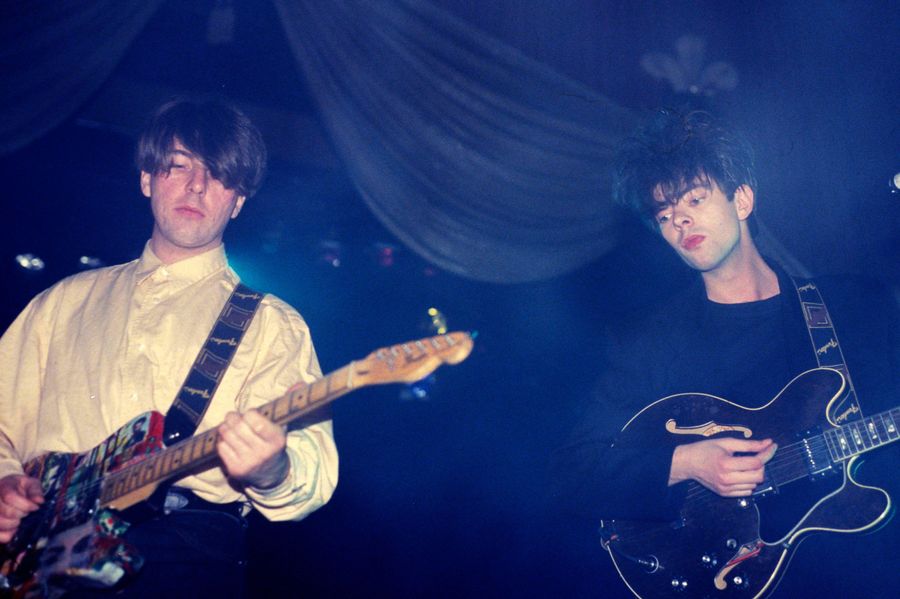
Ian McCulloch still thinks ‘Ocean Rain’ is the “greatest album ever made”

The late 1970s brought along a new form of guitar music by the name of post-punk. Pioneered by the likes of Talking Heads, Public Image Ltd, and Devo, artists took on the DIY approach of their punk predecessors but also experimented with new genres like funk and krautrock. The result was a more arty sound than punk, with abrasive guitars and playful rhythms.
While many post-punk greats made quirky, jangly guitar music, a Liverpool-born band called Echo & The Bunnymen took the genre in a darker direction. Combining the influences of post-punk and new wave with gloomier, gothic tendencies, they gained widespread acclaim with their early 1980s releases ‘The Cutter’ and ‘The Killing Moon’.
The latter of these singles became Echo & the Bunnymen’s biggest hit, with a cult following only bolstered by the track’s feature in Richard Kelly’s 2001 thriller Donnie Darko. It also formed the first single for the band’s atmospheric 1984 album, Ocean Rain. Marketed as the “greatest album ever made”, the dim record featured a 35-piece orchestra and cinematic, moody soundscapes.
Echo & the Bunnymen frontman Ian McCulloch has since affirmed his belief in this claim – over three decades after its release, he gave The Quietus a list of his favourite albums and Ocean Rain made the list. He boldly states, “I go by my original story – greatest album ever made. It’s incredible, beautiful.”
McCulloch goes on to praise the lead track, which he penned himself. He dubs ‘The Killing Moon’, “genius” and “the best song ever written”. He recalls writing the song just before the band went to Paris to record the full album, describing it almost as a religious experience: “I woke up one morning and I know it was sunny, and I sat upright with words that God had given to me in my sleep.”
McCulloch continues: “It wasn’t like a dream, I just woke up with the words, and that has never happened before or since. I legged it to find a guitar to get the chords down, and obviously to write the words down. Divine inspiration, and that was it. I haven’t really credited Our Lord with the lyrics before.”
Contemplating whether he would change anything about the album retroactively, McCulloch admits that he prefers his voice now but that the masses might disagree. He concludes, “No, not really. I think it’s a complete thing.”
Despite McCulloch’s unwavering faith in the record, he reflects on the album’s limited success overseas, sharing, “It wasn’t the easiest album to sell to America, but it certainly inspired other people in bands in America to go on and reap more rewards than we did.”
He continues, “I’m surprised that Warners didn’t press the button [and promote it properly in the US]. In those days you’d hire a plugger. Wayne Coyne thinks it’s the best album ever, but it just didn’t have the exposure. And we weren’t really a band that toured for long periods – I’d miss Liverpool too much. More European influences I suppose.”
Still, McCulloch retains his self-assurance, “But then we were the best band in the world and we’d just created that… and you’re not going to bribe people?”
Though it was marketed as the “greatest album ever made”, Ocean Rain received mixed critical and commercial success, reaching number four in the UK and number 87 in the US. Nonetheless, the record is still one of the genre’s greatest releases, loved by post-punk fans and Ian McCulloch alike.
