


“The Ministry of Not Forgetting”: How Iain Pollard and Jane Forsyth perfected the humanist music documentary with ‘Broken English’

The process of making Broken English with Marianne Faithfull was nothing short of “divinity”, as Jane Pollard put it, coming together in a miraculous and perfect way, but in that very specific miraculous and perfect way of being a complete accident, by chance.
Specifically, Iain Forsyth and Jane Pollard are fascinated by musicians and capturing their portraits, such that you’d be forgiven for thinking that their office was a record label, as music history books are everywhere, punk memorabilia is scattered around, and a looming portrait of Nick Cave hangs over the desk.
There isn’t really a point in asking them why musicians when instead I can just look at their record player set up, look at both of their style and just know that it’s as simple as the fact that music captured their heart and united them, like it has for people throughout time, turning them into this formidable duo working on the intersection of two forms.
Yet still, Broken English was an accident because while music and music makers are their fascination, both will admit that Marianne Faithfull wasn’t a figure that they were specifically passionate about. In fact, Pollard admitted that the depth of their knowledge about her at the start was not much more than “the big lie”.
In their film, in which they bring Faithfull into a fictional organisation called the ‘Ministry of Not Forgetting’ with the clear motivation of archiving and documenting her life and career, “the big lie” sits central as the prevailing and enduring misogynistic and minimising take of Faithfull as merely a “’60s pop star and Mick Jagger’s girlfriend,” Forsyth says with an eye roll, has blocked anything more thorough. It’s done that for a decade, leaning to very little actually interesting, actually inquisitive content on Faithfull beyond a grubby desire to dig fingers into her pain and past addiction and pick around in there. But overwhelmingly, the thing that is so moving about Broken English, and so special about the duo behind it, is that it does the direct opposite of that, making no secret of its deep adoration of its subject matter or any move that would make her even the slightest bit uncomfortable.
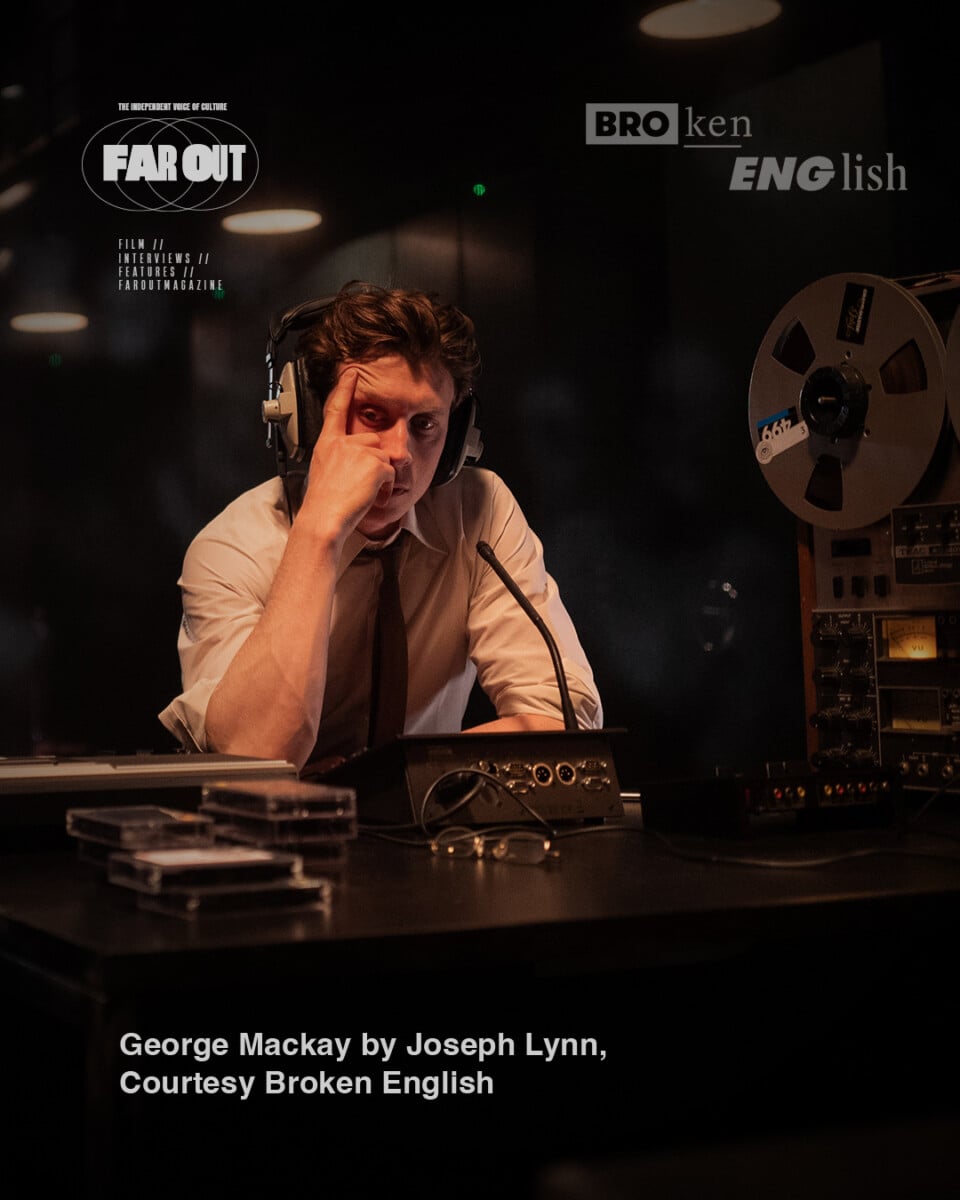
There lies an interesting point that I put on the table. There is a blurry divide between me, a journalist, and Pollard and Forsyth. Technically we work in different worlds, but after seeing Broken English, my number one take away was that this is perhaps the best piece of music journalism I’ve ever seen as with the help of a cast of actors, including George MacKay and Tilda Swinton as the two primary figures running the ministry, as well as panels of journalists doing round table discussions, and musicians sharing off-the-cuff thoughts on Faithfull, they create what genuinely feels like a definitive document on her career at its vastest, covering everything from her music, her acting, her love for beat poetry, her childhood, and so much more.
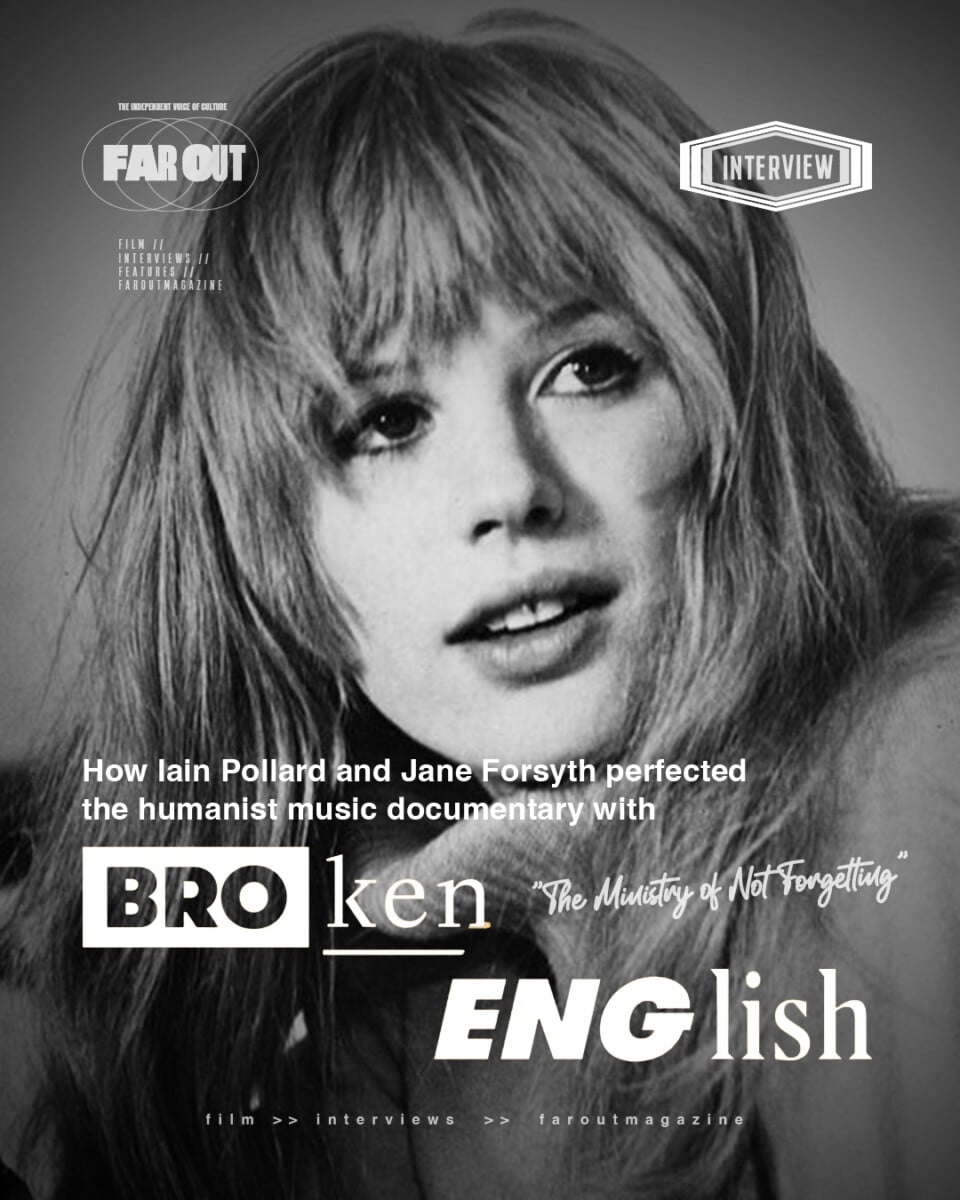
But crucially, some of that is never put to Faithfull. There is a fascinating moment, when the film begins to address her addiction and the media abuse she’s faced, where a comment is made about how she “shouldn’t have to” talk about it. Instead, the clips of the singer reviewing her own career focus on highlights, giving her a truly beautiful experience of reflecting on her own career as Pollard said that the baseline idea of this movie was simply “watching Marianne’s face”, documenting the moments of joy or pride, capturing the icon reviewing her own archive.
It is journalism, but the wall that journalists run into all the time is the looming question of how close you should get to your subject. As a writer, I often hear voices that don’t think journalists should try to be friends with the person they’re talking to, believing that there should always be an ‘us vs them’ line that is essential for impartiality. Yet, as Pollard, Forsyth and I all look at each other, as music fans and humans first, we all know that’s bullshit.
“I don’t know how much you get from being combative with your subject,” Forsyth said, agreeing that while politicians deserve, and need, a level of fight to hold them to account, trying to connect with an artist demands trying to connect purely with a person. If you want Marianne Faithfull to let you in, she has to trust you. If you want her to trust you, why would you make her uncomfortable, demanding she retread old and painful ground that she’s been asked about a million times before.
The idea brings us to the golden ground that Forsyth and Pollard have staked their claim on with 20,000 Days On Earth, and now even bettered with Broken English. Approaching their subjects as artists themselves and filmmakers, their desire feels unadulterated. Forsyth laughs, questioning if anyone actually wants to see Nick Cave doing his weekly shop in Sainsbury’s in a documentary about the artist. They muse on the format’s strange desire “to crack the surface of artists”, to peer “behind the curtain” as if there is one, or as if the artist hasn’t spent their whole career working on what we see in front of us.
I make a point about how odd that is; creativity is so beautiful, seeing people in the focused and dreamlike flow state of their passion is so beautiful, even in the stressful moments, so why are people often so hungry to make it ugly? Forsyth sums it up perfectly, claiming how the desire to seemingly humanise an artist, by putting Nick Cave in Sainsbury’s or capturing Marianne Faithfull in a grumpy or tired mood, is actually dehumanising, only furthering the suggestion that artists aren’t real people by only seeing their humanity in small, uncomfortable, odd or ugly moments.
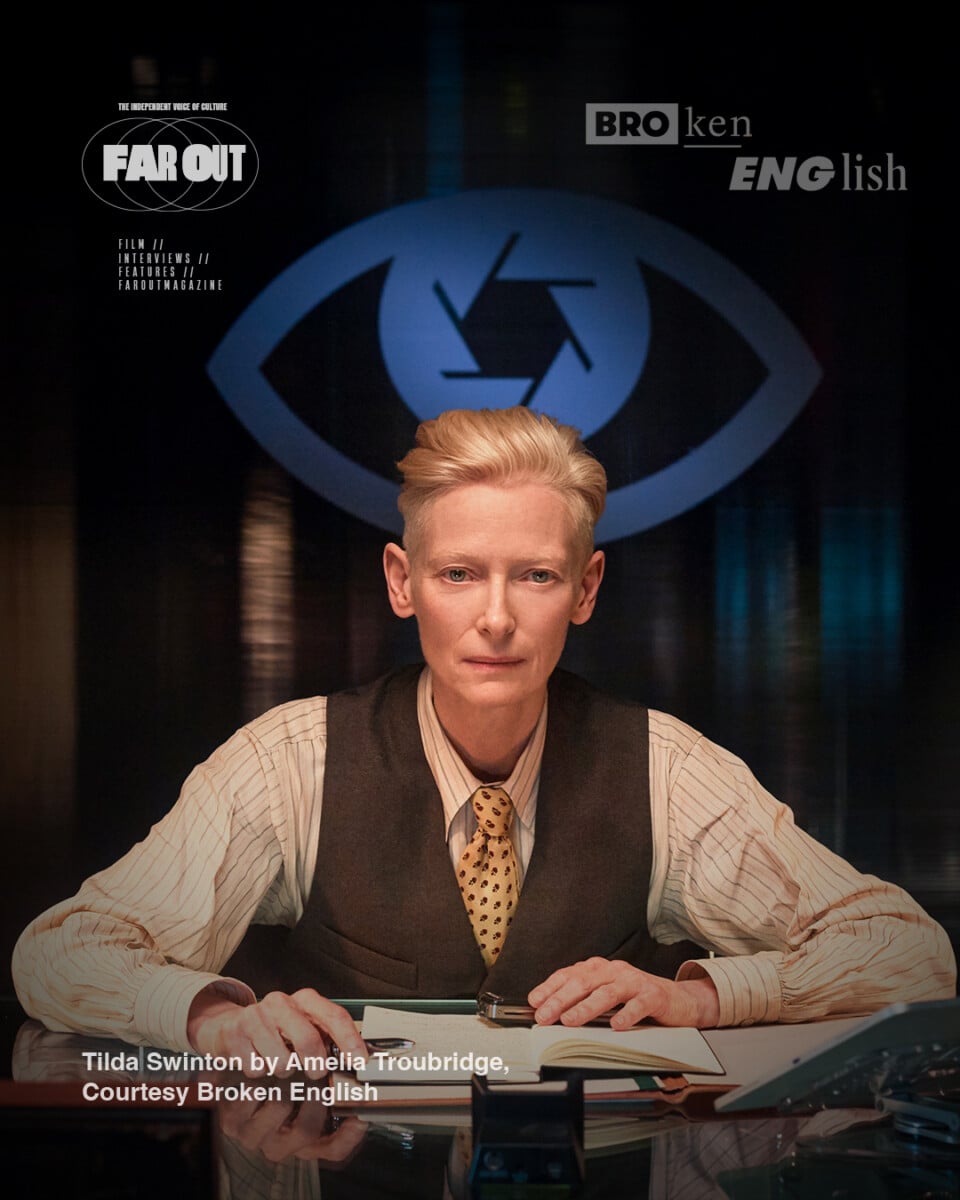
In Broken English, Marianne Faithfull is vividly human; the whole film is. She’s human when, in Pollard’s favourite moment of the film, she sees rehearsal footage from the Seven Deadly Sins that she didn’t know existed, and so makes a joke to hide quite how impacted she is. She’s human when she’s smiling at Nick Cave during her final ever live performance, and Cave is smiling back with a look of disbelief across his face. She’s human in moments where she changes the topic, denying a line of questioning, or when she’s reflected so beautifully in the glimmer in George MacKay’s eyes as you see him break out of character a little as he falls into the natural, human joy of a great conversation with someone fascinating.
To get all of that, Pollard said that the key was her being human too, and learning to work “just on the edge of control”, only holding onto interpersonal instinct and simply trusting herself to “read Marianne’s face”, and work from the mood in the room, even if it meant a gear switch, or a break.
In their office, my brain is buzzing. The reason why Broken English moved me so deeply is exactly the feeling in my gut in that moment, where you feel your whole body alight with complete love and excitement, prompted by connecting with people on their passions. Any time Pollard or Forsyth talk, bouncing answers back and forth, I have about 20 follow-up points, but push them away, closing the notepad in front of me to simply be in the conversation, following the method they adopted for the movie.
They’re talking about the crucial need to archive an artist’s life in a deeply human way in a world where AI and censorship are closing in. They’re talking experiences that unlock everything, that Nick Cave calls “gear shifts of the heart”. They’re talking about the influence of Samuel Beckett’s Krapp’s Last Tape, and how you can get everything from the look on someone’s face, and sometimes there’s no need to ask a question. They’re talking about women in punk, Marianne Faithfull’s spirit, Warren Ellis’ book, the fascination of Kate Bush… And when I leave, I go to hit stop on the recording and find my phone off, glitched, all of it gone.
In Broken English, Faithfull is brought into the ‘Ministry of Not Forgetting‘ as a way to archive not so much the facts of her career or the specifics, but the feelings and the experience, the importance of flashes and snippets that might be lost.
So while I could sob forever that it’s lost, it’s not really, because I captured it here, the best I could, keeping it human, keeping it honest, keeping the feelings at the forefront because really, it matters more than the quotes.
