


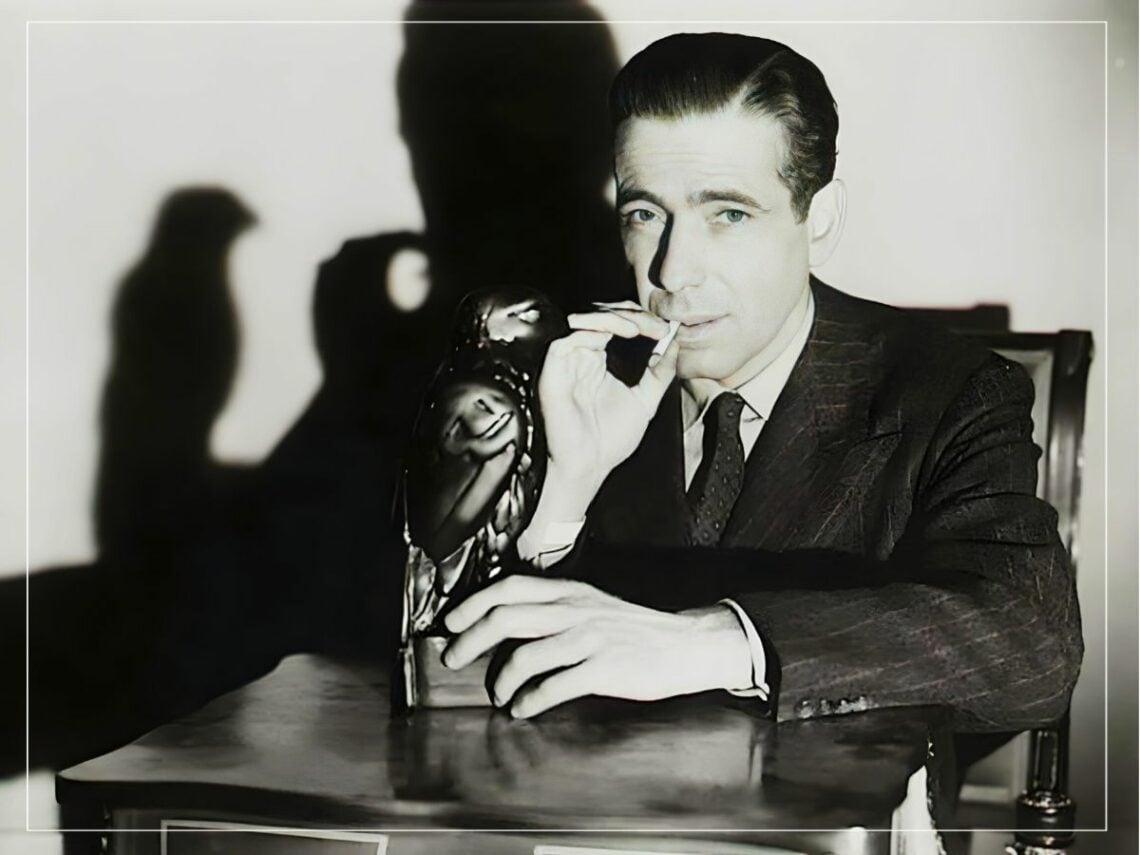
Humphrey Bogart’s five most under-appreciated performances

Humphrey Bogart will forever be remembered as the irascible nightclub owner with a heart of gold who said, “Here’s looking at you, kid,” to Ingrid Bergman. But while Casablanca will almost certainly be his most beloved film for the foreseeable future, Bogart wasn’t confined to that trenchcoat and fedora, even though he wore them in so many of his movies.
Born into an aristocratic family in Manhattan, the actor’s upbringing was a far cry from the hardscrabble outcasts and world-weary detectives that became his legacy on-screen. His mother, Maud Humphrey, was a leading illustrator at the turn of the century, earning a higher salary than her husband, who was a surgeon. Bogart always felt like an unloved misfit and was thrown out of every fancy prep school he attended until he had nowhere to go but the Navy.
After knocking around on Broadway for a decade, he jumped ship to Hollywood, where he floundered yet again as a would-be matinee idol. When he finally got his big break in The Petrified Forest, it was as a hard-bitten criminal. Suddenly, he was in his element. Having struggled with alcoholism since his early twenties, Bogart had the face of a man who had burned the candle at both ends and approached life with clenched fists. In Hollywood, he was the resident cynic, a self-proclaimed outsider who loved to needle those around him and bring his fellow movie stars down to earth.
When the actor died of oesophagal cancer in 1957, he left a body of work that would only become more iconic with the passing decades. But some of his best performances remain under the radar as fans flock to Casablanca, The Maltese Falcon, and The Big Sleep. This is a shame because Bogart had more range than these films give him credit for. Here are five that give a more complete picture of his talents.
Humphrey Bogart’s five most underrated movies:
5. The Caine Mutiny (Edward Dmytryk, 1954)
Bogart was cast in an unusually vulnerable and unsympathetic role in Edward Dmytryk’s star-studded adaptation of Herman Wouk’s Pulitzer Prize-winning novel. He plays Captain Queeg, an uncompromising Navy captain whose crew loses respect for him and forces him out of his position. A significant portion of the story revolves around the ensuing trial, in which Queeg’s subordinates are charged with mutiny and accuse him of mental instability.
Bogart earned an Oscar nomination for his erratic performance as the troubled captain. The film leaves room for moral ambiguity. It’s up for debate whether the crew was justified in their mutiny or whether they should have stuck by him despite his unpopular and unpredictable style of leadership. Bogart’s poor health is painfully apparent on screen. The lines on his face and bags under his eyes offer a visceral sense of weariness and add to the vulnerability of his performance, and he seems haunted and lost rather than tyrannical. He is petty, cowardly, and an outcast because he is unliked rather than an elective outsider. Seeing an actor known for his cool, detached brand of contrarianism play a character who is so out of his depth and powerless is often uncomfortable, but it speaks to Bogart’s skill as a performer.
4. The Barefoot Contessa (Joseph L Mankiewicz, 1954)
The same year that The Caine Mutiny was released, Bogart starred as a world-weary (he was always world-weary after he hit his thirties) movie director who discovers a once-in-a-lifetime starlet. Played by Ava Gardner, the starlet is the Barefoot Contessa of the title, a free-spirited Spanish dancer who the director plucks from obscurity and turns into the world’s biggest movie star. The film begins with her funeral and a voiceover from Bogart telling her story. Gardner is an elusive presence, described more than seen. Bogart does the heavy lifting when it comes to the performances, threading the needle between industry cynic and soft-hearted mentor.
This type of role was not uncommon for the Casablanca star, but he manages to imbue his performance with even more pathos than usual. As with The Caine Mutiny, his features at this stage in his career were on the haggard side of care-worn, and when broadcast in Technicolor, they offered a road map of sorrow, hard living, and reluctance to be drawn into anything approaching real-life drama. Next to the effervescence of Gardner, he is positively soulful, and no matter what the title suggests, he carries the whole film on his weary shoulders.
3. Dark Passage (Delmer Dave, 1947)
Bogart made four films with his fourth wife, Lauren Bacall. They famously met on the set of To Have and Have Not when she was 19 and were inseparable until his death 12 years later. Of the films they made together, The Big Sleep and Key Largo are probably the most well-known. But Dark Passage is secretly excellent, a taut thriller with a unique premise and the famous chemistry that drew the stars together on their first film.
Bogart isn’t on screen for most of the initial half of the movie. Instead, it’s shot from the point of view of his character, a man convicted of murdering his wife who escapes from prison. He meets Bacall’s character by chance, and she helps him escape the police and undergo plastic surgery. Following the procedure, Bogart’s face is revealed, somewhat comically, to be the outcome of the surgeon’s hasty work.
Bogart and Bacall get more alone time on screen than they do in their other films, and their easy alchemy is a joy to watch. He is in his comfort zone as a wrongly accused man searching for the answers to a deadly mystery, but it’s all expertly realised, and the final scene is film noir romance at its absolute best.
2. Beat the Devil (John Huston, 1953)
John Huston’s crime comedy-drama Beat the Devil is not his or Bogart’s best film. It isn’t even the best film that the long-time friends made together. But it is an irresistible combination of fresh ideas and outrageous talent. Set in Italy, it stars Bogart and Italian sex symbol Gina Lollobrigida as a married couple who used to enjoy the high life but are now forced to work for a group of criminals. Bogart has a dalliance with a nosy English tourist, played by Jennifer Jones, who is visiting Italy with her uptight husband (Edward Underdown). Huston brought Truman Capote onboard to help with the script, and as a result, the dialogue is full of daggers, unexpectedly poetic detours, and breezy punchlines.
Bogart was playing against type in a comedic, not particularly cynical role. He embraces the deadpan script with aplomb and is masterful at playing a petty con artist who still thinks of himself as a high roller. Lollobridiga is an unlikely choice to play his wife, but they make a surprisingly charming duo, dashing off lines of sardonic banter with real chemistry. Beat the Devil is an often maddening film, bursting with disorganised potential. But it is also full of stellar dialogue and performances, especially from Bogart.
1. In a Lonely Place (Nicholas Ray, 1950)
Bogart’s greatest role is not Rick Blaine in Casablanca or Philip Marlowe in The Big Sleep. It’s Dixon Steele in Nicholas Ray’s bitter, razor-sharp film noir In a Lonely Place. Dix is a screenwriter who used to be a big deal. Now, he delays writing screenplays and openly mocks the men who hold the keys to his next paycheque. When a young woman who he spent the evening with turns up murdered, his complete lack of outward concern makes him the prime suspect. He strikes up a relationship with his next-door neighbour (Gloria Grahame), only to have her question his alibi as he becomes increasingly violent.
In a Lonely Place was the film most closely aligned with Bogart’s inherent nihilism, ambivalence toward Hollywood, and tendency to pick on people who were less powerful than him. His friend, the silent film star Louise Brooks, pinpointed the movie as the one that got closest to his true character, writing, “[Dixon’s] pride in his art, his selfishness, his drunkenness, his lack of energy stabbed with lightning strokes of violence, were shared equally by the real Bogart.”
The film doesn’t portray the actor in his best light, but it did give him the opportunity to go deeper into the darkest recesses of his psyche and turn in the best performance of his career.
