


Hugh Grant’s forgotten Bram Stoker adaptation is weirder than you could possibly imagine

Way back in 1988, before he stood blinking in the rain in Four Weddings and Funeral or stammered his way through an impression of a Horse & Hound journalist in Notting Hill, Hugh Grant played a plucky aristocrat who wages war on an enormous prehistoric worm somewhere in Derbyshire. It wasn’t his finest moment on-screen – that distinction belongs to his performance in Paddington 2 – but it was certainly a moment worth remembering. Sadly, for whatever reason, it has fallen into obscurity.
The most obvious reason Ken Russell‘s The Lair of the White Worm has been relegated to the dustbin of cinematic history is that it is not ‘good’ in the classical sense. It is shambolic and often poorly acted, and many of its plot points are abruptly dropped, never to be seen again. But there is something completely mesmerising about it.
Based on a lesser-known Bram Stoker novel, it centres on the two Trent sisters who live alone in a tenant farmhouse after their parents’ disappearance. An alarmingly youthful Peter Capaldi plays an archaeologist who unearths a hugeskull from their front garden, and Grant plays the lord of the manor, James D’Ampton, whose ancestor famously slayed a fearsome worm.
The undisputed star of the whole thing is Amanda Donohoe, who gives what must surely be the most committed performance of the decade as Lady Sylvia Marsh, another member of the landed gentry who lives in a neighbouring mansion. Although she masquerades (rather poorly) as a human being, she happens to be an ancient snake of some sort. Or maybe she’s a vampire with snakelike tendencies. Either way, she spends most of her time swanning around in full dominatrix mode, vomiting a dream-inducing acid on religious trinkets.
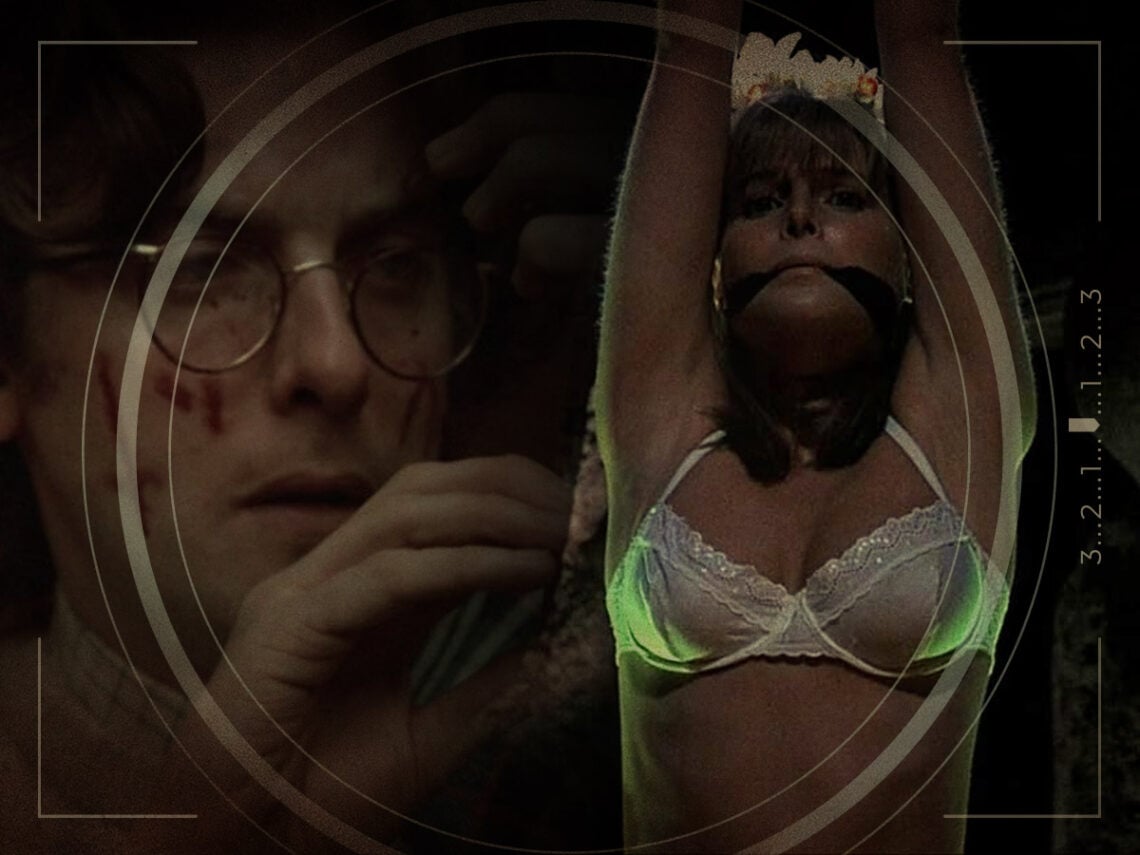
In one scene, one of the Trent sisters, subtly named Eve (her sister is Mary, of course), touches the vomit and has a violent vision of a group of nuns getting raped by Roman soldiers while a crucified Jesus looks on, spurting blood. In another scene, Lady Sylvia writhes to the sound of a teenage hitchhiker’s harmonica playing while wearing little more than thigh-high boots. On yet another occasion, she straps on an arm-length spike and uses it to rape a hypnotised virgin.
All of this pales in comparison to a truly glorious moment when Capaldi rocks up to a snake fight in a kilt and proceeds to subdue the female serpent with the dulcet tones of his bagpipe. Speaking of pipes, the phallic symbolism in this film is so overt that it practically isn’t symbolic anymore. In one lengthy sequence involving an aeroplane in which Lady Sylvia humps a doorframe (it doesn’t make sense in context, either), Grant holds a red-tipped pen in such a way as to make its analogy to the male organ completely unmistakable.
It’s critical at this point to note that The Lair of the White Worm might be a masterpiece. You could imagine Francis Ford Coppola watching it in preparation for making Bram Stoker’s Dracula and taking copious notes, only to scribble in the margins, “But a little less horny.”
Not surprisingly, it barely made $1 million at the box office when it was released, and Grant has since expressed some embarrassment about it. This is unfortunate, because it is something of a harbinger of his most recent work. Completely unhinged and inspired, this movie is just waiting for the world to rediscover it.
