


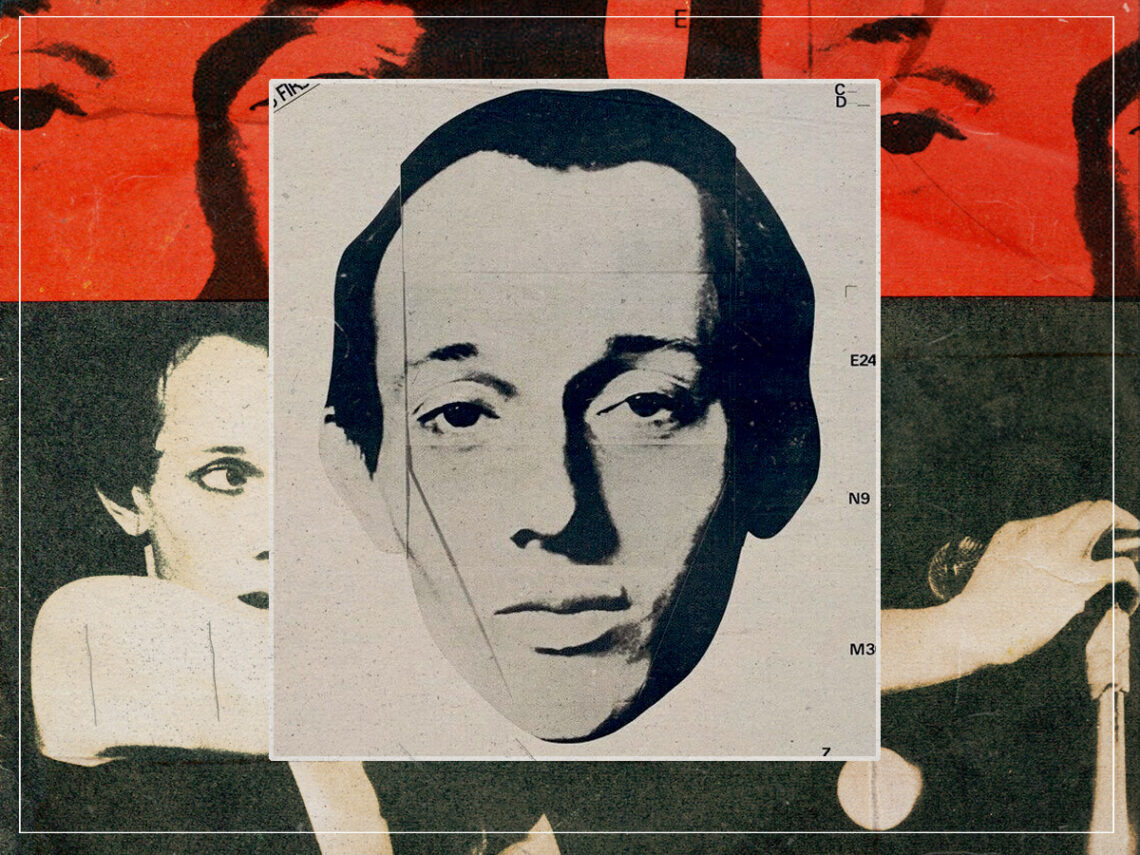
How Howard Devoto brought punk to Manchester

Howard Trafford, better known by his stage alias Howard Devoto, brought crucial nuance to punk music in the late 1970s as the zany frontman of Magazine. With diverse, progressive textures and dark, existential lyrics, the Manchester band embodied the transition from punk to post-punk most succinctly. This is especially true when one considers that Devoto set out as an early member of the classic punk band Buzzcocks. But did you know Devoto helped introduce punk to Manchester?
Devoto had always been an artistically inclined individual but stumbled upon a vivid calling in February 1976 after reading the headline, “Don’t look over your shoulder, the Sex Pistols are coming,” in the NME. With no YouTube to speak of, the 23-year-old had never heard the Sex Pistols’ music. The new London-based punk sensation was yet to hit the studio and had never played a gig within the Greater Manchester limits.
Devoto read that the Sex Pistols were booked for a gig in High Wycombe, around 200 miles away, the following evening. Intrigued by the hype, he decided to attend but had to figure out how to get from Lancashire to Buckinghamshire. Serendipitously, one of Devoto’s flatmates asked him if he could collect her little Renault from the garage while she was away. She allowed him to use it over the weekend as a thank you.
Meanwhile, Devoto’s friend Pete McNeish was a student and had been given travel expenses to attend a conference in London. “She asked me if I’d pick it up for her,” Devoto said, recalling his cheeky plan in a 2008 interview with The Guardian. “And I could have the use of it for the weekend. I don’t think she meant that I could drive to London.”
After the conference in London, Devoto and McNeish headed to the gig. “It needed all those elements to come together. But it shows how desperate we were – for something,” Devoto added.
Sure enough, the Sex Pistols blew Devoto away that night in High Wycombe – not with instrumental command or virtuosic vocals, but with uncut attitude and an air of revolution. After the gig, Devoto and McNeish approached the Sex Pistols manager Malcolm McLaren, asking whether they could arrange a concert in Manchester.
McLaren consented, keen to introduce the band to the north, and the resultant gig took place at the Lesser Free Trade Hall on June 4th, 1976. The performance went down in history as one of the most important of the British punk wave. Morrisey, Mark E. Smith, Mick Hucknall, John Cooper Clarke, future Joy Division members Ian Curtis, Bernard Sumner and Peter Hook, and future Factory Records boss Tony Wilson were allegedly among the small number in attendance since citing it as a pivotal moment in their respective careers.
“It was just about the attitude,” Peter Hook said, discussing the gig in a 2022 interview with Far Out. “The fact that what they were doing was so different. The week before, I’d been to see Led Zeppelin, and that was great; they played fantastically, but they weren’t inspiring – as in, come along and change your life, inspiring. So, yeah, the Sex Pistols spoke to me and said, ‘Pack it in’, OK, ‘give up your job, and get out and join the circus.'”
David Nolan, the author of I Swear I Was There: Sex Pistols, Manchester And The Gig That Changed The World, noted that, while there were only around 40 people in the small audience that evening, its legendary status has naturally led to every Tom, Dick and Harry at every Mancunian boozer claiming to have attended.
Mystery aside, Howard Trafford swiftly changed his surname to Devoto, while McNeish became Pete Shelley. This duo founded Buzzcocks, Manchester’s first major punk act. Within months, like-minded bands proliferated across Manchester in a chain reaction that eventually birthed The Smiths, The Stone Roses, Oasis, The Haçienda rave scene and other components of the so-called Madchester movement.
After playing this pivotal role in the emergence of punk in Manchester, Devoto played with Buzzcocks for a year before leaving to form his own band, Magazine. With a more cerebral and eclectic approach to the genre, he became one of the early progenitors of post-punk, delivering a true masterpiece in 1978’s Real Life.
Watch a true punk icon in action below.
